Answer: Hydraulic leveling jacks for RVs offer stable, load-bearing support to level your trailer quickly and with less manual effort. This guide highlights five top options suited for different RV sizes and setups, helping you choose the right system for front-to-rear, or mid-travel, leveling needs. Ideal buyers include frequent solo travelers seeking quick setup, owners of heavier fifth wheels needing higher lift capacity, and those upgrading an existing leveling system for smoother operation.
| Product | |||
|---|---|---|---|
| 8,000 lb | |||
| 14,000 lb | |||
| 6,500 lb | |||
| 9,000 lb per jack | |||
Lippert Level Up Aluminum RV Hydraulic Leveling Jack, 8,000 lb

Best for: Heavier fifth wheels or travel trailers that require strong aluminum construction and a reliable 8,000‑lb lift. This jack replaces front, rear, driver, or passenger units in Lippert Level Up systems, making it a solid choice for upgrading or extending an existing setup. It features a 9″ footpad and 13 mounting holes for flexible installation, with an overall coach rating up to 32,000 lbs GVWR. Caution: Confirm compatibility with your specific Level Up model before replacement to ensure a precise fit.
Lippert Aluminum Hydraulic Leveling Jack Assembly, 14,000 lb

Best for: RV owners with higher lift needs and long-term durability. Designed for exact fit with Lippert’s Level Up systems, this 14,000‑lb aluminum jack emphasizes heavy‑duty resilience and natural resistance to outdoor elements. Note: Verify your model’s manual for the correct replacement jack to avoid misfit installation. This option excels where frequent, heavy-use leveling is required.
OULEME 24″ RV Camper Scissor Jack, 6,500 lb (Set of 2)
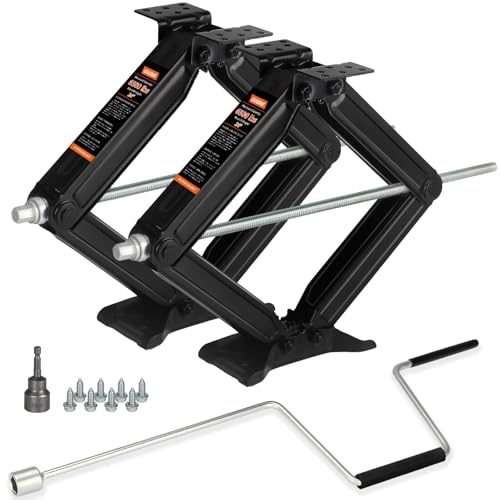
Best for: Campers and travel trailers that need a simple, out-of-box stabilization solution. The 6,500 lb capacity and wide base plate provide solid stability, with a complete kit including a manual crank handle and drill socket. Choose this if you want fast setup with a combination of manual and drill-assisted operation. Limitation: Not a true hydraulic leveling jack; best used as a stabilizer in conjunction with a primary leveling system.
LIBRA 9K 24″ Stabilizer Jacks (Set of 4)
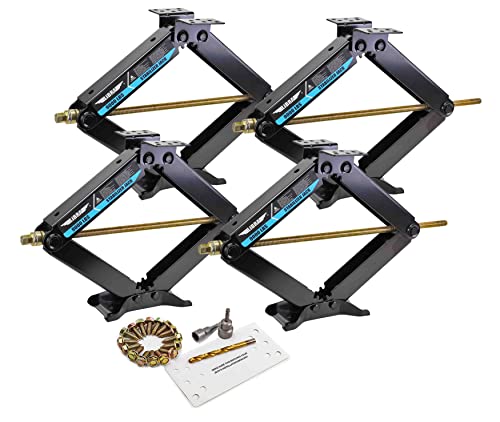
Best for: Heavier trailers requiring a complete stabilization kit with mounting hardware included. These 9,000-lb-capacity jacks come as a four-pack with a power-drill-ready socket and all mounting hardware, enabling fast, secure setup. Limitation: Primarily stabilizers; do not replace hydraulic leveling jacks with these in systems expecting hydraulic lift for leveling.
Trailer Jack Block 4 Pack by Hyfico

Best for: Providing stable support under jacks on uneven ground, or when extra stability is desired on grass, gravel, dirt, or asphalt. These 20,000-lb capacity leveling blocks are lightweight, UV-resistant, and compatible with many jacks, tong jacks, or stabilizers. Caution: Not a replacement for functioning hydraulic jacks; serves as a supplementary stabilization aid.
AUH Adjustable Camper Slide Out Supports Jacks

Best for: RV owners seeking adjustable slide-out stabilization with both drill-assisted and manual lifting options. Height range from 13.8″ to 26.8″ supports up to 5,000 lbs per jack, and includes a steel plate and anti-slip rubber. Caution: Check compatibility with your slide-out mechanism to ensure proper clearance and fit.
Buying Guide
What should you consider when choosing hydraulic leveling jacks for an RV?
- Lift capacity: Match the jack’s capacity to your RV’s GVWR and the expected load on each jack location.
- System compatibility: Some jacks are designed specifically to replace parts in Lippert Level Up systems; verify compatibility with your current hardware before purchase.
- Material and durability: Aluminum jacks are lighter and corrosion-resistant; steel jacks offer raw strength but may be heavier and prone to rust without protective coatings.
- Installation ease: Look for kits with minimal components, clear mounting holes, and included hardware to simplify upgrade or replacement.
- Stability features: A wide footpad, robust mounting options, and anti-slip bases improve stability on uneven ground.
- Versatility: If you need both lifting and stabilizing capabilities, consider a combination of hydraulic jacks and stand-alone stabilizers or blocks.
Practical considerations
- Ground conditions: Soft soil or sand may require wider footpads or additional blocks for stability.
- Electrical requirements: If using electric drills for setup, ensure you have the necessary power tools and safety practices in place.
- Maintenance: Regular inspection of seals, hydraulic lines, and mounting hardware helps extend life and prevent leaks.
How to choose by scenario
- Heavy fifth wheels or long trailers: Prioritize higher lift capacity (12,000 lb+ per jack range) and aluminum construction for durability and weight savings.
- Frequent setup away from power outlets: Favor hydraulic jacks with quick installation and simpler replacement paths, plus a mix of manual stabilization options.
- Shallow or irregular sites: Choose jacks with adjustable height ranges and robust base design to maximize contact area.
FAQ
- Q: Are hydraulic leveling jacks universal for all RVs?
- A: Not always; verify compatibility with your model, make, and existing leveling system. Some jacks require replacement within a specific brand family.
- Q: Can I mix brands in a single leveling system?
- A: It depends on the system; mixing components from different brands can cause mismatches in fit and operation.
- Q: Do hydraulic jacks require ongoing maintenance?
- A: Yes; inspect seals, fittings, and mounting hardware regularly to prevent leaks and ensure stability.
- Q: Are there safety concerns when upgrading leveling equipment?
- A: Follow manufacturer instructions; use proper jack stands and levelers when necessary; avoid overloading beyond rated capacities.
- Q: Is a higher lift capacity always better?
- A: Higher capacity provides more headroom for heavier trailers but may add weight; balance capacity with overall RV weight and system design.