Finding the right hydraulic oil for a log splitter depends on temperature, duty cycle, and seal compatibility. This guide highlights five suitable options and explains who each is best for. Use cases range from heavy, long-haul splitting to everyday home use, with clear notes on compatibility and potential limitations.
| Product | Best For | Notes |
|---|---|---|
| TRIAX Powerflow AW 46 Multi-Viscosity HLP Hydraulic Oil | Extreme-season demanding splitters | 6,000-hour life, low foaming, -40F pour point |
| TRIAX Powerflow AW 32 Multi-Viscosity HLP Hydraulic Oil | Balanced performance in varied temps | 6,000-hour life, high viscosity index, low foaming |
| ULTRA 1PLUS AW ISO 68 Hydraulic Oil | High-pressure, industrial or mobile use | Excellent wear protection, broad temperature stability |
| Premium Hydraulic Oil AW ISO 32 – Hapco | Everyday machinery with anti-wear needs | Anti-wear, anti-oxidation, reliable performance |
| LU02322G Log Splitter Hydraulic Fluid Oil, 2 Gallon | Budget-friendly, generic log splitters | Two-gallon size, simple use, China-made |
TRIAX Powerflow AW 46 Multi-Viscosity HLP Hydraulic Oil
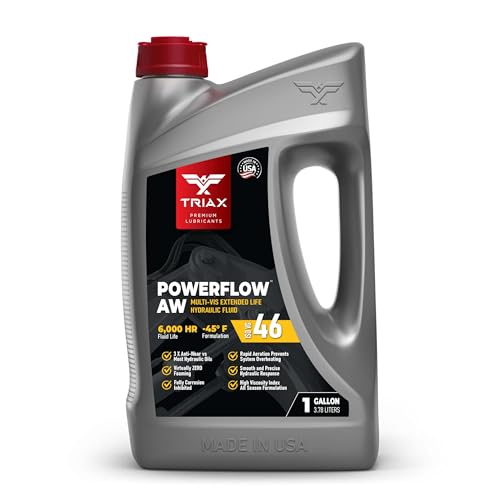
Best for high-demand log splitters operating in extreme conditions. This 46-grade oil is designed for 6,000-hour severe service with high oxidation resistance. It features an anti-wear booster pack with triple zinc content, delivering enhanced protection for components under heavy use. A high viscosity index helps maintain stable performance across a wide temperature range and reduces hydraulic cavitation, supporting seal integrity.
Who it’s best for: builders and homeowners running heavy-duty splitters in varying climates who need long intervals between changes. Why chosen: it combines extended life with strong anti-wear performance, helping minimize maintenance in demanding work cycles.
Limitation to note: higher-viscosity fluids can be less forgiving in very cold starts if the system isn’t designed for thicker oil; ensure your unit’s seals and clearances match the 46-grade specification.
TRIAX Powerflow AW 32 Multi-Viscosity HLP Hydraulic Oil

Best for balanced performance across seasons. This 32-grade oil offers excellent protection with a 6,000-hour life and anti-wear booster similar to the 46-grade variant. It maintains durability under varied operating conditions, helps prevent overheating, and resists fluid shear while protecting seals.
Who it’s best for: users who split in fluctuating temperatures and want reliable viscosity stability without extreme cold or heat challenges. Why chosen: it’s a versatile option that supports diverse climates and typical home-use duty cycles.
Caution: in very heavy-duty industrial setups or extreme heat, some users may prefer the 46-grade for maximum film strength; confirm your equipment tolerates the 32-grade viscosity.
ULTRA 1PLUS AW ISO 68 Hydraulic Oil

Best for high-pressure systems and heavy-duty use. This ISO 68 oil emphasizes wear protection, stability across temperature ranges, and robust rust and corrosion resistance. It is suitable for both industrial and mobile hydraulic applications, including log splitters with demanding cycles.
Who it’s best for: operators needing strong protection for seals and metal parts in challenging environments. Why chosen: the formulation targets wear reduction and system reliability under sustained or peak loads.
Limitation: the higher viscosity at operating temperature may affect very fast tending actions in some small or low-flow log splitters; ensure compatibility with your unit’s flow and clearance requirements.
Premium Hydraulic Oil AW ISO 32 – Hapco
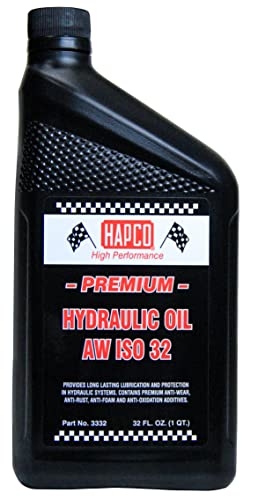
Best for everyday machinery with a need for anti-wear, anti-rust, anti-foam, and anti-oxidation protection. The Hapco ISO 32 formulation provides reliable viscosity stability and protection of internal components against rust and oxidation, making it a pragmatic choice for typical log splitter setups.
Who it’s best for: users seeking a dependable, all-around hydraulic oil for routine splitting and maintenance. Why chosen: offers essential protection features without specialized requirements beyond standard hydraulic systems.
Limitation: not the strongest option for extreme temperatures or the longest intervals between changes; if you operate in harsh conditions, consider higher-viscosity variants.
LU02322G Log Splitter Hydraulic Fluid Oil, 2 Gallon

Best for budget-friendly, straightforward use in common log splitters. This 2-gallon option is convenient for owners who perform routine splitting tasks and want a simple oil that provides general lubrication and protection.
Who it’s best for: DIY enthusiasts or occasional users who want an economical option without specialized performance claims. Why chosen: value-focused choice that covers everyday needs.
Limitation: may lack the extreme longevity or advanced additives found in premium formulations; verify compatibility with your splitter’s seals and pump design.
Buying Guide
Key purchase considerations help compare options beyond price and brand name.
- Viscosity grade: Higher grades (like 46 and 68) offer thicker lubricating films at high temperatures but may be harder to start in cold conditions. Lower grades (32) provide easier cold starts but may thin out under heavy loads. Choose based on typical climate and duty cycle.
- Oxidation and rust protection: Look for anti-oxidation and anti-rust additives to extend component life in humid or damp environments common to outdoor splitting.
- Wear protection: Anti-wear boosters and zinc content improve protection for pistons and seals under heavy use. Systems with sensitive seals may benefit from fluids designed for long life and robust film strength.
- Foaming resistance: Low-foaming formulas minimize air entrapment, which helps prevent cavitation and preserve pump efficiency during rapid cycles.
- All-season performance: Fluids with a wide pour point and viscosity stability reduce the need for frequent changes across temperature shifts.
- System compatibility: Confirm the oil’s viscosity, additives, and approvals align with your splitter’s seals, pumps, and reservoir capacity.
Frequently Asked Questions
- What is the best oil for extreme cold? An oil with a low pour point (like -40F) and good viscosity stability at low temperatures is ideal.
- Do log splitters require a specific ISO grade? Not always, but many systems perform best with ISO 32 or ISO 46 lubricants; check your unit’s manual for recommendations.
- Can I mix different hydraulic oils? Mixing can compromise additive balance and performance; use a single recommended formulation for the system.
- How often should hydraulic oil be changed in a log splitter? Change intervals depend on usage, climate, and oil quality; follow manufacturer guidance and monitor system performance.
- What signs indicate oil is degraded? Dark color, foaming, strong burnt odor, or decreased hydraulic response may indicate degradation or contamination.
- Is higher viscosity always better? Not necessarily. Higher viscosity provides better film strength but can cause slower response in cold starts or small-volume systems.