In-bed fuel tanks for pickups are designed to expand your fueling capacity while keeping tools and cargo organized. This guide focuses on five solid options that balance durability, capacity, and ease of use. Best for contractors, ranchers, and fleet operators who need reliable fuel transfer on job sites, these picks emphasize rugged construction and straightforward installation. Below, you’ll find quick-at-a-glance comparisons, detailed product notes, and a buyer’s guide to help you choose the right tank for your truck and workload.
- Product selection highlights include heavy-duty aluminum builds, integrated tool storage, and high-flow transfer pumps.
- Consider capacity, footprint, compatibility with your truck bed, and pump features when evaluating options.
| Product | Capacity | Best For | Key Feature |
|---|---|---|---|
| Vigorighter 51 Gallon Aluminum Tank & Toolbox | 51 gallons | On-site crews needing integrated toolbox and fuel transfer | 12 GPM pump, 13 ft hose, corrosion-resistant aluminum |
| RDS MFG INC 60-Gallon Tank | 60 gallons | General auxiliary fueling with straightforward top-siphon design | Fully welded seams for durability |
| RDS MFG INC Rectangular 69 Gallon | 69 gallons | Large-capacity needs with flexible fit | Top-siphon compatible, compact package |
| WIKIBB In-Bed Fuel Filler Relocation Kit | Not a full tank; filler relocation kit | Chevrolet/GMC 1967–1987 pickups needing easier fueling access | Powder-coated, rust-resistant |
| Garage-Pro 16-Gallon Tank | 16 gallons | OEM-style replacement with basic capacity | Direct-fit OE replacement, steel construction |
51 Gallon Aluminum Fuel Transfer Tank Toolbox Combo
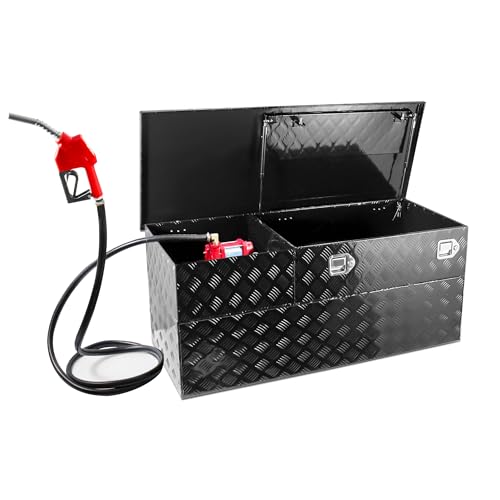
The Vigorighter unit combines a full-size 51-gallon auxiliary tank with a built-in toolbox, offering a compact footprint suitable for trucks where space is at a premium. The aluminum construction is designed for corrosion resistance and long-term durability in challenging environments. A built-in 12 GPM fuel transfer pump with a 13-foot hose and auto-nozzle enables spill-free refueling directly in the field. This option is best for buyers who need cargo versatility—fuel, tools, and gear—in one integrated package. A potential limitation is the overall footprint; ensure your truck bed can accommodate both the toolbox and tank without obstructing other equipment.
Best for: Contractors and fleet operators who want an all-in-one solution that saves bed space and reduces the number of separate components to manage.
Why selected: Combines high-capacity fueling with a rugged toolbox, reducing the need for separate storage and refueling gear.
RDS MFG INC 60-Gallon Tank

The 60-gallon rectangular tank from RDS MFG INC emphasizes durability with fully welded seams and a top-access fueling approach via an electric pump. The design supports gasoline auxiliary fueling, allowing siphoning from the top with a compatible pump. This option suits buyers who prioritize a straightforward, dependable tank shape with robust seam construction. A note: verify fitment with your specific bed dimensions to avoid clearance issues with other components.
Best for: Users seeking a sturdy, easy-to-install auxiliary tank with simple top-fueling capability and strong seam integrity.
Why selected: Durable welds and a broad compatibility range make it a reliable, no-fruss option for varied pickups.
RDS MFG INC Fuel Tank – 60-Gallon

This 60-gallon RDS MFG INC tank is designed for versatility and broader compatibility with various short-bed pickups. The description notes that gasoline fueling is allowed and that siphoning is done from the top via an electric pump. It fits well for buyers who need a reliable mid-to-large capacity tank without overreaching into oversized dimensions. A potential limitation is bed length compatibility; measure available space before purchase.
Best for: Trucks needing a mid-to-large capacity tank that remains practical for standard bed lengths.
Why selected: Simple, effective design that balances capacity with compatibility for common truck bed sizes.
WIKIBB In-Bed Fuel Filler Relocation Kit

The WIKIBB kit is designed for Chevy and GMC trucks from model years 1967–1987, helping relocate the fuel filler to the truck bed for easier fueling access. It’s a practical addition for owners who already own a bed-mounted tank or prefer a simpler fill approach without modifying the primary tank location. The black powder-coated finish enhances durability and rust resistance. This option is best for classic truck restorations or retrofits that prioritize fueling accessibility over tank capacity.
Best for: Vintage Chevy/GMC trucks needing easier bed fueling access or fuel filler relocation.
Why selected: Improves fueling ergonomics on older trucks, with a durable finish to resist rust in harsh environments.
Garage-Pro 16-Gallon Tank

The Garage-Pro 16-gallon tank provides a compact, direct-fit solution for pickups that require a smaller auxiliary tank or a replacement in a limited space. This steel tank offers straightforward installation as an OE-style replacement, making it a practical choice for maintenance and simple upgrades. A limitation is its lower capacity, which means more frequent refueling stops compared to larger tanks. Buyers prioritizing reliability over capacity may find this option appealing.
Best for: Buyers seeking a durable, compact, direct-fit replacement tank with minimal installation complexity.
Why selected: A dependable, space-efficient option that suits smaller bed configurations or as a supplementary tank for shorter trips.
Buying Guide
When choosing an in-bed fuel tank for a pickup, consider capacity, bed compatibility, and the fueling method. Below are practical questions and guidance to help compare options:
- What capacity do I need? If you cover long distances or run heavy equipment, higher capacities (50–70 gallons) reduce refueling frequency, while smaller tanks (16–60 gallons) are easier to fit and install in limited spaces.
- Does the bed have room for a toolbox-inclusive design? Models like the 51-gallon aluminum tank with a toolbox optimize space by combining storage and refueling in one unit.
- How is fueling managed? Look for high-flow pumps (e.g., 12 GPM) and hose length that suits your typical fueling locations. Top-fill and top-siphon designs influence ease of use and installation.
- What is the construction material? Aluminum tanks offer corrosion resistance and lighter weight, while steel tanks tend to be cheaper but heavier and potentially more prone to rust if not protected.
- Is bed length or clearance a concern? Some tanks are optimized for short or standard beds; measure bed width, length, and any cross members to ensure a proper fit.
- Do you need additional features? Integrated tool boxes, corrosion-resistant finishes, and relocation accessories can significantly impact overall usability and value.
Practical quick comparisons
- Best for integrated storage and fueling: 51-Gallon Aluminum Tank with Toolbox
- Best for simple, robust welding and top-fueling capability: 60-Gallon and 69-Gallon RDS MFG INC tanks
- Best for retrofitting classic trucks with easier bed fueling access: WIKIBB filler relocation kit
- Best for compact spaces and OE-style replacement: Garage-Pro 16-Gallon Tank
Frequently Asked Questions
- What is the typical lifespan of an in-bed fuel tank? It varies by material and usage, but corrosion-resistant builds and proper maintenance usually extend service life in demanding environments.
- Can I install these tanks myself? Many options are designed for straightforward, plug-and-play installation, but it’s important to follow manufacturer guidelines and ensure compatibility with your truck model.
- Is aluminum better than steel for in-bed tanks? Aluminum offers superior corrosion resistance and lighter weight, while steel can be more affordable but may require additional protective coatings.
- Will these tanks fit all truck beds? Not all tanks fit every bed length or configuration. Always measure bed dimensions and check fitment notes before purchasing.
- Do I need a separate pump for fueling? Some kits include a built-in pump; others require an external pump. If purchasing separately, ensure the pump specifications meet your flow and hose requirements.
- Are there safety considerations for transporting fuel in trucks? Yes, follow all local regulations, keep the nozzle closed when not in use, and store hoses and fittings securely to prevent spills.