Looking for the right inline fuel pump to support a modern fuel-injected engine? This guide highlights five proven options, explaining who each is best for, and how to choose among them. These pumps are designed to deliver consistent fuel pressure for EFI systems, with varying flow rates and pressures to match performance goals. Ideal buyers include street enthusiasts upgrading to higher-flow injectors, builders running forced induction, and anyone replacing a failed external pump in a non-tank location. A compact buying table follows to summarize key specs at a glance.
Summary table of selected products
- EVIL ENERGY External Inline Fuel Pump — 300 LPH, 75 PSI, best for high-flow EFI setups.
- CarBole External In-Line Fuel Pump (Red) — 116 PSI, 120 LPH at 6 bar, ideal for high-pressure needs and universal fit.
- JDMSPEED High Flow 255LPH Inline Fuel Pump — 255 LPH, 15-120 PSI, great balance for turbo/NA builds.
- JDMSPEED Universal External Inline Pump (Black) — universal fit, standard 58–75 PSI range applications.
- DTMAP Electric Fuel Pump 200LPH — 43–75 PSI, solid all-around choice for external EFI systems.
EVIL ENERGY External Inline Fuel Pump 300LPH
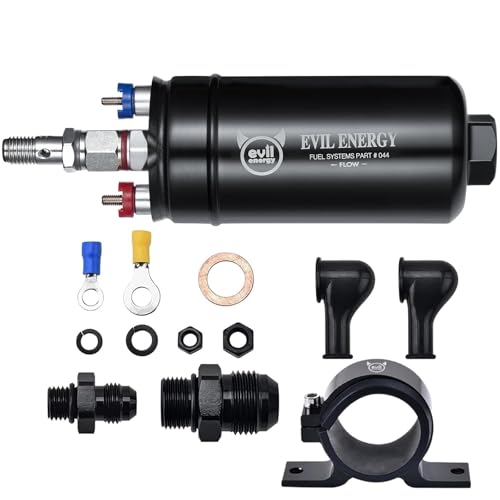
Best for high-volume EFI systems that demand robust flow. The EVIL ENERGY pump specifies 200 LPH at 75 PSI, and 300 LPH at higher operating points, with a 12V input and a 60MM bracket clamp for installation. It covers a wide pressure range and temperatures, making it suitable for performance applications. It is designed for 12V DC EFI setups and is compatible with gasoline blends, race fuels, and denser fuel mixes. A limitation is that precise performance may vary with fuel temperature and system backpressure, so calibrate your regulator accordingly.
Who it’s best for: builders pursuing aggressive boost or turbo setups, and users who need high-flow EFI delivery without an in-tank pump. Why chosen: high maximum flow combined with broad operating range supports numerous high-performance configurations. Caution: verify fitment and electrical compatibility with your wiring harness and regulator to avoid shortfalls in pressure under load.
CarBole External In-Line Fuel Pump Red (116 PSI)

Best for high-pressure, universal-fit EFI systems. This CarBole pump is listed for up to 116 PSI operation and includes a mounting bracket and clamps for straightforward external installation. It is designed to replace specific models like 0580464070 while remaining compatible with aftermarket EFI setups. Flow characteristics include 120 LPH at 6 bar and 100 LPH at 7 bar, with 1/2 inch inlet and 1/4 inch outlet. This pump excels when you need extra pressure to push fuel through efficient high-flow rails.
Who it’s best for: builders running high-pressure rails or those converting older setups to modern EFI. Why chosen: higher pressure capability makes it a safer bet for turbocharged engines that demand reliable fuel delivery. Caution: it is not OEM-specific, so some adaptation may be required for exact vehicle fitment and plumbing changes.
JDMSPEED High Flow 255LPH Inline Fuel Pump

Best all-around inline pump for moderate-to-high-performance EFI builds. This unit offers a rated flow of 255 LPH and an operating range of 15-120 PSI, designed for external mounting outside the tank. It includes mounting clamps, fittings, and a cushion to secure installation. The design favors engines with higher injector demands or those using a regulator to achieve peak power. A caution is that performance depends on proper regulator setup; mis-sizing the regulator could limit gains.
Who it’s best for: enthusiasts implementing turbo, supercharged, or high-performance NA builds with external mounting. Why chosen: strong flow and broad pressure range provide reliable fuel delivery across a variety of tunes. Caution: ensure compatible fittings and wiring to prevent leaks or voltage drop under load.
JDMSPEED Universal External Inline Pump (Black)

Best for universal-fit EFI upgrades where vehicle-specific fitment is uncertain. This pump is made from brass and steel alloy with a black finish, designed as a universal external fuel pump. It includes a mounting clamp, gaskets, nuts, bolts, and connectors. It’s important to note that some adapting may be required depending on the application, and installation may require knowledge. Best used when you need a flexible, non-tank pump solution for multiple builds.
Who it’s best for: hobbyists and builders needing a universal external pump that can be adapted to various setups. Why chosen: broad compatibility makes it easier to match with different fuel delivery components. Caution: lacks install instructions, so plan for the necessary wiring and plumbing knowledge.
JDMSPEED Universal Inline High Pressure Pump Black

Best for those who want a high-quality, versatile inline pump with robust construction for external mounting. The unit is advertised as 0580464070/0580453911/0580463017 variants, with a black finish and a comprehensive set including clamps, gaskets, and nuts. It emphasizes a universal fit, but installation may require skill and knowledge due to its external hose and electrical connections. This pump is suited for users who prefer a durable, heavy-duty option for various EFI configurations.
DTMAP Electric Fuel Pump 200LPH 43-75 PSI

Best for balanced EFI needs across many standard builds. The DTMAP pump delivers 200 LPH at 43–75 PSI, designed as an external inline option suitable for a wide range of 12V fuel systems. It is described as compatible with most 12-volt EFI setups that require higher-than-low-pressure fuel delivery. It is not intended for carbureted systems. A potential limitation is that exact performance can depend on fuel and system backpressure; ensure regulator compatibility and adequate wiring.
Buying Guide: Inline Fuel Pumps For Fuel Injection
- What flow rate do you need? Choose based on injector size, horsepower goals, and turbo/supercharger presence. Higher LP H typically suits high-performance builds but may require a larger regulator and adequate wiring.
- What operating pressure is required? EFI systems often use 40–75 PSI, but some engines demand higher pressure for reliability in boosted setups. Match pump pressure rating with your fuel rail and regulator.
- External vs. in-tank placement: External inline pumps are easier to service and swap, but ensure proper cooling and secure mounting. Inline units outside the tank need robust brackets and vibration-resistant installation.
- Fuel compatibility: Most pumps are designed for gasoline; if you plan to use race fuels or ethanol blends, verify compatibility to avoid corrosion or degraded performance.
- Electrical considerations: Confirm voltage, wiring gauge, and fuse sizing. Undersized wiring can cause voltage drop, reducing flow and pressure under load.
- Fitment and adaptors: Some universal or aftermarket pumps require fittings, hoses, and seals. Plan for compatible hose barb sizes and clamps to prevent leaks.
- Reliability and maintenance: Look for pumps with robust materials (brass/steel fittings), corrosion resistance, and a proven track record in EFI builds.
FAQs
- What is the difference between inline and in-tank fuel pumps?
Inline pumps are mounted outside the tank and push fuel to the engine, while in-tank pumps reside inside the fuel tank. Inline pumps are easier to access for service but may require external hardware and cooling considerations. - Do I need a fuel pressure regulator with an inline pump?
Yes. Most EFI systems require a regulator to maintain stable pressure at the rails. The pump provides flow; the regulator sets the pressure. - Can I use a universal inline pump for my specific vehicle?
Universal pumps can fit many setups, but some adaptation is required. Confirm hose sizes, mounting dimensions, and electrical connections before buying. - What should I consider when upgrading to a higher-flow pump?
Check fuel lines, hoses, clamps, backpressure, regulator capacity, and wiring. Upgrading flow without adequate pressure management can starve injectors or flood the system. - Is it safe to run an inline pump with diesel or other fuels?
Most listed pumps are designed for gasoline. For diesel or alternative fuels, verify that the pump material and seals are compatible with the fuel type to avoid leakage or failure.