When selecting an inline fuse for an amplifier, you want reliability, quick protection, and easy installation. The best options below are suited for different setups—from compact car audio systems to high-output subs. This guide highlights five high-quality inline fuse solutions, explains who each is best for, and shows why they stand out in terms of safety, conductivity, and ease of use.
Summary of chosen products:
- BOJACK 4-8 Gauge AWG Inline 100A AGU Fuse Holder with 100 Amp AGU Fuses — corrosion-resistant and water-resistant, ideal for mid-range car amps.
- Petutu 2 Packs Fuse Holders with 100A AGU fuses — complete kit with visibility and solid conductivity, good for upgrades.
- BOJACK 0/2/4 Gauge AWG In Line ANL Fuse Holder with 300 Amp Fuse — best for higher-current systems, straightforward connections.
- Scosche PMFHIKF Inline Fuse Holder — compact, includes 40/80 Amp Maxi-Fuses, great for 4–8 gauge wiring.
- Skar Audio 1/0 or 4 Gauge In-line ANL Fuse Holder with 150 Amp Fuse — strong current flow for heavy-duty setups.
Best All-Around Inline Fuse for 8 Gauge Car Audio

The BOJACK 4-8 Gauge AWG Inline Fuse Holder comes with 100 Amp AGU fuses and a corrosion-resistant, water-resistant body. This unit is best for mid-range amplifiers and installations that require durable protection in variable weather. The gold-plated metal contacts deliver good conductivity, while the polycarbonate shell keeps the fuse area visible and protected.
Best for: Car enthusiasts upgrading a single amplifier or mid-tier systems where reliable protection and visibility are priorities. Limitations: The single-fuse design may be less ideal for multi-amp configurations unless paired with additional fuses.
Best Budget Kit With Fuses Included
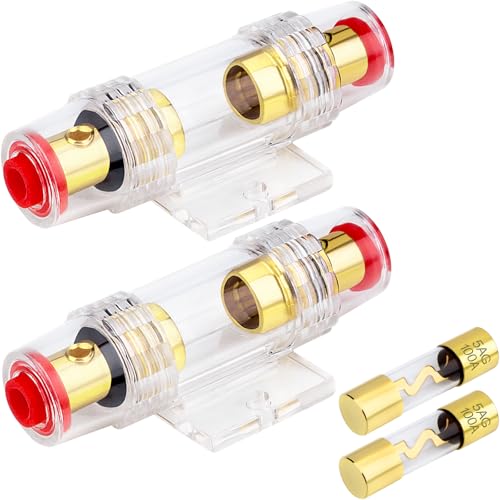
The Petutu kit includes two AGU fuse holders and two 100A AGU fuses. It uses gold-plated terminals and a clear polycarbonate body for visibility and conductivity. Each fuse holder measures 3.34 inches long with a 0.67 inch diameter and 0.19 inch mounting hole, matching standard AGU fuses.
Best for: Users who want a complete, affordable upgrade or first-time protection setup for a dual-amp system. Caution: It’s designed for standard AGU fuses; confirm your fuse type before purchasing additional components.
High-Current ANL Inline Fuse For Big Systems

The BOJACK 0/2/4 Gauge AWG In Line ANL Fuse Holder supports 1/0 or 4 AWG inputs and outputs with a 300 Amp fuse included. It emphasizes ease of wiring without terminal blocks and is suited for high-power amplifiers and subwoofers. The design focuses on straightforward connections and reliable current flow.
Best for: High-output systems needing robust protection and a straightforward installation. Limitation: ANL designs may be bulkier than smaller AGU options, requiring more space in tight installs.
Compact Fuse Holder For 4–8 Gauge Wiring

The Scosche PMFHIKF inline fuse holder is designed for 4- to 8-gauge power wire and ships with 40- and 80-Amp Maxi-fuses. Its compact design is ideal for tighter installations where space is at a premium. Maxi-fuses provide strong protection for mid-range amps and accessories.
Best for: Installations requiring a compact protection module with readily available fuses. Choose this if space is your primary constraint. Limitation: Includes Maxi-fuses only; verify compatibility with your amplifier’s required fuse rating if you plan higher outputs.
Large-Capacity Inline ANL For Heavy-Duty Setups
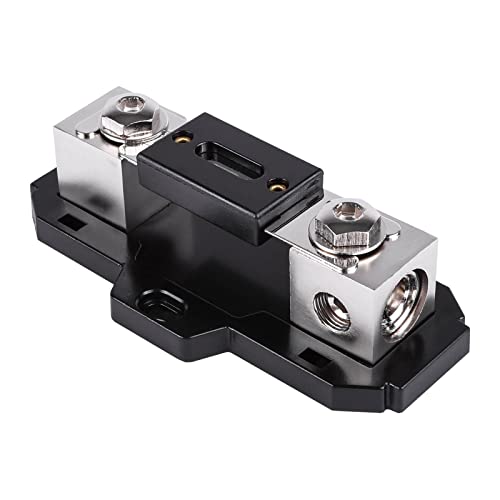
The Skar Audio inline ANL fuse holder supports 1/0 or 4 AWG connections and includes a 150 Amp fuse. Its solid zinc core is designed to maximize current flow for demanding systems, making it suitable for powerful amplifiers or multi-woofer configurations.
Best for: Users mounting high-power subs or amps where current stability is critical. Caution: An ANL fuse and larger gauge wiring require more space and careful routing to prevent interference or heat buildup.
Buying Guide
- Fuse type vs. wire gauge: AGU fuses suit many mid-range builds, while ANL fuses handle higher current loads. Match the fuse type to your amplifier’s demand and wire gauge for best protection.
- Current rating: Choose a rating that protects the wiring and amp without tripping unnecessarily. A fuse rating just above your system’s maximum draw is common, but follow manufacturer guidance.
- Protection features: Water resistance, corrosion resistance, and flame retardance improve reliability in vehicles with exposure to moisture or heat. Consider enclosures that shield the fuse from dust and impact.
- Installation space: ANL holders are bulkier; ensure your dash or trunk area can accommodate the unit with proper clearance for heat dissipation and wiring.
- Visibility and accessibility: Clear bodies or transparent shells help you inspect fuses quickly. Accessibility is important for easy replacement without tools.
- Expansion potential: If you plan future upgrades, select a kit with extra fuse holders or larger ratings to minimize rewiring.
FAQ
- What is the main purpose of an inline fuse for an amp? It protects power wiring and amplifiers from short circuits and overloads by interrupting excessive current.
- Should I use AGU or ANL fuses? AGU fuses fit smaller gauges and mid-range setups; ANL fuses handle higher currents for more powerful systems.
- How do I choose the correct fuse rating? Base the rating on your amp’s peak current and the wiring gauge, ensuring the fuse trips before wiring overheats.
- Is a fuse holder necessary for every amplifier? For most aftermarket car audio systems with aftermarket wiring, yes, to provide essential protection near the battery or power source.
- Can I install multiple inline fuses in a system? Yes, but plan placements carefully and ensure each fuse protects its own run and component.
- What maintenance is required for inline fuses? Regularly inspect for corrosion, heat discoloration, or loose connections and replace blown fuses promptly.