Answering the common search for reliable interior car glues, these products offer strong bonding for headliners, fabric, leather, trim, and badges. They suit different needs—from heat resistance and waterproof performance to flexible, long-lasting bonds for interior panels. Ideal buyers include DIY enthusiasts fixing sagging headliners, professional detailers, and fleet maintenance teams seeking durable repairs without specialized tools. The table below highlights five top options and why each might fit your project.
| Product | Best For |
|---|---|
| WoldoClean Super Glue for Cars | General interior and exterior trim, badges, and decals |
| VerdeVilla Headliner Repair Glue | Headliners and fabric repairs in extreme temperatures |
WoldoClean Interior Glue For Cars

WoldoClean’s 25g cyanoacrylate formula bonds emblems, badges, bumpers, interior and exterior trim in seconds. It is heat resistant and waterproof, suitable for plastic, rubber, metal, glass, and painted panels. Best for quick fixes on emblems, trim pieces, decals, and lightweight exterior components that require a fast, clamp-free bond.
Best for: Minor trim repairs and badges that need an immediate, durable hold. Limitations: Not ideal for large fabric or headliner repairs that require flexible, long-term adhesion.
VerdeVilla Headliner Repair Glue
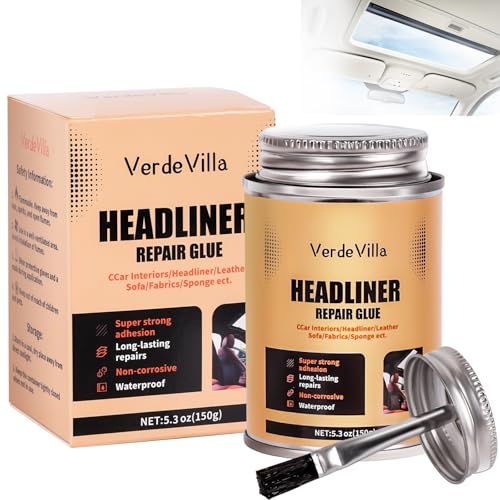
VerdeVilla’s headliner repair kit bonds sponge, leather, rubber, and fabric, sealing tears and gaps. It cures in 5–10 hours initially and fully in 12–24 hours. It endures -40°C to 120°C and remains waterproof, resisting rain and car washes. Best for professional-looking headliner repairs where temperature variation is a concern.
Best for: Long-lasting headliner work and interior fabric repairs. Caution: Longer cure times than instant glues, plan repairs accordingly.
Nozerix Car Headliner Glue

Nozerix offers an elastic headliner adhesive designed to stay flexible after drying. It provides a strong bond for fabric and leather, while remaining clear and smooth to prevent marks on interior surfaces. Best for flexible, durable headliner repairs that must move with upholstery without cracking.
Best for: Flexible headliner and fabric repairs. Caution: Check compatibility with very porous surfaces to avoid absorbent overload.
3M Headliner & Fabric Adhesive

3M Headliner & Fabric Adhesive is designed for automotive headliners and heavyweight fabrics. It dries in about 30–60 minutes and features an adjustable nozzle for precise application. It’s a recognized option for secure, quick setups in both professional and hobbyist settings.
Best for: Automotive headliners and fabric surfaces requiring medium-dwell bonding. Caution: 3M’s stronger formulations may be less forgiving on very delicate materials.
KRAFTPROTZ Automotive Super Glue Gel

Automotive Super Glue Gel from KRAFTPROTZ is a no-drip gel ideal for bumpers, trim, and brackets. It resists oil and heat, with a formulation that tolerates vibration and road stress. It provides triple-sized tubes for repeat repairs in garages or workshops.
Best for: Quick, clean bonding on trim and metal/plastic interfaces. Caution: Gel may not spread evenly on porous surfaces without surface prep.
BioOich Headliner Repair Kit

BioOich’s headliner repair kit includes a 4.23 oz adhesive, a seam roller, and gloves for a cleaner repair. It bonds leather, fabric, plastic, and rubber, offering a waterproof seal and temperature resilience from -40°C to 120°C. Best for comprehensive headliner and interior piece fixes with helper tools included.
Best for: All-in-one headliner repair projects and DIY detail work. Caution: Kit size may be larger than needed for small fixes.
WANJAO Headliner Repair Glue

WANJAO’s headliner adhesive emphasizes strength, providing a long-lasting bond for fabric and foam. It’s designed for quick-drying and minimal dripping, suitable for automotive interiors with multiple surface types. Best for fast fixes on sagging headliners and loose fabric panels.
Best for: Quick, clean headliner repairs with minimal mess. Caution: Not ideal for heavy, structural interior plastics if a bond needs extreme shear strength.
Buying Guide: Key Considerations For Interior Car Adhesives
- Material compatibility: Check if the adhesive bonds fabric, leather, vinyl, plastic, rubber, glass, or metal. Some products are specialized for headliners, while others suit trim or badges.
- Flexibility vs. rigid bonds: Headliner repairs benefit from flexible adhesives that move with the fabric; rigid glues work for badges and trim but may crack on flexible surfaces.
- Heat and water resistance: Interior car conditions vary with sun exposure and car washes. Look for heat-resistant and waterproof formulations for durability.
- Drying and cure times: Faster-drying products save time but may require more precise application. Longer cure times can yield stronger, more durable bonds.
- Application method: No-drip gels, brush-on, and spray foams have different handling requirements. Choose based on your comfort and project size.
- Surface prep needs: Some products require clean, dry surfaces or degreasing prior to bonding for best results.
- Volume and cost efficiency: Consider tube or bottle size and the number of repairs you anticipate to gauge cost per repair.
Frequently Asked Questions
- What glue is best for headliners?
– For fabric and foam headliners, look for adhesives that offer flexible bonding and high heat resistance. Kits with a roller and brush can reduce air bubbles and improve finish. - Can I use standard super glue on car interiors?
– Some cyanoacrylates work for trim and badges, but they can be brittle on fabric or rubber and may not handle temperature changes well. - How long does headliner glue take to cure?
– Initial tack commonly occurs within hours, with full cure often within 12–24 hours depending on product and conditions. - Should I prep surfaces before applying adhesive?
– Yes. Clean, dry surfaces improve adhesion. Roughening very smooth surfaces can help mechanical bonding in some cases. - Are there risks with interior adhesives?
– Some adhesives can irritate skin or fumes; use gloves and ensure proper ventilation during application and curing. - What is a no-drip glue good for?
– No-drip gels stay in place on vertical surfaces like door panels or trim, reducing mess during repair.