Finding the right jack for a 4-post lift starts with capacity, height range, and compatibility. This guide highlights five rolling bridge jacks that pair well with four-post lifts, helping you safely lift, position, and service vehicles ranging from sports cars to full-size trucks. The selections emphasize versatility, stability, and clear height options. Ideal buyers include professional shop users, home garage enthusiasts, and fleet technicians who need reliable under-car access. Below is a quick buying table to compare core specs at a glance.
| Product | Capacity | Best For |
|---|---|---|
| Rolling Jack Bridge Jack for KT-4H110/4H850 (KATOOL) | 7,000 lbs | Heavy-duty lifting and wheel service |
| 4500 Lb Rolling Scissor Jack (642way) | 4,500 lbs | Budget-friendly, adjustable for 4-post lifts |
| Rolling Jack Bridge Jack for KT-4H120PX/4M110PA (KATOOL) | 7,000 lbs | Heavy-duty lifting with high reach |
| KATOOL 5000Lbs Rolling Jack (KT-4H110/4H850) | 5,000 lbs | Low-profile service for sports cars |
| Rolling Jack 5000Lbs (KATRAX KT-4H110 & KT-4H850) | 5,000 lbs | Versatile and portable for multiple lifts |
Rolling Jack Bridge Jack for KT-4H110/4H850 (KATOOL)

This jack offers a 7,000 lbs lifting capacity, designed for heavy-duty vehicles such as full-size SUVs, pickup trucks, and commercial vans. Built from industrial-grade steel with reinforced welding, it provides a stable base for wheel service, brake repairs, and under-car inspections. The height range, from 5.3″ up to 18.3″ with adapters, accommodates low-profile sports cars as well as high-clearance trucks. Best for pro shops and serious home garages, where capacity and durability matter most.
Who it’s best for: shops needing a high-capacity rolling jack for frequent heavy lifts. Why selected: exceptional weight capacity with a stable base and versatile height range. Caution: ensure adapters are used as specified to reach the maximum height safely.
4500 Lb Rolling Scissor Jack (642way)

This 4,500 lb rolling scissor jack uses a manual pump for precise lifting without air. Its locking positions help prevent accidental lowering, and the design supports easy positioning under 4-post lifts. It’s a practical option for enthusiasts who prefer a simple, reliable hydraulic action with straightforward maintenance. Best for: budget-conscious garages and hobby mechanics who still need dependable lift support.
Who it’s best for: hobbyists and small shops. Why selected: solid manual operation with safe locking; limitation: lower capacity than the larger KATOOL options.
Rolling Jack Bridge Jack KT-4H120PX/4M110PA (KATOOL)

This jack mirrors the high-capacity design with a 7,000 lbs rating and a wide height range, making it suitable for high-clearance work and under-chassis access. Precision engineering yields a stable, non-deforming base ideal for wheel service and suspensions. Best for: shops that service a mix of large SUVs and lifted trucks. Caution: verify compatibility with your 4-post lift model before purchase, as mounting hardware may vary by lift type.
KATOOL 5000Lbs Rolling Jack KT-4H110/4H850

This option offers a 5,000 lbs capacity with a low 5.3″ pad height and a maximum 18.3″ height using adapters, plus three locking height positions. It’s well-suited for low-profile sports cars and mid-range lifted vehicles. Best for: garages needing a lighter-weight, yet sturdy, rolling jack for frequent wheel service. Limitation: not ideal for the heaviest four-post lift tasks when extreme loads are involved.
Rolling Jack 5000Lbs (KATRAX KT-4H110 & KT-4H850)
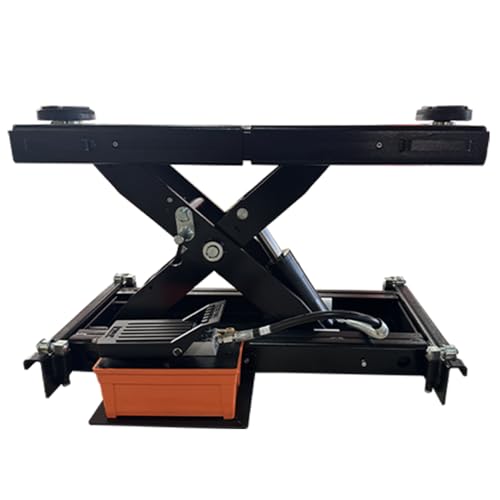
Low-profile at 5.3″ with an extended reach to 18.3″ and a 5,000 lbs capacity, this jack features three locking points for stable elevation. It’s a versatile pick for a mix of sports cars and larger sedans on a four-post lift. Best for: users who need a balance of depth, reach, and practicality. Caution: ensure the carriage height aligns with your lift’s clearance when fully extended.
Buying Guide: How To Choose The Right Jack For A 4-Post Lift
- Capacity: Match the jack’s lifting capacity to the heaviest vehicle you service. For most light to mid-size fleets, 5,000 lbs is adequate; for full-size SUVs and vans, 7,000 lbs offers headroom.
- Height Range: Low-profile starts around 5.3″, extending to 18.3″ with adapters. Consider the tallest vehicle you’ll service and whether adapters are included or sold separately.
- Build Quality: Look for industrial-grade steel, reinforced welds, and a stable base to prevent wobble during lifting and moving.
- Locking Mechanisms: Multiple locking positions improve safety during maintenance work and when positioning vehicles for wheel service or brake repairs.
- Compatibility: Confirm that the jack references your four-post lift model and any adapters or mounting hardware required for safe operation.
- Manual vs. Hydraulic: Manual pumps offer simplicity and cleanliness; hydraulic options provide quicker lifting, but may require more regular maintenance.
- Mobility and Storage: Rolling jacks improve maneuverability in tight spaces; consider wheel design and weight if you move jacks between bays.
FAQ
- What does “rolling” mean for a bridge jack? It indicates mobility across the shop floor, making it easier to position a vehicle under a lift without moving the vehicle itself.
- Can I use a 7,000 lbs jack on smaller cars? Yes, but ensure proper placement to avoid overloading any lift section and follow the lift’s weight distribution guidelines.
- Are adapters necessary for reaching higher heights? Often yes; adapters extend the reach, enabling access to higher undercarriage areas.
- Is a locking mechanism essential? Yes, locking points help prevent accidental lowering while you’re working under the vehicle.
- How do I choose between manual and hydraulic rolling jacks? Manual jacks are simpler and cleaner; hydraulic jacks lift faster and reduce physical effort, but may require more maintenance.
- What safety checks should I perform before using a rolling jack? Verify load capacity, check for cracks or deformation, ensure locking pins engage fully, and inspect wheels for smooth operation.