Answering today’s buyer question: which jet-drive or outboard motor is best for your boat and how to choose among popular models. This guide highlights five solid options, suitable for sunlit lakes, coastal waters, and inflatable or wooden boats. Each pick targets different user needs—speed, reliability, fuel efficiency, or easy operation. Use the table below to compare core specs and decide which engine fits your craft and budget.
| Product | Brand | Key Strength | Best For |
|---|---|---|---|
| DUIBAII 18 HP HangKai | DUIBAII | Strong power, efficient fuel use, robust cooling | Active boaters needing speed and reliability |
| Pxolerig 4HP Jet Drive | Pxolerig | Lightweight, fuel-efficient 4-stroke | Small craft and beginner operators |
| JDCEREN 4HP 55CC | JDCEREN | Compact, CDI ignition, easy reverse | Inflatable boats and light wooden boats |
| GrfceVue 4HP 55CC Jet Pump | GrfceVue | Wind cooling, fuel-efficient | Inflatable and rubber boats |
| NAZEAOB 18HP Outboard | NAZEAOB | Heavy-duty build, high load capacity | Faster watercraft with larger loads |
DUIBAII 18 HP HangKai Outboard Motor

Best for: Boaters needing strong propulsion and durable construction. This 2-stroke engine delivers up to 18hp, with a maximum speed of 5500 rpm. The 8” three-blade propeller reduces water resistance for better acceleration and top-end performance. It uses a lightweight aluminum alloy with a corrosion-resistant finish, suitable for both fresh and saltwater use. It includes a large external fuel tank (about 6.34 gallons) for longer operation intervals and a carburetor designed for efficient fuel burn.
Why chosen: The combination of high power, robust build, and extended fuel capacity makes this a compelling option for medium-sized boats or anglers who need quick planing and reliable performance. A noted limitation is two-stroke fuel consumption, which can be higher than four-stroke equivalents in repeated use.
Pxolerig 4HP Jet Drive Outboard

Best for: Small inflatable or rubber boats and beginner operators who want easy control and fuel efficiency. This 4-stroke 55cc unit delivers 4hp, around 2900W, with 4500-5500 rpm. The design emphasizes fuel economy vs. two-stroke counterparts, and the unit features a step-less speed change for smooth acceleration and a CDI ignition. Caution: smaller engines have limited payload capacity and may struggle with heavier loads.
JDCEREN 4HP 55CC Outboard Motor
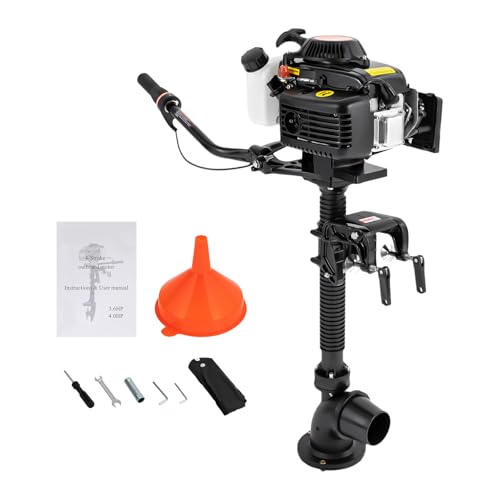
Best for: Inflatable and wooden boats that prioritize compact size with reliable performance. The 4-stroke, 55cc engine produces 2900W and maintains 4500-5500 rpm, providing solid thrust for small crafts. It features a CDI ignition system and a 360-degree rotation with a 180-degree reverse mechanism for easy maneuvering. Limitation: limited horsepower compared to larger outboards.
GrfceVue Outboard 4HP Jet Pump

Best for: Inflatable and rubber boats needing airflow cooling and efficient fuel use. The 4-stroke, 55cc engine runs at 4500-5500 rpm with a 2900W output. It crucially highlights wind cooling and multiple exhaust vents to manage engine temperature. The design includes a forward/neutral option with 360-degree rotation and a CDI ignition for straightforward handling. Consideration: wind cooling may be less effective in extremely hot or enclosed environments.
Universal Whale Tail Hydrofoil Stabilizer Kit
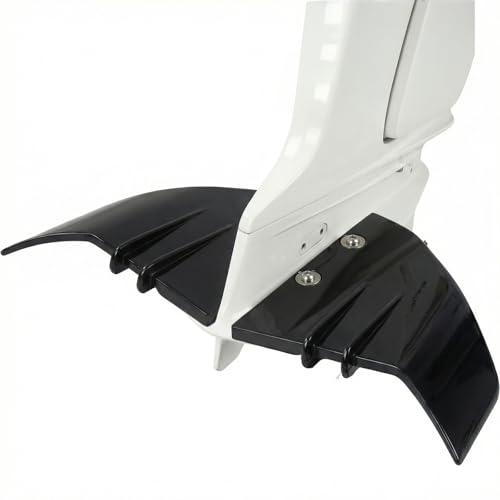
Best for: Boats needing improved stability and smoother rides, especially when accelerating or cutting through wakes. The hydrofoil fins fit 5-150 HP outboards and stern drives, reducing front-end lift and delivering a steadier ride. It’s a practical upgrade for open-water conditions. Limitation: not a motor itself but a performance accessory—installation adds complexity and weight distribution considerations.
NAZEAOB 18HP Two-Stroke Outboard

Best for: Larger, fast-moving boats that require significant thrust and load-bearing capacity. This 2-stroke 18HP engine operates from 4500 to 5500 RPM and uses an aluminium alloy body for durability. It supports a high load capacity (up to 2,204 pounds), making it suitable for heavier equipment or more passengers. Caution: two-stroke engines generally require more maintenance and fuel management over time.
GrfceVue 4HP 6HP Outboard (4-Stroke)

Note: The GrfceVue 6HP unit offers a high-speed option in a similar form factor, with wind cooling, CDI ignition, and a forward/neutral/ reverse capability. This is best for small to mid-sized boats needing more torque than a 4HP unit. Data highlights emphasize efficiency and safety features like multiple vents and auto-shutdown when overheating.
Buying Guide
- Engine type and size: Match horsepower to boat size, weight, and required speed. Larger boats benefit from higher horsepower; smaller craft benefit from lighter 4-stroke options for fuel efficiency.
- Fuel system and efficiency: Two-stroke engines deliver more power per weight but typically consume more fuel and require more maintenance. Four-stroke engines are often more fuel-efficient and cleaner-running.
- Cooling method: Wind cooling suits open environments but may underperform in enclosed spaces. Water cooling provides consistent temperature management in hotter conditions.
- Ignition system: CDI ignition is common and reliable; ensure compatibility with your boat’s controls and propeller configuration.
- Control and maneuverability: Look for 360-degree rotation, easy reverse, and tilt features to improve handling in tight spaces or rough water.
- Durability and materials: Aluminum alloy builds resist corrosion and wear, important for saltwater use. Consider external fuel tank capacity if long excursions are planned.
- Installation and compatibility: Check shaft length (short vs. long) and mounting requirements for your boat transom. Ensure the unit’s weight and dimensions fit your setup.
FAQ
- What is the best engine for a small inflatable boat?
– A compact 4HP to 6HP four-stroke engine is typically best for light inflatable boats, offering good fuel efficiency and easier handling. - Which engine is more fuel-efficient, two-stroke or four-stroke?
– Four-stroke engines generally burn fuel more efficiently and emit fewer pollutants than two-stroke engines at comparable power levels. - Is a hydrofoil stabilizer worth it for my outboard?
– For boats needing improved stability and smoother wakes, a hydrofoil can reduce front-end lift and provide a more balanced ride, especially at higher speeds. - What should I consider before buying an outboard motor for saltwater use?
– Look for corrosion-resistant materials, protective coatings, and a design that supports reliable cooling to prevent overheating in marine environments. - Can I use a 18HP outboard on a wooden boat?
– Yes, provided the transom and mounting hardware support the weight and power, and the boat’s design can handle higher thrust without stability issues.
For buyers seeking a balance of power, reliability, and price, the five options above cover a range of boat sizes and usage scenarios. Always verify mounting compatibility and weight limits with your vessel before purchase.