Looking for lift kits that balance price and performance? This guide highlights five cost-conscious lift kits that deliver noticeable height gains, improved stance, and better off-road capability without breaking the bank. Each option is suited for different vehicles and use cases, from daily driving to weekend wheeling. Read on to compare fitment, front versus rear lift behavior, and installation nuances to choose the best value lift kit for your needs.
| Product | Vehicle Fitment Focus | Best For | Key Benefit |
|---|---|---|---|
| KSP 3in Level Lift Kit | F-150 / Expedition / Mark LT | Raising front end for a level look | Aircraft-grade aluminum, solid construction |
| Rough Country 6″ Lift Kit (N3 Shocks) | Chevy Silverado / GMC Sierra 1500 4WD | Heavy duty, off-road ready | High travel suspension with durable N3 shocks |
| Maxracing 2.5″ Leveling Kit | Chevy Silverado / Suburban 1500 / Tahoe | Budget-friendly 2.5″ lift | Billet aluminum construction, CNC machined |
| Rough Country 2.5″ Jeep Wrangler JK | Jeep Wrangler JK Unlimited | Trail-focused lift for JK with good ride | OEM-like ride with added clearance |
| FlexHitch 3.5″ Front + 3″ Rear Leveling Kit | Chevrolet Silverado / Sierra 1500 (modern body) | Balanced 3.5″ front, 3″ rear lift | Front spacer and lower spacer work together |
KSP 3in Level Lift Kit for F150 / Expedition / Mark LT

Best for: 2004-2026 F-150 owners, Expedition enthusiasts, and Mark LT owners who want a front lift to level the stance. This kit raises the front approximately 3 inches post-installation, with the understanding that actual thickness differs due to suspension geometry. The kit uses aircraft-grade aluminum and CNC processing for strength, with corrosion-resistant black hardanodized surfaces. Installation is described as straightforward, typically 1-2 hours.
Why selected: It offers a true-front lift with a compact, purpose-built design, making it a solid option for a level look without a full multi-link lift. The forged aluminum spacers and solid bolts contribute to reliable performance in varied conditions.
Caution: The front lift is not a 1:1 thickness-to-height relation; the final ride height may vary by vehicle condition and alignment. Ensure alignment checks after installation.
Rough Country 6″ Lift Kit with N3 Shocks

Best for: 1999-2006 Chevy Silverado & GMC Sierra 1500 4WD builders who want serious ground clearance and a solid, comfortable ride. This kit preserves ride quality and maintains factory geometry as much as possible, using N3 shocks designed for rugged, all-weather durability.
Why selected: It delivers substantial height and off-road capability with attention to ride comfort and baseline geometry, minimizing drivetrain modifications. The included N3 shocks enhance heat dissipation and performance in harsh conditions.
Caution: A 6″ lift is a substantial change; professional installation and alignment are advised to avoid drivetrain or steering issues on some trucks.
Maxracing 2.5″ Leveling Kit

Best for: Silverado, Suburban, and Tahoe owners seeking a budget-friendly 2.5″ lift with straightforward installation. It’s important to note the kit’s thickness-to-height ratio is not 1:1, and the front-end lift is about 2.5 inches overall.
Why selected: The kit uses CNC-machined billet aluminum for durability and a clean finish, pairing well with factory steel front lower control arms (as noted by fitment limitations).
Caution: Does not fit certain Denali, Trail Boss, AT4, or MagneRide-equipped models. Verify vehicle compatibility before purchase.
FlexHitch 3.5″ Front + 3″ Rear Leveling Kit
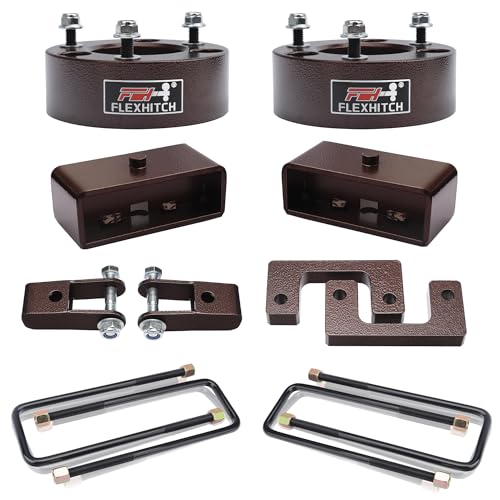
Best for: Silverado/Sierra 1500 owners seeking a balanced lift that levels the stance with a 3.5″ front and 3″ rear rise. This kit uses a front shim and a lower strut spacer to achieve the overall lift while aiming to preserve ride quality and alignment.
Why selected: The two-piece approach addresses suspension geometry to produce an even stance, which is visually appealing and functional for clearance. It’s a practical option for daily drivers who want a noticeable upgrade without moving to a full multi-link system.
Caution: The exact final lift can vary with model year and existing front-end components. Installation may require compatible upper control arms for some lift heights.
Buying Guide: How To Choose The Right Lift Kit
- Vehicle compatibility: Confirm year, make, and model; note any restrictions on Denali, Trail Boss, AT4, MagneRide, or other specialized suspensions.
- Front vs. rear lift balance: Decide if you want a level stance (front and rear balanced) or a higher front for a more aggressive look, keeping in mind driveability and potential rake differences.
- Ride quality vs. height: Higher lifts (6″ and above) impact ride comfort and safety at highway speeds. Consider shock upgrades and control arm compatibility to maintain a smooth ride.
- Material and construction: Billet aluminum spacers, forged components, and CNC processing generally provide better strength and corrosion resistance than basic steel spacers.
- Installation and alignment: Some kits require alignment after installation. Complex lifts may benefit from professional installation to ensure proper geometry and wear patterns.
- Future-proofing: If you plan larger tires, verify that the kit accommodates tire size without causing rubbing or drivetrain interference.
Frequently Asked Questions
- Do lift kits always require an alignment? Yes, most lift kits require alignment after installation to maintain proper steering and tire wear.
- Will a 3.5″ front lift affect highway stability? It can; ensure compatible upper control arms and follow manufacturer guidance for safe operation after lifting.
- Are these kits compatible with all wheel configurations? Some kits are designed for 4WD or specific models only; verify exact fitment before purchase.
- Why is the front thickness not equal to the lift height? Suspension geometry and component placement cause non-linear height changes; actual lift height can differ from spacer thickness.
- Is a higher-priced kit always better? Not necessarily. Choose based on application, ride preference, and intended use rather than price alone.