Finding the right garage door lubricant helps reduce squeaks, prevent sticking, and extend the life of tracks and hinges. This guide highlights top options for common setups, including households seeking quick, simple sprays and those needing durable, long-lasting protection. The best fit depends on door type, climate, and how often you operate the door. Below, five well-rounded choices are shown with practical notes on who benefits most from each product and why they stand out for garage door tracks.
| Product | ||
|---|---|---|
| 3-IN-ONE Garage Door Lubricant with Smart Straw | General home use; quick on-demand lubrication | Two spray options; quick-drying, residue-free |
| 3-IN-ONE Professional Garage Door Lubricant Twin Pack | Homeowners with frequent maintenance | Precision Smart Straw, long-lasting protection |
| WD-40 Specialist Silicone Lubricant | Multiple surface needs; parts exposed to moisture | Thin film, non-stick, quick drying |
| WD-40 Specialist White Lithium Grease Spray | Heavy-duty tracks, hinges, and pulleys | Thick protective coat; broad temperature range |
| 400-HD Heavy-Duty Garage Door Lubricant | Rust-prone environments; long-lasting protection | Three-way nozzle; targeted reach |
3-IN-ONE Garage Door Lubricant With Smart Straw Sprays

Best for: Homeowners seeking a simple, fast-drying solution for standard metal tracks and moving parts. The dual spray selector offers broad or pinpoint application, reducing waste and mess. Use on metal components between moving parts to curb rust and squeaks, with the promise of quick drying and a non-sticky finish to minimize dirt attraction.
Why chosen: This option emphasizes fast performance and ease of use, essential for busy households where door operation is frequent. It protects metal surfaces and prevents corrosion while keeping parts clean and moving smoothly.
Limitation: The product may need more frequent reapplication in harsh climates or heavy-use scenarios to maintain quiet operation.
3-IN-ONE Professional Garage Door Lubricant With Smart Straw

Best for: Users who want a premium-grade option with a refillable precision straw for both narrow and wide streams. This twin-pack setup suits households that perform regular maintenance on multiple doors or components. It prevents rust and reduces friction without leaving a sticky film that attracts grime.
Why chosen: The intelligent straw helps control spray pattern and avoids misplacement, making it a reliable choice for consistent lubrication routines and a quieter, smoother door operation over time.
Limitation: The higher upfront cost may be a consideration for renters or light-use garages.
Gear Hugger Multipurpose Lubricant Spray
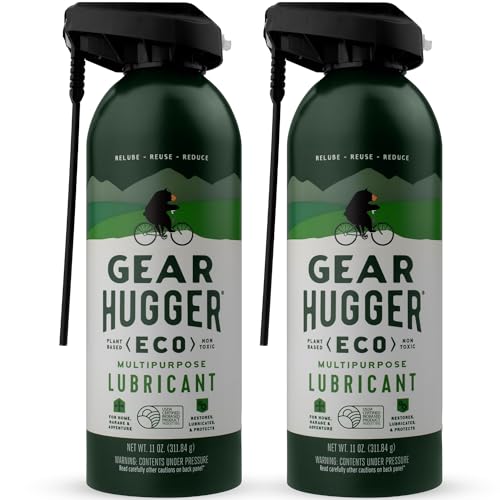
Best for: Homes needing a versatile spray that covers garage doors, sliding tracks, and other moving hardware. It can serve as a broader maintenance tool beyond garage doors when dealing with squeaks and stiffness across different fixtures.
Why chosen: It combines a deep-penetrating formula with rust resistance and a non-messy finish, making it a practical all-around option for busy households seeking fewer products.
Limitation: While effective, it may not deliver the ultra-thin film some metal parts require in extremely tight tolerances.
WD-40 Specialist Silicone Lubricant with Smart Straw Sprays

Best for: Surfaces where a silicone-based lubricant is preferred, including metal, rubber, and plastic components around the garage. The spray allows precise or fan-shaped delivery, making it suitable for hard-to-reach tracks and rollers.
Why chosen: This product provides a clean, residue-light film that reduces friction without attracting dust, ideal for environments where cleanliness and consistent performance matter.
Limitation: Silicone can repel some sealants or paints; test on unfamiliar plastics before broad use.
WD-40 Specialist White Lithium Grease Spray

Best for: Heavy-duty garage door tracks, hinges, and pulleys where a thick, long-lasting lubrication is required. The white lithium grease forms a robust film that resists water and reduces wear in tough conditions.
Why chosen: It’s well-suited for metal-to-metal friction points that see exposure to temperature variation, providing reliable protection and smoother operation over months.
Limitation: It can be more prone to attracting dust if overapplied; use a light touch on exposed exterior surfaces.
400-HD Heavy-Duty Garage Door Lubricant

Best for: Environments prone to rust or cold temperatures where durable protection is essential. This product uses a three-way nozzle for precise application to hard-to-reach areas, ensuring comprehensive coverage.
Why chosen: It focuses on long-term protection, and the nozzle design helps target difficult spots on the track and hinges, improving overall door performance and longevity.
Limitation: The heavy-duty formula may be thicker; ensure you apply sparingly to avoid buildup on seals or weatherstripping.
Buying Guide: Key Points For Choosing Garage Door Lubricants
- Application ease: Look for smart straws or dual spray options for precision and quick coverage.
- Film type: Thin, residue-free films are ideal for clean operation; thicker greases suit heavy-duty or outdoor environments.
- Surface compatibility: Silicone lubricants work well on plastic and metal, while white lithium greases offer robust protection on metal parts.
- Weather and climate: Cold-weather formulas prevent stiff movement, while moisture-resistant lubricants deter rust in humid areas.
- Parts covered: Choose products designed for tracks, hinges, and pulleys to ensure targeted lubrication where needed.
- Residue and dirt: Non-sticky or quick-drying formulas reduce dirt attraction and maintenance frequency.
FAQ
- Q: How often should I lubricate garage door tracks?
- A: Generally every 3–6 months, or when noises reappear, depending on climate and usage.
- Q: Can I use wheel or automotive grease on tracks?
- A: Not recommended; use products formulated for lightweight moving metal parts to avoid buildup and dirt attraction.
- Q: Is a silicone-based lubricant safe for rubber seals?
- A: Yes, silicone lubes are typically safe for rubber seals when used sparingly and as directed.
- Q: Should I oil or grease my garage door hinges?
- A: Use light oil or spray lubricants on hinges; reserve thicker greases for heavier, high-load areas if needed.
- Q: What’s the benefit of a three-way nozzle?
- A: It provides precise, variable spray patterns to reach tight spaces without overspray.