Answering the question “which lubricant oil is best for my chainsaw?” this guide compares top options that balance performance, environmental impact, and ease of use. The best picks suit different buyers: casual homeowners may prefer affordable, all-season formulas; professionals might lean toward durable, high-tack lubricants that resist throw-off; environmentally conscious buyers may opt for soy-based biodegradable oils. Below, five carefully selected products are analyzed to help you choose confidently for your saw, climate, and maintenance routine. A quick at-a-glance summary table is provided for quick comparison.
| Product | Best For | Keep In Mind |
|---|---|---|
| DEWALT Biodegradable Bar & Chain Oil (16 oz) | Eco-friendly daily use, electric and gas saws | Soy-based; check cold-weather performance |
| 3-IN-ONE Multi-Purpose Oil (8 OZ) | Versatile, budget-friendly lubrication | Not a dedicated bar and chain oil |
| STP Premium Bar & Chain Oil (32 Oz) | Standard duty, ready-to-use | Basic anti-wear additive package |
| Oregon Premium Bar & Chain Oil (1 Quart) | All-season, all-brand compatibility | Premium tackiness for smoother cuts |
| Prime Guard Bar & Chain Oil (1 Gallon) | High-volume needs and cold-weather performance | Higher viscosity option |
DEWALT Biodegradable Bar & Chain Oil – 16 oz

This all-season, non-toxic oil is soy-based and biodegradable, designed for both electric and gas chainsaws. It provides protection from -15°F to 500°F and minimizes environmental impact in 100% loss applications. Best for: users who want a green option without compromising performance. Better for sustainable job sites and sensitive environments. Caution: in extremely cold conditions, viscosity considerations may affect flow; pre-warm the oil if starting in freezing weather.
3-IN-ONE Multi-Purpose Oil – 8 OZ

Multi-purpose drip oil that lubricates, cleans, and protects against rust and corrosion. It offers precise application with minimal overspray, and a fill-level indicator helps when monitoring usage. Best for: those who want a single, versatile oil for various outdoor equipment beyond chainsaws. Better for small maintenance tasks and tools with moving parts. Caution: not a dedicated bar-and-chain oil; performance on the chain may vary compared to specialized products.
STP Premium Bar & Chain Oil – 32 Oz

Engineered with an anti-wear additive package to help protect the bar and chain, this oil is formulated for immediate use with chainsaws. Best for: regular maintenance where straightforward protection and ease of use are priorities. Better for users who want a ready-to-use option with predictable performance. Caution: does not emphasize heavy-duty biodegradable performance; for eco-focused use, consider soy-based formulas.
Oregon 54-026 Premium Bar & Chain Oil (32 oz)
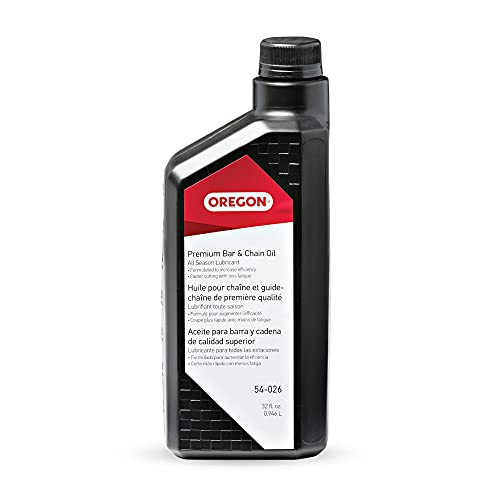
All-season lubricant designed for gas and electric chainsaws, pole saws, hedge trimmers, and more. It features extra tackiness for smoother cuts and to prevent “oil throw off.” Best for: users who run multiple tools with chains and bars who need a single, versatile oil. Better for winter use and heavy-duty seasons. Caution: some users may prefer higher or lower viscosity depending on climate and saw model.
Prime Guard Bar & Chain Oil – 1 Gallon

This one-gallon container emphasizes a protective film that reduces metal-to-metal contact and wear, maintaining lubricating properties in varying temperatures. Best for: high-volume users or professional crews needing bulk oil and consistent performance. Better for cold-weather operation due to its formulated tackiness. Caution: larger containers require proper storage to prevent contamination or moisture ingress.
Buying Guide
What features matter most when selecting chainsaw bar and chain oil?
- All-season performance: Look for formulations that resist thinning at high temperatures and maintain viscosity in cold weather.
- Biodegradability and toxicity: Soy-based, non-toxic oils are gentler on ecosystems and safer for waterways; choose these if you work near water or wildlife.
- Adhesion and tackiness: Higher tack helps keep oil on the chain, reducing throw-off and extending bar life.
- Compatibility: Most bars and chains work with standard bar oil; verify any brand-specific recommendations in your saw’s manual.
- Volume and cost per mile: For frequent users, larger containers reduce refill frequency and total cost, but require storage space and handling care.
How to choose between biodegradable versus traditional oils?
- Biodegradable options are ideal when environmental impact is a priority or when cutting near waterways or sensitive ecosystems.
- Traditional petroleum-based oils may offer broader availability and slightly different tackiness; select these if you need a widely tested, straightforward option.
What about cold-weather performance?
- Oil viscosity can thicken in colder temperatures, affecting flow. For winter use, choose an oil rated for low temperatures or pre-warm the oil before starting the saw.
Quick comparison by use-case
- Eco-conscious homeowner: DEWALT Biodegradable Bar & Chain Oil (16 oz) or Oregon Premium Bar & Chain Oil (32 oz) for all-season green performance.
- DIY and multi-tool users: 3-IN-ONE Multi-Purpose Oil (8 oz) provides lubrication with cleaning and rust protection for various gear.
- Professional crews or high-usage: Prime Guard Bar & Chain Oil (1 gallon) for bulk lubrication and steady performance in diverse conditions.
FAQs
- Q: Can I use any oil on my chainsaw bar and chain?
A: Use a dedicated bar and chain oil designed for saws; some multipurpose oils work, but performance varies with viscosity and tackiness. - Q: Is biodegradable oil safe for my environment?
A: Yes, biodegradable oils reduce environmental impact but verify local guidelines and compatibility with your equipment. - Q: How often should I lubricate the chain?
A: Lubrication frequency depends on usage and temperature; follow your saw’s manual and oil product guidelines. - Q: What is “oil throw-off” and how can I prevent it?
A: Oil throw-off is oil flinging off the chain during cutting; high-tack oils adhere better to the chain to minimize this. - Q: Do I need to warm oil in cold weather?
A: In very cold environments, pre-warming or selecting a low-temperature-rated oil can help maintain proper lubrication. - Q: Is a larger container better for frequent users?
A: Yes, larger containers lower refill frequency, but ensure proper storage and safety handling.