Answering the question “which oil cleaner works best on a driveway?” this guide highlights five effective products that target oil and grease stains on concrete, pavers, and garage floors. The best picks vary by stain severity and surface type, and they’re chosen for residential driveways, commercial use, or areas with embedded oil. This buyer’s guide helps you decide who benefits most from each formula and why. A quick summary table follows to compare core features at a glance.
| Product | Best For | Key Benefit |
|---|---|---|
| Oil Eater Original 1 Gallon Cleaner | Medium to heavy kitchen and workshop oils on washable surfaces | Biodegradable, noncorrosive, USDA approved for food service areas |
| Overnight Stain Remover for Concrete | Old, deep-set oil stains on driveways, pavers, garage floors | Oil-eating microbes pull oils up from beneath the surface |
| CHOMP! Concrete Oil Stain Remover (128 oz) | Large, stubborn oil stains on concrete and brick | Deep-penetrating, safe formula without bleach or acids |
| Oil Stain Fighter 10oz Driveway Size | Embedded oil stains on driveways and patios | Dry application with enzyme action; no water required |
| Mission Control 32 oz Concrete Oil Stain Remover | Garage floors, driveways, patios with oil and grease | Easy to use; lifts stains and lightens discoloration |
Oil Eater Original 1 Gallon Cleaner
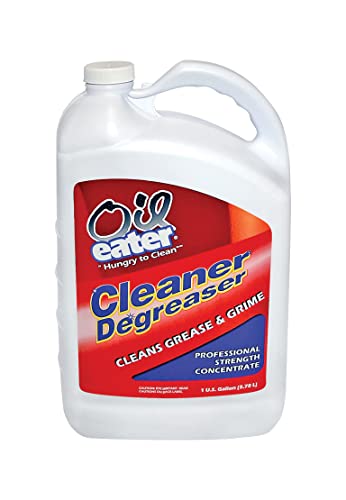
Product overview: Oil Eater Original is a versatile degreaser designed to dissolve grease, oil, and dirt from washable surfaces. Its formula is biodegradable and noncorrosive, with USDA approval for use in food service facilities. This makes it a practical choice for residential driveways that see automotive fluids and everyday spills. It’s best for homeowners seeking a single cleaner that can handle both garage floors and exterior concrete without harsh solvents.
Who it’s best for: Homeowners needing a reliable, all-purpose degreaser that’s safer for surrounding plants and pets while still tackling tough stains. This product is also suitable for light commercial cleanup in facilities adhering to USDA guidelines.
Why selected: Strong grease dissolution combined with a biodegradable, low-hazard profile makes it a balanced option for daily maintenance and occasional heavy staining.
Limitations: For deeply set or very old stains, a second treatment may be required to achieve a full lift, and some surfaces may require rinsing after use to remove residue.
Overnight Stain Remover for Oil Stains on Concrete
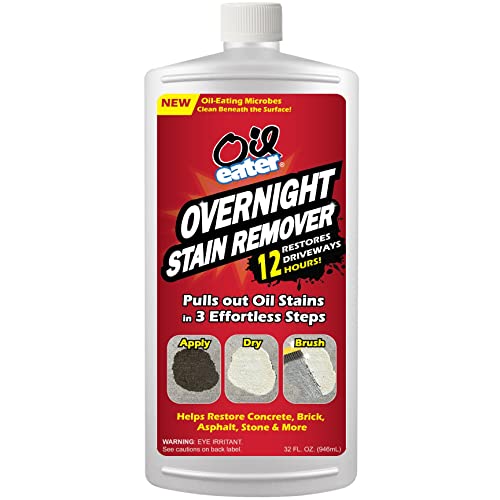
Product overview: This Overnight Stain Remover uses oil-eating microbes to pull oil stains from beneath the surface of concrete, asphalt, brick, and stone. It works best on porous materials and is designed for both fresh and older stains. It’s a good fit for homeowners who want a “set-it-and-forget-it” approach—apply, let sit, and sweep away the dry residue the next day.
Who it’s best for: Buyers dealing with stubborn, older oil stains who prefer a product that penetrates below the surface. It is also well-suited for patios, driveways, and garages with a mix of oil leaks and grease.
Why selected: The microbe-based action targets embedded oils, offering a different mechanism than surface cleaners. It’s especially effective when surface scrubbing is impractical.
Limitations: Results may require multiple applications for very deep or widespread staining, and you should avoid applying to damp surfaces to ensure effective drying and powder formation.
CHOMP! Concrete Oil Stain Remover (128 oz)

Product overview: CHOMP!’s Pull It Out formula uses deep penetration to lift oil and grease from concrete and brick. It’s designed for heavy stains from transmissions, brake fluid, and other automotive leaks. The product is presented as safer than harsher chemical options, avoiding bleach and acids while providing a straightforward, dry-to-dry application.
Who it’s best for: Large driveways or commercial spaces with long-standing oil stains where a thorough lifting action is needed without mechanical scrubbing. Ideal for users who want a simple pour-and-dry method.
Why selected: Its deep-penetrating action makes it strong for embedded stains, and the absence of harsh chemicals reduces potential surface damage.
Limitations: It requires waiting for the formula to dry and then sweeping away chalk-like residue, which may be slower than immediate rinsing options.
Oil Stain Fighter 10oz Driveway Size

Product overview: Oil Away’s Oil Stain Fighter is an enzyme-based cleaner designed for embedded oil stains on driveways and patios. It uses dry application to start working without water, making it convenient for areas where rinsing is difficult. The formula targets oil, grease, and grime and aims to brighten concrete surfaces over time.
Who it’s best for: Property owners who prefer dry, no-water applications and want a product that gradually degrades oils through enzymes. It’s also suitable for areas where water use is limited or undesirable.
Why selected: The dry-application feature offers low-effort use and reduces runoff concerns, which can be beneficial in driveways with adjacent landscaping.
Limitations: Dry application may require longer waiting periods for noticeable results, and effectiveness can vary with stain age and exposure.
Mission Control 32 oz Concrete Oil Stain Remover

Product overview: Mission Control’s 32 oz formula is designed to lift oil and grease from bare concrete. It is noted for lightening discoloration left behind, and it’s intended for use on garage floors, driveways, patios, and workshop slabs. The product emphasizes a simple application process with immediate agitation and rinsing guidance.
Who it’s best for: Homeowners seeking a straightforward cleaner for moderately stained concrete areas without needing heavy-duty solvent cleaners. It’s suitable for monthly maintenance and occasional deep cleaning.
Why selected: It provides a balanced option between heavy-duty cleaners and everyday maintenance products, helping restore color and appearance with minimal effort.
Limitations: Deep, set-in stains may not vanish completely in a single treatment, particularly on heavily weathered surfaces.
Buying Guide: How To Choose The Right Oil Cleaner For Driveways
- Consider stain depth: Embedded or old stains may respond better to enzymes, microbes, or deep-penetrating formulas.
- Surface type matters: Porous concrete, brick, and pavers react differently; choose a product designed for the material you’re treating.
- Dry vs. wet application: Dry formulations are convenient where water access is limited, but wet cleaners can act faster on fresh spills.
- Safety and environmental impact: Biodegradable and noncorrosive options reduce risk to plants and pets, especially on residential driveways.
- Maintenance vs. heavy-duty tasks: For regular maintenance, a milder cleaner may suffice; for severe stains, select a product marketed for heavy-duty cleaning.
Frequently Asked Questions
- What is the best cleaner for oil stains on driveways? This depends on stain age and porosity. For embedded or older stains, enzyme-based or microbial formulas can be effective, while surface cleaners work well for recent spills.
- Do I need to rinse after applying these cleaners? Many products recommend rinsing or sweeping away residue after drying. Always follow the product specific instructions for best results.
- Are enzyme-based cleaners safe for pets? Most enzyme-based cleaners are formulated to be safer for pets and plants, but verify labeling and follow proper usage guidelines.
- Can I use these cleaners on asphalt? Some cleaners are designed for concrete, brick, or stone. Check the surface compatibility on the product page or packaging before use.
- Will these cleaners remove all oil stains? Deeply set or weathered stains may require multiple applications or a combination of products for complete lift.
- Is scraping necessary after treatment? Some products require brushing or sweeping away dry residue as part of the cleaning process.