Yes, the best oils for door locks reduce squeaks, prevent rust, and keep keys turning smoothly. This guide matches top products to common buyers: homeowners seeking quiet, long-lasting lubrication; DIY enthusiasts needing precise application; and professionals who want fast, reliable performance in tight spaces. Below is a quick buyer’s snapshot of five standout options, followed by in-depth product sections and a practical buying guide.
| Product | Brand | Best For | Key Benefit |
|---|---|---|---|
| 3-IN-ONE Lock Dry Lube, 2.5 OZ | 3-IN-ONE | Stuck or stiff door locks | Dries clear, quick-drying, narrow-spread straw |
| WD-40 Specialist Penetrant | WD-40 Specialist | Stubborn rusted parts and locks | Fast-acting penetration with Smart Straw |
| Houdini Lock Lube Professional | Houdini | Electronic and non-electrical locks | Greaseless, dielectric-safe formula |
| LIQUIDFIX Door, Lock & Hinge Lubricant | LIQUIDFIX | Door hinges and sliding tracks | Two bottle sizes for easy application |
| 3-IN-ONE Multi-Purpose Oil, 8 OZ | 3-IN-ONE | Versatile small parts lubrication | Lubricates, cleans, protects against rust |
3-IN-ONE Lock Dry Lube, 2.5 Oz

3-IN-ONE Lock Dry Lube is a clear, quick-drying lubricant designed to loosen and protect stuck locks. It provides a narrow straw for tight spaces or a wider spray pattern to refurbish an entire lock. It dries clear and is safe on metal, wood, and most plastics (excluding clear polycarbonate and polystyrene). Best for: users dealing with tight, stubborn locks or those who want a quick-touch-up spray. Caution: avoid long-term buildup in very high-friction areas where a grease-based product might perform differently.
WD-40 Specialist Penetrant with Smart Straw

WD-40 Specialist Penetrant provides a low-odor, fast-acting solution to jammed threads, locks, and hinges. The Smart Straw allows two spray modes for precise targeting, and a protective layer reduces future corrosion. Best for: tackling rusted locks and stubborn hardware. Caution: its spray action may not be ideal for extremely delicate electronic components without confirming compatibility.
Houdini Lock Lube Professional

Houdini Lock Lube is a greaseless, graphite-free spray designed for locks, hinges, latches, and electronics. It cleans deeply and leaves no sticky residue, while its dielectric formula is safe around electrical components. Best for: locksmiths and homeowners seeking a clean, reliable lubricant that won’t gum up electronic devices. Caution: as a lubricant spray, it may require reapplication in high-use environments.
LIQUIDFIX Door, Lock, and Hinge Lubricant
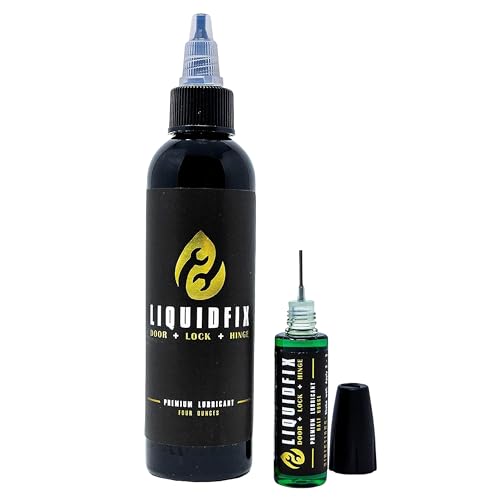
LIQUIDFIX offers a multi-purpose solution for doors, locks, hinges, and tracks. It helps silence squeaks instantly and comes in two bottle sizes for easy application and refills. Best for: homeowners seeking an all-in-one lubricant for multiple door hardware components. Caution: check compatibility with sensitive finishes before frequent use on delicate surfaces.
Qucship Door Hinge Lubricant 1 oz Needle Oiler

Qucship provides a premium door hinge lubricant with a long-needle applicator for precise, mess-free lubrication in tight spaces. Best for: hinges, locks, and other small moving parts where precision matters. Caution: small bottle may require frequent reapplication in high-use doors.
Buying Guide
Key considerations when selecting door-lock lubricants include the type of mechanism (deadbolt, electronic, or cylinder), the space available for application, and the desired residue (grease vs. dry). Choose a product with a compatible base (grease, oil, or dry formula) for your hardware and environment.
- Application space: Look for a needle oiler or narrow straw if you need precise drops in tight keyways.
- Residue preference: Grease-based lubes last longer but can attract dust; dry or greaseless formulas reduce buildup but may require more frequent reapplication.
- Electronic and dielectric safety: If you have electronic locks, prefer dielectric or electronics-safe formulas.
- Rust and corrosion protection: Penetrants with rust inhibitors help in outdoor or high-humidity settings.
- Multi-purpose vs. lock-specific: Multi-purpose oils cover many parts, while lock-specific products target hinges, latches, and cylinders more precisely.
Frequently Asked Questions
- Q: Can I use any oil on door locks? A: Use dedicated lock lubricants or dry lubricants designed for locks to avoid residue buildup.
- Q: How often should I lubricate a door lock? A: Reapply when you notice stiffness, squeaks, or after cleaning a lock assembly.
- Q: Are greaseless formulas better for electronics? A: Yes, greaseless and dielectric-safe formulas are generally safer around electronic components.
- Q: Should I oil hinges separately from locks? A: It’s often best to treat hinges and locks with the same lubricant if they are already combined in a product, but separate lubrication is acceptable if needed for specific parts.
- Q: Is penetrating spray necessary for rusted locks? A: For severely rusted components, a penetrating spray can help loosen parts before lubricating.
- Q: Can oil damage plastic parts? A: Some oils can affect certain plastics; check the product’s compatibility on the label before use.