Looking to reduce wear, noise, and friction while boosting fuel economy and horsepower? This guide highlights top engine oil treatments that are well-suited for American drivers seeking smoother operation and longer engine life. Each pick is explained with clear, practical guidance on who should choose it, why, and any limitations to consider. The top five products focus on gasoline and diesel engines, including high-mileage vehicles and performance-minded builds.
| Product | Brand | Typical Size | Best For |
|---|---|---|---|
| Prolube Oil Treatment (1 QT) | Prolube | 1 Quart | Daily drivers and work vehicles needing quieter operation |
| Prolube Oil Treatment (6 oz) | Prolube | 6 oz | Compact dosage for quick maintenance or topping off |
| Prolube Oil Treatment (16 oz) | Prolube | 16 oz | Regular oil changes with stronger protection for longer intervals |
| Lucas Oil 10001 Heavy Duty Oil Stabilizer | Lucas Oil | 1 Quart | Vehicles with higher mileage or older seals needing extra protection |
| Rislone 4102 XTREME LUBE | Rislone | 16.9 oz | Engines requiring sludge removal and broad-temperature protection |
Prolube Oil Treatment – Engine Oil Additive (1 Quart)
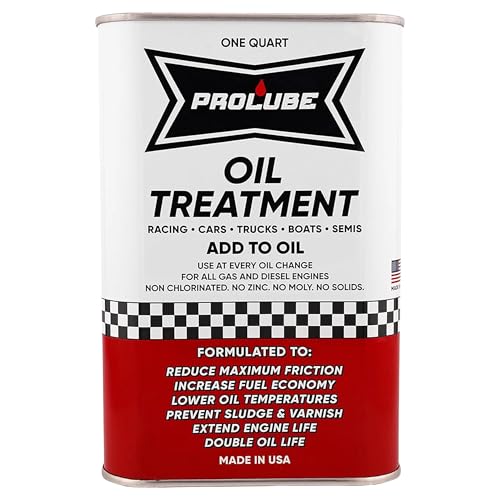
Best for: Daily drivers and light-to-moderate heavy-use vehicles needing quieter operation and smoother performance. The product promises increased horsepower, reduced noise and vibration, and improved efficiency by lowering internal friction. Its strong wear reduction claim supports vehicles that see frequent stop-and-go driving or heavier workloads.
- Key benefits: increases horsepower, reduces engine noise, smooths vibrations, and improves overall efficiency.
- Fuel economy angle: formula aims to minimize friction, helping engines run cooler and more efficiently over time.
- Usage note: suitable for gasoline and diesel engines; can be used alongside regular oil changes as part of maintenance intervals.
Caution: While performance claims are compelling, results vary by engine condition and operating environment. Avoid using this additive if your engine seals show obvious defects without professional inspection.
Prolube Oil Treatment – 6 oz

Best for: Short-term maintenance or topping off in smaller engines, vintage cars, or motorcycles where a quick friction-reducing boost is desired between oil changes.
- Notes: Shares the same core benefits as the quart version—friction reduction, noise suppression, and improved lubrication.
- Limit: Smaller quantity means fewer ongoing protection intervals; may require more frequent reapplication depending on usage.
Prolube Oil Treatment – 16 oz

Best for: Regular maintenance with stronger protection for longer intervals or engines that endure heavier workloads. The larger volume supports more robust lubrication and friction mitigation across more miles per oil change.
- Key advantages: consistent reduction in wear, noise, and vibration; potential long-term fuel economy benefits from reduced friction.
- Best practice: pair with standard oil change schedules to maximize protection.
Limitation: Heavier duties or high-mileage engines may still require additional treatments or seals inspection if leaks are present.
Lucas Oil 10001 Heavy Duty Oil Stabilizer

Best for: High-mileage vehicles and older engines needing an extra cushion against friction and wear. The stabilizer provides a thick protective layer to reduce metal-to-metal contact and may support stop-leak performance in some cases.
- Key benefit: 100% petroleum-based formula aimed at reducing wear and protecting engine life across a broad temperature range.
- Consideration: While it offers protection, it is a stabilizer rather than a full synthetic additive; evaluate compatibility with your current oil type.
Rislone XTREME LUBE Maximum Performance

Best for: Engines that accumulate sludge or varnish and need cleaning action combined with protective lubrication across temperatures. The formula emphasizes sludge removal and quieter lifters, with a focus on high-temperature resilience.
- Highlights: removes and prevents sludge, quiets lifters, and protects against wear across a broad temperature range.
- Limitation: Sludge-removal claims can depend on existing deposits; not a substitute for thorough cleaning in severely clogged engines.
Lucas Oil 10003 Fuel Treatment

Best for: Both gasoline and diesel engines requiring fuel-system cleaning and lubrication to improve efficiency. This option treats fuel directly, aiming to optimize injector performance and combustion.
- Note: This is a fuel additive; it complements oil treatments by addressing fuel-system cleanliness.
- Consideration: It should be used as part of a holistic maintenance plan, not as a sole solution for mechanical issues.
Buying Guide
What should I look for in an engine oil treatment?
Match the product to your engine type (gas or diesel), mileage, and driving conditions. Consider viscosity compatibility with your current oil and any existing engine concerns, such as leaks, sludge, or worn seals.
Is a high-mileage engine better suited for these additives?
Yes for many high-mileage engines. Stabilizers and oil treatments can reduce wear and preserve seals, but they don’t fix major mechanical problems. For engines with significant leaks or severe wear, consult a professional.
How do I choose between a compact 6 oz bottle and a quart-size bottle?
Choose based on your oil-change schedule and engine size. Smaller bottles are convenient for topping off or trial usage, while quart or larger sizes provide longer-term protection and cost-per-usage benefits for regular maintenance.
Can fuel treatment additives replace oil additives?
No. Fuel treatments target fuel-system cleanliness and combustion efficiency, while oil treatments focus on lubrication, wear reduction, and viscosity protection inside the engine. Using both where appropriate can be beneficial as part of a broader maintenance plan.
Are there any risks or precautions?
Follow the application directions and do not exceed recommended doses. If an engine shows symptoms of a mechanical issue (knocking, severe overheating, or oil consumption), stop using additives and seek professional diagnostics.
How do I interpret compatibility and performance claims?
Look for concrete benefits tied to wear reduction, temperature stability, and friction reduction. Claims like “up to 45% wear reduction” should be understood as typical expectations under certain conditions; actual results may vary by engine design and operating environment.
What is the best approach to using these products?
Use additives as part of a regular maintenance routine aligned with the manufacturer’s oil-change schedule. Start with the product that best matches your engine’s mileage and usage, monitor performance, and adjust as needed.
FAQ
- Do oil treatments void warranties? Generally, they do not, but check your vehicle’s warranty terms and consult a professional if in doubt.
- Will these additives improve fuel economy for all engines? They can help in many engines by reducing friction, but results vary with design and driving conditions.
- Can I use more than one additive at a time? It’s typically not necessary and could cause compatibility issues. Choose one formulation recommended for your engine and follow guidelines.
- Are these products safe for diesel engines? Many are formulated for both gas and diesel engines, but always verify the label for your specific engine type.
- When should I stop using an additive? If you notice new leaks, unusual noises, or worsening performance, discontinue use and consult a mechanic.