Direct answer: Use a dedicated oxidation remover designed for automotive finishes to restore color, gloss, and clarity. The top picks below are best for: daily drivers needing mild to moderate correction, older vehicles with dull clear coats, or project cars requiring deeper correction. Each product section explains who it’s best for, why it was selected, and a practical limitation to consider.
Overview of top picks:
| Product | Best For | Why It Stands Out |
|---|---|---|
| Meguiar’s Ultimate Compound | Most DIY enthusiasts seeking a showroom-like finish | Removes scratches, swirls, and oxidation while restoring color and gloss; safe on clear coats. |
| ABRO Rubbing Compound | Strong correction for oxidized, dull paint | Fast-cut formula designed for deeper correction before polishing/Waxing. |
| Chemical Guys C4 & P4 Combo | Two-step correction and refinement | Fast defect removal with a precise polishing step for depth and shine. |
| Oxide Reducing Emulsion (OxideOff) | Easy DIY restoration of faded finishes | Restores color and clarity with a simple application without heavy rubbing. |
| Veksis Paint Deepoxidation Remover | Professional-grade, non-abrasive restoration | Deep oxidation removal while preserving clear coat; non-abrasive for safety. |
Meguiar’s Ultimate Compound – Pro-Grade Car Scratch Remover

Best for: DIY enthusiasts and car owners who want a versatile, showroom-ready finish. This compound removes scratches, swirls, and oxidation while restoring color and clarity. It is safe for clear coats and gloss paints when used as directed, offering a balance of cutting power and finishing ability.
Why selected: Meguiar’s Ultimate Compound is widely regarded for its ability to correct a range of imperfections with a single-step approach. It provides a show-ready gloss and is usable by hand or with a polisher, making it a flexible option for home detailers.
Limitations: For deep, heavy defects or severe oxidation, multiple steps or stronger compounds may be required. Always test on a small area first to confirm paint compatibility.
ABRO Rubbing Compound 10 oz

Best for: Vehicles with dull, oxidized paint requiring stronger correction before polishing. It’s a fast-cut compound designed to reduce surface oxidation, scuffs, swirls, and light scratches, setting up a smoother surface for polishing and waxing.
Why selected: ABRO’s fast-cut formula is effective when oxidation is clearly visible and the paint looks chalky. It provides a direct path from oxidation removal to a refined finish with a follow-on polish or wax.
Limitations: Aggressive cutting can leave micro-marring if overused. Use with light presión and follow with a polish to restore depth and gloss.
Chemical Guys C4 & P4 Clear Cut & Polish Kit
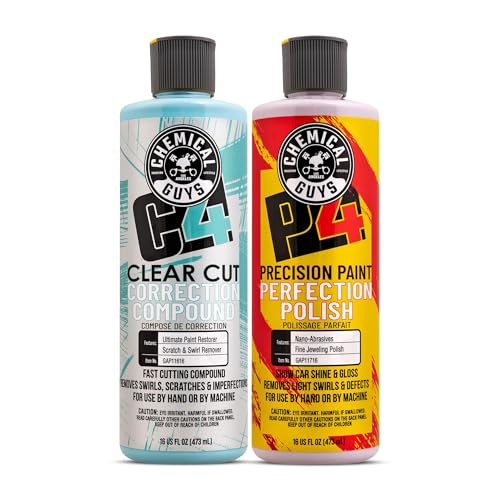
Best for: Detailers who want a two-step process for fast defect removal and a refined, high-gloss finish. This kit pairs a cutting compound with a precision polish for a show-quality result.
Why selected: The combination addresses both defect removal and surface refinement, helping achieve a balanced outcome without needing multiple separate products. It’s well-suited for refreshed color and depth after oxidation removal.
Limitations: Requires an additional wax or sealant to maximize protection, as this kit focuses on correction and refinement rather than long-term protection.
Oxide Reducing Emulsion – OxideOff
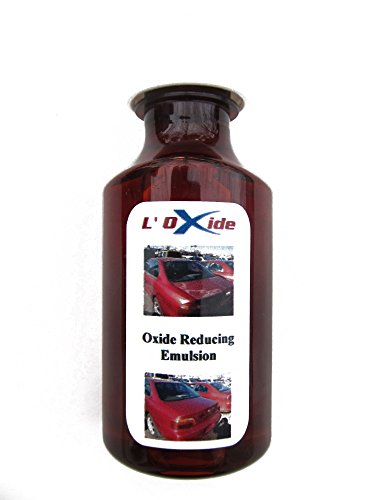
Best for: Car owners seeking a straightforward, DIY restoration of faded finishes and headlight clarity without heavy rubbing or sanding. It’s designed to address oxidation and dullness in a user-friendly way.
Why selected: This emulsion provides a simple approach to restoring color and shine, especially for those who want a less aggressive method than traditional rubbing compounds. It also claims to rejuvenate plastic and trim without complex steps.
Limitations: Results may vary with severe oxidation or deep staining; deeper work may require multiple applications or combination with a polishing step.
Veksis Paint Deepoxidation Remover – 500ml

Best for: Professional-grade restoration of faded or oxidized automotive finishes with a non-abrasive approach. Suitable for multiple paint types, including clear coats, ceramic coatings, and PPF.
Why selected: Veksis targets deep oxidation with a non-abrasive formula, making it safer for a longer-term finish while still delivering noticeable color and gloss improvements. It’s a good option for those who want a safer, professional-level product.
Limitations: As a deeper restoration product, it may require careful application and follow-up polishing to achieve the final high-gloss result.
Buying Guide
What to consider when choosing an oxidation remover for cars
- Severity of oxidation: Light oxidation may respond to smoother polishes; heavy oxidation often benefits from stronger compounds or a two-step approach.
- Paint type and finish: Clear coats, single-stage paints, gel coat finishes, and matte or ceramic coatings react differently to abrasive products. Choose accordingly.
- Application method: Hand application vs. machine polishing affects cut and finish. Beginners may prefer gentler formulas.
- Expected finish: Do you want a showroom gloss, or is the goal simply to restore color and depth? Some products emphasize tint restoration, others focus on scratch removal.
- Protection follow-up: After oxidation removal, consider a polish, sealant, or wax to protect the refreshed surface.
- Ease of use: If you want a straightforward DIY job, look for all-in-one or two-step kits that minimize training requirements.
- Safety and compatibility: Ensure the product is safe for your vehicle’s finish and any coatings. Test on a small area first.
FAQ
- What is oxidation on car paint?
- Can I use car polish to remove oxidation?
- Is it safe to use these products on all finishes?
- Should I seal the paint after using oxidation remover?
- How many steps are needed for best results?
- Can these products restore headlights and plastic trim?
Oxidation is a chemical combination that dulls the paint’s surface, often caused by sun exposure, weather, and environmental contaminants.
Polish can help refine the surface after oxidation is removed, but dedicated oxidation removers or compounds are typically more effective for deeper issues.
Most products are formulated for common automotive finishes, but always check the label and test a small area first.
Yes. Applying wax, sealant, or ceramic coating after oxidation removal helps protect the refreshed surface from future oxidation and UV damage.
Many projects benefit from a two-step approach: a cutting compound to remove defects, followed by a polishing product for gloss and clarity. Some all-in-one products may simplify this process.
Some formulations claim to address headlights and trims; however, verify compatibility for any non-paint surfaces and follow manufacturer guidelines.