Answering the need for a durable, heat-resistant finish on engine blocks, this guide highlights top high-heat paints that resist oil, gas, and intermittent engine temperatures. The selections are best for DIY enthusiasts, professional restorers, and anyone refinishing engine components. Each pick emphasizes adhesion, heat tolerance, and rust resistance to help protect metal surfaces under demanding conditions.
Below is a quick comparison of the five chosen products. Use this table to compare heat tolerance, finish, and coverage at a glance.
| Product | Best For | Heat Tolerance | Finish | Coverage |
|---|---|---|---|---|
| Rust-Oleum High Heat Primer (Gray) — 12 oz | Priming bare metal before color coats | Up to 1000°F | Matte gray primer | Up to 12 sq ft |
| Rust-Oleum Engine Enamel Gloss Black — 11 oz | Engine components exposed to heat | Up to 600°F | Gloss black | Up to 12 sq ft |
| Seymour EN-66 Hi-Tech Engine Spray Paint — AMC Blue | Durable coating for engines and transmissions | Up to 300°F | Engine enamel finish | — |
| RAPTOR Engine Enamel Primer — Bright Red | Professional-grade primer for high-heat enamel | Up to 950°F (with ceramic resins) | Primer (color varies) | — |
| Rust-Oleum Engine Enamel Gloss Blue — 11 oz | Automotive parts with intermittent heat | Up to 600°F | Gloss blue | Up to 12 sq ft |
Rust-Oleum High Heat Primer, Gray
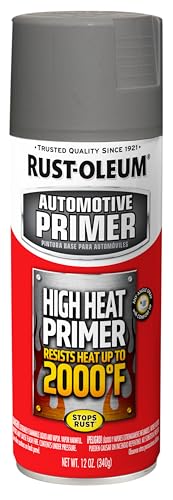
Product overview: Oil-based primer designed for metal surfaces such as automotive engines and mufflers. The Stops Rust formula offers rust protection as a base coat for cars and trucks. Coverage reaches up to 12 sq ft, with a dry-to-touch time of about 30 minutes and topcoating possible after one hour.
Who it’s best for: Beginners or DIYers priming bare engine blocks or metal parts before applying color coats. This primer helps improve adhesion and corrosion resistance on hot metal surfaces.
Why selected: A high-heat primer is a practical first step in any engine-block painting job, especially when you plan multiple coats or color finishes.
Caution: Ensure proper ventilation and follow the label’s recoat window to avoid wrinkling when applying subsequent coats.
Rust-Oleum Engine Enamel Gloss Black

Product overview: Engine enamel with rust-preventive formula that resists oil, gas, and environmental elements. Designed for automotive parts that face intermittent temperatures up to 600°F. Dries to touch in 20 minutes and covers up to 12 sq ft; proper curing per the label ensures best performance.
Who it’s best for: Those seeking a durable, glossy black finish on engine components that see regular exposure to automotive fluids and heat fluctuations.
Why selected: It balances strong heat resistance with a visually appealing gloss finish, making it a solid all-around option for engine blocks and related parts.
Caution: Optimal results require curing per label directions to prevent premature softening in extreme heat scenarios.
Seymour EN-66 Hi-Tech Engine Spray Paint, AMC Blue

Product overview: Engine enamel coating designed for engines, transmissions, and other metal automotive equipment needing a durable finish. Heat resistant up to 300°F for engine-related applications, and it dries to the touch in about 5 minutes with tack-free status around 30 minutes for quicker project completion.
Who it’s best for: Buyers needing a specialized color—AMC Blue—in a fast-drying engine enamel that provides reliable protection during typical engine service temperatures.
Why selected: The quick dry time helps speed timelines on mid-range engine projects, with a focus on sustained protection against heat and environmental exposure.
Caution: Lower heat tolerance means this is better suited for components not near the hottest exhaust areas or turbo zones.
RAPTOR Engine Enamel Primer — Bright Red

Product overview: A professional-grade enamel primer designed for high-heat applications. This primer uses ceramic resins to resist temperatures up to 950°F. It is intended to be used before applying a RAPTOR Engine Enamel Color Coat for maximum performance.
Who it’s best for: Projects requiring maximum heat resistance in a two-step system, especially when a high-temperature coating is planned on engine blocks or parts.
Why selected: The high-temperature capability makes it suitable for engine areas subjected to intense heat, such as near exhaust manifolds and hot running components.
Caution: This primer is part of a system; ensure you pair it with the compatible RAPTOR color coat to achieve expected performance.
Rust-Oleum Engine Enamel Gloss Blue

Product overview: Engine enamel designed for automotive parts subject to intermittent heat up to 600°F. The rust-preventive formula guards against oil, gas, and humidity, while the 20-minute dry-to-touch time allows quicker project finishes. Up to 12 sq ft coverage per can is common.
Who it’s best for: Those wanting a vibrant blue finish on engine components that still delivers strong protection from heat and corrosion.
Why selected: Combines an appealing color with solid performance in typical engine environments, suitable for dashboards, valve covers, or accessory brackets.
Caution: For best results, follow curing instructions to ensure the coating fully hardens before exposure to extreme heat or fluids.
Buying Guide
What to consider when choosing engine block paint
- Heat tolerance: Match the expected operating temperatures. Some enamel paints handle up to 600°F, while primers may tolerate higher temps when used as a base.
- Finish and color: Decide between gloss, semi-gloss, or matte finishes. Gloss helps with visibility and aesthetics; matte tends to hide imperfections.
- Substrate compatibility: Ensure the paint adheres to bare metal or primed surfaces without peeling in high-heat zones.
- Durability factors: Look for rust resistance, oil/gas resistance, and ceramic additives for extra heat management.
- Drying and curing: Note dry-to-touch times and full cure periods to plan project timelines and recoat windows.
- Application method: Aerosol sprays offer convenience for engine bays, while primers and coatings may require spray equipment for uniform coverage.
Practical tips for best results
- Prepare the surface by cleaning and degreasing before applying primer or enamel.
- Apply thin, even coats with adequate drying time between layers to avoid runs or blisters.
- Use primer where needed to improve adhesion and corrosion resistance on bare metal.
- Follow the manufacturer’s curing instructions to achieve optimal film strength and heat resistance.
FAQ
- Q: Can these paints be used on all engine parts?
A: Yes, but note specific temperature limits. Choose higher-heat options for exhaust areas and lower-heat enamel for non-exhaust components. - Q: Do I need a primer before enamel?
A: Primers improve adhesion and corrosion protection, especially on bare metal or surfaces previously prepared for paint. - Q: How long before running the engine after painting?
A: Allow full cure per product instructions before starting the engine to prevent coating damage. - Q: Are these paints resistant to oil and fuel exposure?
A: Many products include rust- and oil-resistant formulas designed for automotive environments; check the label for details. - Q: Can I apply color coats over primer within the same day?
A: Recoat windows vary by product; follow label directions to ensure proper adhesion and durability. - Q: Is gloss or blue finish better for engine blocks?
A: Gloss finishes are easier to wipe clean and inspect; color choice depends on aesthetics and visibility preferences.