Choosing the right polishing machine for cars helps you achieve swirl-free finishes, remove oxidation, and restore gloss efficiently. This guide highlights five reliable options suited for different budget levels and user needs. Best for beginners, best for heavy-duty polishing, best cordless convenience, and best overall value—these picks cover common detailing scenarios for everyday car care.
Summary table of selected products:
| Product | Best For | Key Benefit | Notes |
|---|---|---|---|
| Niusken Cordless Car Buffer Polisher Kit | Beginners and cordless enthusiasts | Dual 21V batteries with multiple attachments | Overheat protection; battery-specific system |
| AOBEN Car Buffer Polisher | All-around polishing | 6 speeds, ergonomic dual-handle design | Wider RPM range for various materials |
| OFISPEED Buffer Polisher | Heavy-duty polishing | 1600W motor, 7-speed control | Detachable handle; solid heat management |
| SPTA 5-Inch/6-Inch Polisher Kit | Value-focused buyers | Two pad sizes with multiple discs | 110V standard power |
| ZOTA Buffer Polisher | High-power performance | 1600W motor, 7 speeds | Long power cord option |
Niusken Cordless Car Buffer Polisher Kit

Niusken’s cordless buffer offers a beginner-friendly entry into orbital polishing with a dual-24V-style battery approach and a 6-speed range (2800–5800 RPM). The LED display keeps you informed about speed and battery level, aiding consistent results. This model suits hobbyists detailing personal vehicles or professionals who want to work without cords and clutter.
Best for: Beginners who want cordless operation and a flexible accessory set for waxing, polishing, and light scratch removal. It’s also suitable for smaller vehicles where a quick, swappable battery setup speeds up sessions.
Limitation: Battery system is not compatible with other brands, so you’ll be tied to Niusken-specific packs.
AOBEN Car Buffer Polisher
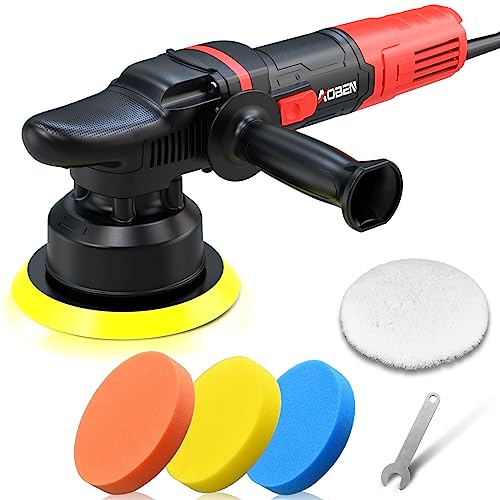
AOBEN offers a traditional corded dual-action polisher with a 6-inch pad and a broad 1000–4500 RPM range. Its six-speed settings accommodate delicate waxing and heavy oxidation removal, while the ergonomic, dual-handle design reduces fatigue during extended sessions.
Best for: Users who value a broad RPM spectrum and stable operation with different grip configurations. Choose this if you expect to handle both gentle waxing and more aggressive polishing on mid- to large-size vehicles.
Limitation: Motor may stop under high pressure at the lowest speeds, requiring a speed adjustment to resume power.
OFISPEED Buffer Polisher

OFISPEED delivers a powerful 1600W motor and a 7-speed range in a compact body. The variable speeds accommodate both fine detailing and heavy decontamination tasks. A built-in constant-power control helps manage heat during longer polishing sessions, supporting consistent results with reduced glare and haze.
Best for: Detailers who need reliable power and a wide speed range for both finishing and defect removal. The detachable handle also helps customize grip for larger vehicles or tight spaces.
Limitation: Heavier than some cordless options, which may affect maneuverability for prolonged use.
SPTA 5-Inch/6-Inch Polisher Kit

SPTA’s kit includes multiple pad sizes and a 110V motor with a 6-speed control dial. The dual-action design helps achieve a swirl-free finish while providing enough power for moderate oxidation removal. The included pads and bag offer value for those building a starter detailing setup.
Best for: Value-conscious buyers looking for a complete polishing kit with versatile pad options and a reliable 750W motor. Suitable for hobbyists polishing small to mid-size vehicles.
Limitation: Not as powerful as some 1600W models, which may limit heavy oxidation removal on very hard paints.
ZOTA Buffer Polisher

ZOTA packs a 1600W motor with seven variable speeds, focusing on delivering sustained power for polishing and wax application. The brushless motor design contributes to higher efficiency and longer life, while the 13.1 ft upgraded power cord option adds flexibility for larger jobs or in garages with outlets far from the car.
Best for: Professionals and serious hobbyists who need continuous power and long reach. It’s well-suited for repetitive sessions on multiple vehicles or larger surfaces.
Limitation: Heavier operation may require more effort when detailing small or intricate areas.
Buying Guide
What matters most when choosing a car polishing machine?
- Power and speed range: Higher wattage and broader RPM options give you more capability for heavy oxidation removal and fine finishing.
- Orbital vs rotary: Dual-action (orbital) polishes reduce swirl risk, while rotary machines offer more aggressive cutting. Choose based on your goal and experience level.
- Corded vs cordless: Cordless machines improve mobility and reduce cable clutter, but may require battery management. Corded units offer consistent power for longer sessions.
- Weight and ergonomics: Lighter designs with adjustable handles reduce fatigue during extended polishing tasks.
- Included accessories: Pads, backing plates, and wax/abrasive options influence versatility and setup cost.
- Safety and heat management: Look for heat control features or overheat protection to protect both the tool and the paint.
How to pick by task
For light waxing and swirl-free finishing, a 6–7 inch dual-action polisher with 1000–4500 RPM is often sufficient. For removing oxidation on harder paints or larger surfaces, a 1600W motor with a wider RPM range and a long power cord can speed up work and maintain consistent power.
What to avoid
Avoid models with very low power for heavy defect removal, or those lacking heat management in high-use scenarios. Be mindful of accessories compatibility and battery ecosystem if you choose a cordless option.
Maintenance and care tips
- Regularly clean dust and debris from vents and pads after use.
- Inspect pads for wear and replace as needed to maintain cutting efficiency.
- Store with a light coating of protective oil on metal backing plates, if recommended by the manufacturer.
Frequently Asked Questions
- What is the difference between orbital and rotary polishers?
Orbital (dual-action) polishers move in two directions to reduce swirl marks, while rotary polishers spin on a single axis for more aggressive cutting. Orbital is generally safer for beginners.
- Can I use any pad with a car polisher?
Pad compatibility varies by model. Check the backing plate size and pad type recommended by the manufacturer to ensure proper fit and safety.
- How do I prevent heat build-up during long polishing sessions?
Use moderate speeds, apply light to moderate pressure, and consider polisher models with heat management features or longer cooling periods between passes.
- Is cordless better than corded for car polishing?
Cordless offers mobility and less clutter but may require battery management and shorter run times. Corded provides uninterrupted power for longer sessions.
- What size polisher should I choose for a typical car?
6 to 7 inches is versatile for most vehicles, balancing control and coverage. Larger surfaces may benefit from 7 inches; smaller areas may be easier with 5 inches.
- Should I choose a kit with multiple pads?
Yes. A kit with wax, compound, and polishing pads provides flexibility for different finishes and defect levels.