Looking to expand roof storage with sturdy cross rails that fit your car’s raised side rails or bare roof? This guide highlights five well-rounded options, showing who each is best for and why. Each product is chosen for durability, load capacity, and ease of installation. Use the quick reference table below to compare key specs at a glance.
| Product | Best For | Fit Type | Max Load |
|---|---|---|---|
| Amazon Basics Cross Rail Roof Rack | All-round everyday gear | Raised rails (6 to 46 in spans) | 165 lbs |
| COWVIE 53 Inch Aluminum Roof Rack Cross Bars | Medium to large cargo | Raised rails | 165 lbs |
| VEVOR Roof Rack Cross Bars | Bare roof or flush rail projects | Bare/flush roofs | 165 lbs |
| Wonderdriver CR-V Roof Rack Cross Bars | Honda CR-V owners needing rugged support | Raised rails (CR-V setup) | 300 lbs |
| ANTS PART Roof Rack Cross Bars For Mazda CX-5 | Mazda CX-5 owners seeking complete kit | Raised rails | Not specified in listing |
Amazon Basics Cross Rail Roof Rack

The Amazon Basics cross rails measure 56 inches and are designed for raised longitudinal rails with specific gap and span requirements. Best for buyers who want a simple, budget-friendly option with corrosion-resistant aluminum and a stated 165 lb load capacity. Best for vehicles with compatible raised rails and a 1/2 inch or larger gap.
Who it’s best for: drivers seeking an affordable, straightforward roof rack for standard luggage and gear on compatible cars. Why chosen: durable aluminum construction and wind-noise reduction seals support everyday use.
Caution: verify that your rails and gaps match the listed dimensions before purchase to ensure a secure fit.
ROSY PIXEL Roof Rack Kit For Honda Odyssey

This kit suits Honda Odyssey models from 2011 to 2017 and includes crossbars with aluminum construction and plastics-covered rails. It supports up to 165 lbs and is designed for straightforward installation with available videos and guidance. Best for Odyssey owners needing a reliable, aftermarket side-rail system.
Who it’s best for: Honda Odyssey owners seeking a complete side-rail rack kit. Why chosen: rust-resistant coating and a practical load rating for family trips and cargo.
Caution: confirm the kit’s fitment for your exact Odyssey year and trim, as some models require different mounting details.
COWVIE 53 Inch Aluminum Roof Rack Cross Bars

These cross bars adjust from 36.6 to 50.8 inches to fit raised rails with a variety of gaps. Built from powder-coated aluminum for corrosion resistance, with rubber-padded clamps to protect vehicle finishes. Best for those who need adjustable length and a strong 165 lb capacity.
Who it’s best for: campers and sports enthusiasts with multiple roof-mounted gear. Why chosen: adjustable length and protective mounting bases reduce vehicle wear and fit a broad range of vehicles.
Caution: verify exact rail gap and length for your vehicle before purchase to avoid overhang issues.
VEVOR Roof Rack Cross Bars

The VEVOR cross bars are designed for bare roofs and flush rails, with a documented 165 lb capacity. They feature aerodynamic tubing to reduce wind drag and noise and offer adjustable inner rail spacing within a narrow range. Best for vehicles without raised rails or with flush rails seeking a quiet ride.
Who it’s best for: owners with naked cars or flush rails looking to add cargo capacity without add-on rails. Why chosen: universal fit on bare roofs plus wind-noise reduction.
Caution: max speed and item compatibility depend on vehicle roof features; use windproof covers for large loads.
Wonderdriver CR-V Roof Rack Cross Bars
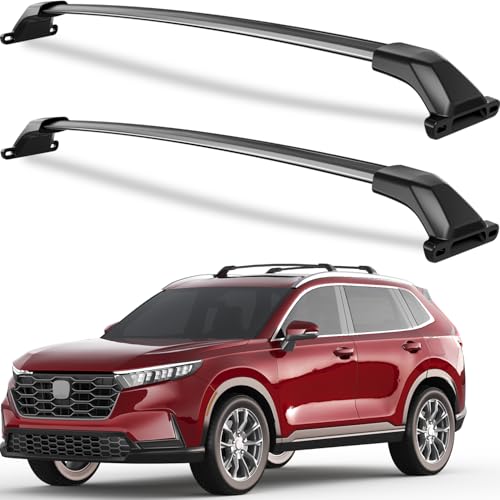
Built for Honda CR-V models from 2023 to 2026 with factory side rails in mind, this crossbar system offers 300 lbs capacity and heavy-duty aluminum feet for stability. It emphasizes low wind noise and easier installation, making it a solid choice for CR-V owners who regularly haul sizable gear.
Who it’s best for: Honda CR-V drivers needing high-capacity, durable cross bars. Why chosen: robust load rating and reinforced feet for long-term use.
Caution: verify the exact CR-V year and trim to ensure compatibility with factory rails.
Buying Guide
What should I consider when choosing roof rack cross bars?
- Vehicle compatibility: raised rails vs bare roofs, rail gap, and bar length. Match the product’s fit notes to your car’s rails.
- Load capacity: choose a system that exceeds your planned cargo weight by a safe margin. Consider distribution for multi-item loads.
- Durability and materials: aluminum constructions resist corrosion and provide lighter weight. Check coatings and hardware quality.
- Ease of installation: look for clear instructions, videos, and tool-free or simple mounting. Verify aftermarket support if needed.
- Aerodynamics and wind noise: low-profile designs and sealing strips can reduce wind noise on highway speeds.
How do I measure fit for raised rails?
- Measure the gap between rails and the span between front and rear rails. Ensure both dimensions fall within the product’s specified range.
- Confirm rail diameter compatibility; some racks require rails within a specific diameter range.
What installation considerations reduce damage to my vehicle?
- Use rubber pads or protective covers on contact points to prevent scratches.
- Follow installation videos or manuals step-by-step to avoid over-tightening or misalignment.
Are there safety tips for long trips?
- Distribute weight evenly and secure all items with straps or bungee cords.
- Check loads periodically during long drives and avoid overloading your roof.
FAQ
- Do roof rack cross bars fit all cars? Not always. Check your vehicle’s exact year, model, and roof type against the manufacturer’s specifications.
- What is the typical maximum load? Many cross bars support around 165 lbs, but always confirm with your product listing and vehicle limits.
- Can I install cross bars without professional help? Yes, most are designed for DIY installation with online guides and videos.
- Do cross bars affect vehicle wind noise? Some designs include seals or low-profile tubing to reduce wind noise.
- Are there maintenance tips? Inspect clamps, bolts, and pads regularly; replace worn parts to maintain safety.