Realistic, kid-friendly motorcycles can spark a lifelong interest in outdoor riding. This guide highlights five top options that balance safety, performance, and long-term fun for children ages roughly 3–14. The best picks are arranged for different needs—city-friendly cruisers for younger kids, longer-range electric dirt bikes for bigger kids, and beginner-friendly options for new riders. Each product below includes who it’s best for, why it was selected, and practical considerations to help you compare quickly.
| Product | Best For | Key Benefit |
|---|---|---|
| ECOLEAP K1 Kids Electric Dirt Bike | Young riders, ages 3–10 | Three speed modes and long range |
| Hiboy DK1 36V Electric Dirt Bike | Active kids needing quiet operation | Hydraulic suspension and long battery life |
| ELEMARA Electric Dirt Bike | Adventurous kids up to 150 lb | LEDs, power display, 15 mph speed |
| FROSTYRIDER 50cc Dirt Bike (Gas) | Older kids seeking gas power | 40 mph capability with robust brakes |
| JOYSTROLL 12V Kids Motorcycle | Beginner riders and early learners | Safety features with training wheels |
ECOLEAP K1: 36V Electric Dirt Bike

The ECOLEAP K1 is a UL-2272 certified electric dirt bike designed for safety and durability. It features an inverted spring hydraulic front fork and a rear parking brake, along with a high-strength shock absorber for a smooth ride. A 36V 5.2Ah lithium battery delivers up to 14 miles of range with a BMS system for safer operation. Three speed modes (low, medium, high) let you tailor the ride to your child’s abilities, with speeds up to 16 MPH. Best for younger riders who need adjustable pace and longer playtime per charge. A 7-color ambient lighting design adds style to the ride. Limitations include possible variations in range due to terrain, weight, and mode selection.
Hiboy DK1: 36V Electric Dirt Bike
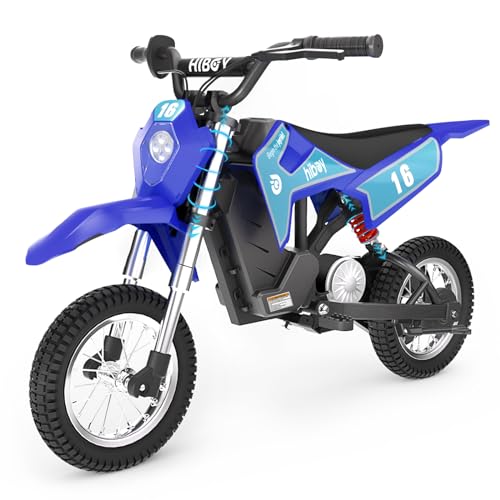
The Hiboy DK1 emphasizes a quiet ride thanks to its high-strength shock-absorbing suspension. It supports up to 90 minutes of use on a fully charged 36V lithium battery, with a full recharge time of about 4–5 hours. The bike offers three safe speed modes: Low (5 mph), Medium (7.5 mph), and High (15.5 mph). This makes it suitable for kids who are transitioning from training wheels to independent riding, especially in neighborhood settings. A potential limitation is the long charging time relative to play durations for some kids.
ELEMARA Electric Dirt Bike

The ELEMARA model targets bigger or more adventurous kids with a 24V 250W motor that can reach up to 15 mph and a 150 lb weight capacity. It includes 12″ air-filled tires for varied terrain and a power display for ride awareness. The bike has a twist-grip throttle and LED lights for daytime visibility. Best for older or taller kids who want a more realistic dirt-bike feel while maintaining kid-safe performance. A caution: actual top speeds and range depend on rider weight, terrain, and battery status.
JOYSTROLL 12V Kids Motorcycle

The JOYSTROLL 12V motorcycle focuses on early riders with two 25W motors that limit speed to 1–3 MPH, ideal for beginners. It adds safety-forward features like training wheels and a self-control throttle grip, plus Bluetooth audio for entertainment. It’s best for preschoolers or very new riders who need the stability of training wheels and a gentle pace to build confidence. A limitation is the modest top speed, which may not satisfy growing kids who crave faster rides.
Buying Guide: Real Motorcycles For Kids
What age and size should you consider?
Match the bike’s recommended rider weight and height with your child. Younger riders typically need smaller frames, lighter weights, and slower top speeds. Taller kids may outgrow entry-level models quickly, so consider a bike with adjustable features or a higher weight limit.
What about safety features?
Look for a helmet, protective gear, and a bike with reliable brakes, stable tires, and a low center of gravity. UL-2272 certification for electric bikes is a strong safety indicator. For younger learners, models with training wheels or gradual speed modes can reduce risk during early rides.
How important is battery life and charging time?
Electric bikes vary in runtime per charge. If your child prefers longer play sessions, choose a model with longer run times and reasonable charging times. Be mindful of terrain and weight, which affect actual performance and range.
Gas vs electric: which to choose?
Electric dirt bikes are quieter, require less maintenance, and are suitable for neighborhoods or apartments. Gas-powered bikes offer higher top speeds and longer range in some cases but require more upkeep and have emissions to consider. For most younger kids, electric is the safer, lower-maintenance option.
Durability and maintenance considerations
Select bikes with steel frames, reinforced components, and simple maintenance routines. Check for serviceable parts, availability of replacement batteries, tires, and brakes in your region to avoid downtime.
What about future growth?
Consider models with adjustable components or higher weight limits so the bike can be used longer as your child grows. Some brands offer upgrade paths or spans across different rider sizes with minimal adjustments.
Summary of selected bikes
- Best for younger beginners: ECOLEAP K1 and JOYSTROLL 12V for gentle speeds and safety features.
- Best for longer playtime and more features: Hiboy DK1 and ELEMARA with longer battery life and higher speed options.
- Best for bigger kids seeking more power: FROSTYRIDER 50cc Dirt Bike (gas) for real-bike feel and higher top speed.
Frequently Asked Questions
- What is the typical age range for these bikes? Most models target ages 3–14, with weight and height guidance varying by bike.
- Are these bikes suitable for use in the yard or driveway? Yes, many models are designed for home use, but always supervise young riders and wear protective gear.
- Do these bikes require assembly? Most arrive partially assembled; some assembly is usually needed.
- Can kids outgrow these bikes quickly? Some models offer adjustable or larger-weight-capacity options to extend usability.
- Is a helmet required? Yes, a certified helmet is essential, along with other protective gear.
- Do electric bikes need maintenance? Basic battery care and occasional brake checks are typical; follow the manufacturer’s guidelines.