Answer: For golf carts and DIY off-road builds needing reliable reverse functionality, these five reverse gearbox kits offer practical options across a range of engine sizes and configurations. They’re best for DIY enthusiasts, small- to mid-sized engines, and riders who want easy maneuverability in tight spaces or off-road trails. The following table summarizes key details to compare at a glance.
| Product | Brand | Engine Range | Shift Modes |
|---|---|---|---|
| JNDO Go Kart Forward Reverse Gearbox Kit | JNDO | Up to 420cc (13HP) | Forward, Neutral, Reverse |
| VEVOR Go Kart Forward Reverse 212cc Gear Box | VEVOR | 2–13HP engines | Forward, Neutral, Reverse |
| Kemblawolf ATV Reverse Gear Box | Kemblawolf | 150cc–300cc | Reverse included (shaft-driven) |
| TDPRO Reverse Gearbox Assembly | TDPRO | 100cc–150cc engines | Forward, Reverse |
| 91.SCS ATV Reverse Transmission Gear Box | 91.SCS | 125cc–300cc | Reverse included |
JNDO Go Kart Forward Reverse Gearbox Kit

Best for higher-torque small builds. This kit supports engines up to 13HP (420cc) and adds forward, neutral, and reverse, addressing the common problem of missing reverse in basic go-karts. The rugged aluminum housing with precision steel gears keeps the unit light yet robust for off-road use. It’s suitable for DIY enthusiasts who want a single, compact gearbox with a built-in shifter. A potential limitation is the requirement for compatible shaft and mount setups in custom builds.
VEVOR Go Kart Forward Reverse 212cc Gear Box

Best for mid-range DIY projects needing a versatile transmission. The unit fits 2–7HP engines and supports multiple chain configurations (10T/12T) with forward and reverse ratios around 1:1.3 and 1:2.6. It’s easy to install for people who enjoy assembling karts themselves. Choose this if your build uses a 40/41 or 420 chain setup. A limitation to watch is compatibility with non-standard drive trains or non-typical shaft sizes.
Kemblawolf ATV Reverse Gear Box Assembly

Best for vertical-engine ATVs, UTVs, and go-karts needing a reliable reverse drive. This shaft-driven system is designed for 150cc–300cc engines, offering durable metal construction and a dedicated reverse drive shaft. It’s well-suited for owners seeking a straightforward, rugged reverse capability in compact installations. Caution: installation requires alignment with shaft-driven configurations and may demand mounting space in tight chassis.
TDPRO Reverse Gearbox Assembly

Best for ATV and small quad builds that use 100–150cc engines. This shaft-drive conversion gearbox includes a 6-spline input and a 12mm output, enabling compatibility with common ATV/quadrunner drivetrains. It supports forward and backward operation for simple transfer-case-style functionality. A key consideration is ensuring the drive shaft and joints match your vehicle’s specifications to avoid misalignment.
ATV Reverse Transmission Gear Box & 425mm Drive Shaft

Best for full drivetrain setups needing a complete reverse system. This kit includes a reverse gearbox, a 425mm drive shaft, and a drive-case assembly, delivering a robust all-in-one solution for go-karts, ATVs, UTVs, and golf carts. The built-in reverse function simplifies operation without extra shifters. Limitation: some installations may require additional spacing to accommodate the longer drive shaft and differential geometry.
Kemblawolf 4 Wheel Drive Reverse Gear Box Assembly
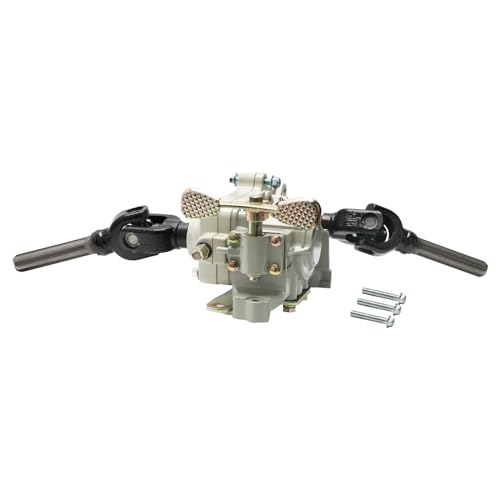
Best for compact, space-conscious 4WD applications. This alloy steel construction unit is designed for 150cc–300cc engines and features a motorcycle-style forward/backward converter transfer case. Its compact dimensions support space-constrained builds in go-karts, ATVs, and UTVs. Choose this when you need a 4WD-ready reverse option in a tight package. Limitation: compatibility depends on engine model and frame clearance.
Buying Guide
What should I consider when choosing a reverse gearbox for a golf cart or go-kart?
- Engine compatibility: Ensure the gearbox supports your engine’s displacement and power (HP). Higher-torque kits are better for heavier builds.
- Drive configuration: Shaft-driven vs chain-driven systems affect mounting, alignment, and available space. Pick based on your chassis design.
- Gear ratios and modes: Look for clear forward/neutral/reverse options and ratios that match your speed and torque needs.
- Durability: Aluminum housings and alloy steel gears offer lighter weight with robust performance for off-road use.
- Installation complexity: Some kits are plug-and-play, while others require custom mounting or adapter plates. Consider your DIY skill level.
- Space requirements: Compact dimensions help for smaller carts; verify clearance for drive shafts and differential components.
Practical installation tips
- Plan matching drive components (sprockets, chains, shafts) before purchase to avoid mismatch.
- Check alignment of input/output shafts to minimize vibration and wear.
- Ensure sufficient cooling and ventilation near the gearbox during extended off-road use.
Frequently asked questions
- Do these gearboxes require professional installation? Some kits are DIY-friendly, while others may benefit from professional mounting for best alignment.
- Will a reverse gearbox affect top speed? In most setups, gear ratios influence torque more than top speed; verify ratios match your intended use.
- Is a built-in reverse safer for beginners? Yes, built-in reverse simplifies operation and reduces the need for additional shifters.
- Can I reuse existing driveshafts with these kits? Reuse is possible if dimensions and splines are compatible; verify before pairing components.
- Are these gearboxes suitable for golf carts? Yes, many kits are designed for kart, buggy, UTV, and golf-cart type frames with reversible operation.
- What maintenance is required? Regular lubrication of gears, inspection of seals, and checking mounting bolts help maintain performance.