The best SAE 30 motor oil for lawn mowers combines protection, durability, and compatibility with small engines. This guide highlights five top options, explaining who each oil is best for and why. Ideal buyers include push mower users, riding mower owners, and seasonal landscapers seeking reliable wear protection and engine cleanliness. The summary table below compares key attributes to help you decide quickly.
| Product | Oil Type | Best For | Key Benefit |
|---|---|---|---|
| Lucas Oil 11315 | SAE 30 | Push and riding mowers | Reduces engine wear |
| TRIAX Power 4-Stroke SAE 30W | Full Synthetic 30W | Heavy-use, long hours | High zinc, long lifespan |
| Valvoline Advanced 10W-30 | 10W-30 | All-season engines | Strong wear and deposit defense |
| Pennzoil SAE 30 | SAE 30 | Compact engine maintenance | Proven wear protection |
| STP Premium 10W-30 Small Engine | SAE 10W-30 | Small engines in mixed climates | All-weather performance |
Note: All five products come from reputable brands and are commonly used in lawn care equipment. When selecting, consider your mower type (push vs riding), climate, and how often you run the engine. The following sections present each option with practical guidance for buyers.
Lucas Oil 11315 SAE 30 Lawn Mower Oil

Lucas Oil 11315 SAE 30 lawn mower oil is formulated to reduce engine wear and extend equipment life. It performs well on both push and riding mowers and helps protect against overheating. Best for: budget-conscious homeowners who want dependable protection for standard lawn maintenance. Limitation: Not a synthetic blend; users in very high-demand applications may prefer full-synthetic options for extreme conditions.
TRIAX Power 4-Stroke SAE 30W Full Synthetic
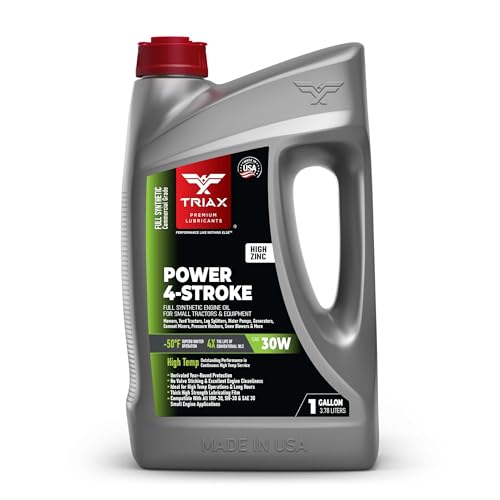
TRIAX Power 4-Stroke SAE 30W is a full synthetic option with a high-zinc formula designed for small engines. It emphasizes commercial-grade durability, extreme shear stability, and broad temperature range performance from -40°F to 130°F. Best for: engines under heavy load, long operation periods, or owners seeking up to 3x longer oil life than conventional oils. Caution: Higher price point may not be necessary for light seasonal use, where standard oils suffice.
Valvoline Advanced Full Synthetic SAE 10W-30

Valvoline Advanced Full Synthetic SAE 10W-30 focuses on four main causes of engine breakdown: wear, friction heat, and deposits. It provides strong wear protection and deposit defense, helping engines stay cleaner for smoother performance. Best for: engines that require dependable protection year-round and improved fuel efficiency. Limitation: This is a 10W-30 grade rather than a straight 30, which may behave differently in certain very hot climates or older engines designed specifically for 30 weight oils.
Pennzoil SAE 30 Motor Oil

Pennzoil SAE 30 Motor Oil provides proven wear protection with a formulation designed to keep engines clean and responsive. It helps prevent dirt and contaminants from forming deposits, supporting reliable lawn mower performance through typical mowing seasons. Best for: compact engines and classic small engines where a straightforward SAE 30 is preferred. Limitation: Not a synthetic blend, so performance under extreme heat may differ from synthetic options.
STP Premium Small Engine 10W-30 SAE Oil

STP Premium Small Engine Oil is a synthetic blend designed for small engines like lawnmowers and generators. It offers an all-weather formula for easier starts and antioxidants to fight thermal breakdown, enhancing oil durability under high temperatures. Best for: owners seeking an all-season solution that protects small engines in a variety of outdoor conditions. Caution: This is a 10W-30 grade, not a pure SAE 30, so performance characteristics differ with cold-start behavior.
Buying Guide: Key Considerations For SAE 30 Lawn Mower Oils
- Engine type and mower usage: Identify whether you have a push mower, riding mower, or other small outdoor equipment. Some oils are tailored to lighter, everyday use, while others are designed for heavy-duty or long-running applications.
- Oil viscosity: SAE 30 is a single-grade option, while 10W-30 blends offer better cold-start performance. Choose based on climate and operating temperature ranges.
- Synthetic vs conventional: Full synthetic and synthetic blends provide enhanced protection in high-temperature or high-load conditions but may come at a higher cost. Conventional oils are adequate for light, regular mowing.
- Wear and deposit protection: Look for oils that emphasize wear reduction and deposit control to keep engine parts clean and operating efficiently.
- All-season performance: If you mow year-round or in fluctuating weather, consider oils with broad temperature protection and anti-oxidation additives.
- Compatibility and approvals: Ensure the oil meets typical small-engine requirements and is suitable for the mower’s design. Check the manufacturer’s recommendations when possible.
FAQ: Quick Answers For Lawn Mower Oil Choices
- Q: Can I use SAE 30 in a small engine that requires 10W-30? A: No. Always follow the engine’s specification. A 10W-30 may offer better cold-start performance, while SAE 30 remains suitable for standard warm-weather use if specified.]
- Q: Is synthetic oil better for lawn mowers? A: Synthetic oils generally provide better wear protection and stability at extreme temperatures, but may not be necessary for all applications. Consider climate and usage.
- Q: How often should I change mower oil? A: Follow the manufacturer’s guidance, which commonly ranges from every mowing season to every 25-50 hours of operation depending on conditions.
- Q: Can I mix brands of oil? A: Mixing is not recommended as it can alter additive balance and performance. Use the same oil type consistently for best results.
- Q: What about oil additives? A: In most cases, standard oils with proper brand formulations are sufficient. Additives may be unnecessary unless a specific issue is identified by a mower technician.
- Q: Does oil grade affect fuel economy? A: Yes, some higher-performance oils can reduce internal friction, contributing to smoother operation and potential efficiency benefits.