Answering the need for a concrete, easy-to-use tool for removing paint, rust, and grime, this guide highlights five reliable sand blasters that work well with common media like aluminum oxide, walnut shells, and sand. Each option targets a different use case, from compact home projects to larger outdoor tasks. Best for beginners, professionals, or hobbyists, these picks emphasize control, accessibility, and performance for paint removal on metal, wood, and concrete surfaces.
Buyer note: Each product below is suited to different compressor setups and project scales. The table summarizes the essentials to help you compare at a glance.
| Product | |||
|---|---|---|---|
| Inokraft Leak-Proof Portable Sand Blaster Gun Kit | Aluminum Oxide, Sand, Walnut Shell, Soda | Small projects, tight spaces | Oil-water separator, 900cc hopper |
| LE LEMATEC Sand Blaster Gun Kit for Air Compressor | Aluminum oxide, glass beads, sand | Detail work and larger surfaces | Two feed modes, 4 CFM recommended |
| Inokraft 60-120 PSI Portable Sand Blaster | Aluminum oxide, sand, soda | Small to mid-size projects | 2-in-1 trigger, works well with smaller compressors |
| NEIKO 30068A Air Sand Blaster Gun | Silicon carbide, baking soda, aluminum oxide, glass, walnut shells | General purpose, versatile media | Gravity feed with replaceable nozzle |
| VEVOR 5 Gallon Sand Blaster | Silica sand, aluminum oxide, glass beads | Large-area rust and paint removal | Oil-water separator, large volume |
Inokraft Leak-Proof Portable Sand Blaster Gun Kit
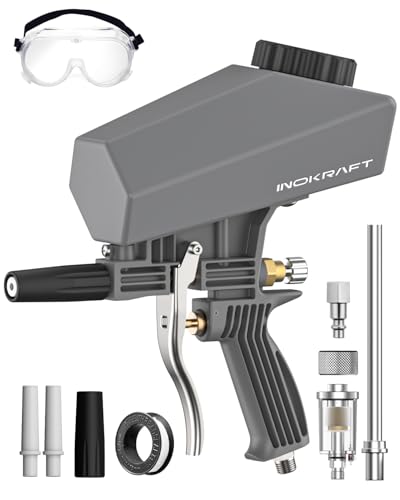
Best for beginners tackling tight spaces, this kit delivers up to 287 m/s airflow with a precision ceramic nozzle. It includes a 900cc hopper, extension nozzle, oil-water separator, ceramic nozzles, quick connector, and safety goggles. The design minimizes leaks and wasted media, making it an easy, predictable option for first-time users and hobbyists.
Who it’s best for: Home workshop owners who need a compact, all-in-one starter kit that remains simple to operate. Why selected: the foolproof trigger control reduces mess and waste, ideal for learning basic sandblasting techniques.
Caution: Ensure media is appropriate for the nozzle size to avoid clogging, especially with denser media. Avoid coarser than 46 grit if using the included ceramic nozzles for best results.
LE LEMATEC Sand Blaster Gun Kit for Air Compressor

Best for detail work and larger flat surfaces, this model supports a range of media and two feed modes: Gravity Feed for precision and Siphon Feed for broader areas. It requires a compressor capable of 4 CFM at up to 150 PSI and a 1/4″ NPT connector. The design emphasizes media control and consistent spray, with a kit that accommodates a variety of media types.
Who it’s best for: Garage setups with mid-sized projects requiring versatility between detail work and larger area blasting. Why selected: dual feed modes offer flexibility without swapping equipment mid-project.
Caution: Continuous blasting can overwhelm small compressors; ensure your unit can sustain the required CFM for best performance.
Inokraft 60-120 PSI Portable Sand Blaster
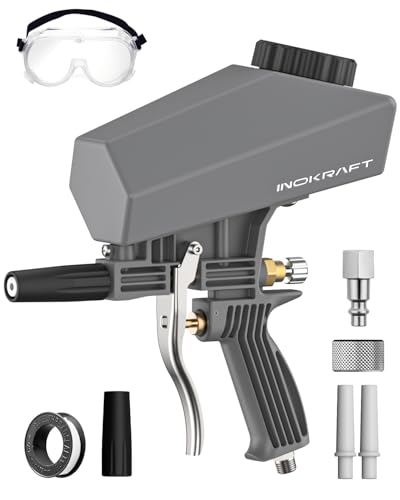
Best for small projects and beginning users who need precise media control, this kit features a 60-120 PSI operating range and a 2-in-1 trigger for controlled media flow. It’s compatible with aluminum oxide, sand, and soda. The design emphasizes minimal waste and predictable results in tight spaces or metal parts.
Who it’s best for: DIY enthusiasts and small shop owners focusing on rust removal in narrow channels. Why selected: the no-leak trigger reduces overspray and keeps work areas cleaner.
Caution: Works best with air compressors that can sustain mid-range PSI; underpowered units may struggle with consistent flow.
NEIKO 30068A Air Sand Blaster Gun
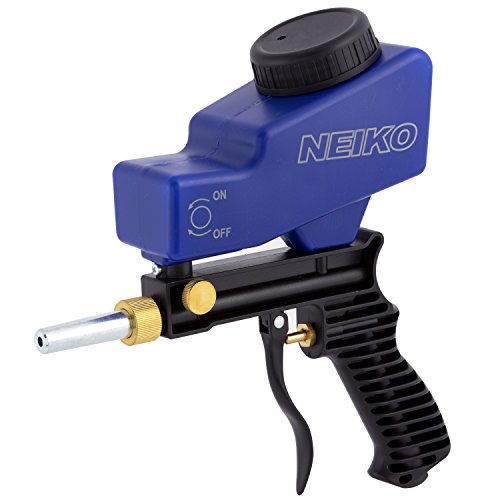
Best for versatility, this sand blaster accommodates multiple media types, including silicon carbide, baking soda, glass, and walnut shells. Its gravity feed hopper supports various applications—from engraving to removing rust and grime. The ergonomic handheld grip aids control for extended sessions.
Who it’s best for: Mixed-use projects that require media variety and a lightweight, portable tool. Why selected: broad media compatibility makes it a flexible choice for different surfaces.
Caution: Ensure media is dry to prevent clogs and maintain a smooth spray pattern.
LE LEMATEC Sand Blaster Gun Kit for Air Compressor

Best for professional-grade restoration and furniture refinishing, this gravity-fed blaster targets years of rust and paint. It operates best at 90 PSI and pairs well with larger compressor options for continuous workflow. It supports media in the #46–#100 grit range, including aluminum oxide and glass beads.
Who it’s best for: Professionals and serious hobbyists performing large projects or restoration work. Why selected: gravity-fed design reduces mess and supports consistent media flow over extended periods.
Caution: For sustained blasting, pair with a larger compressor and an inline moisture filter to prevent clogging from moisture in the air lines.
VEVOR 5 Gallon Sand Blaster

Best for large-area paint and rust removal, this 5-gallon pot blaster supports a wide working range of 60-110 PSI and 6-25 CFM air consumption. It includes an oil-water separator to reduce moisture, and a robust die-cast aluminum gun for durability. Suitable for heavy-duty projects outdoors or in a shop setting.
Who it’s best for: Users tackling bigger surfaces or outdoor installations, such as statues, iron frames, or car frames. Why selected: higher air volume and large media capacity accelerate large-area treatments.
Caution: This unit requires a dedicated, capable air compressor; undersized compressors may struggle to sustain performance.
Buying Guide: How To Choose A Sand Blaster For Paint Removal
What size project do you have? For small, detail-oriented work, consider gravity-fed or 2-in-1 trigger models with smaller hoppers. For larger jobs, a 5-gallon pot blaster or a unit with high CFM requirements helps maintain steady performance.
What media will you use? Media type affects nozzle compatibility, blasting speed, and surface finish. Aluminum oxide and glass beads work well on metal; baking soda and walnut shells suit softer materials. Look for a unit that handles your chosen media without clogging.
Can your compressor handle the load? Check required CFM and PSI. Some units demand 4 CFM or more at up to 150 PSI, while others operate on smaller compressors. A separate moisture filter or oil-water separator helps prevent media clogs.
How important is control and waste reduction? Models with no-leak triggers or precise flow reduce material waste and cleanup. If you’re a beginner, an all-in-one kit with a safety bezel and clear instructions is beneficial.
Portability and maintenance matter. Lightweight, ergonomic designs ease use in tight spaces, and easy-to-clean systems save time after blasting sessions. Consider whether you need a kit with extension nozzles for hard-to-reach areas.
FAQ
- What PSI is best for most sand blasters? Most home and shop units operate around 60-110 PSI. Always follow the manufacturer’s recommendations for your model.
- Do I need an oil-water separator? An oil-water separator helps reduce moisture in the air line, which can cause media clogs and inconsistent spray.
- Can I use household air compressors with sand blasters? Smaller, pancake-style compressors may underperform. Check the required CFM and ensure your unit can sustain it during blasting.
- Is gravity-feed better than siphon-feed? Gravity-feed is often cleaner and easier for detail work; siphon-feed provides more media capacity for larger surface areas.
- How do I prevent rust or paint buildup on the nozzle? Regular cleaning and using dry media help prevent clogs and maintain performance.
- What media should I avoid for delicate surfaces? Avoid aggressive media like coarse aluminum oxide on soft woods or fragile metals to prevent gouging or pitting.