Finding the right sand paper for car detailing helps achieve a smooth, polished finish whether you’re removing imperfections, preparing surfaces for paint, or refining clear coats. This guide highlights five reliable options, explains who each is best for, and points out practical limitations to consider before you buy. Ideal buyers include DIY enthusiasts, professional body shops, and hobbyists working on auto restoration projects.
| Product | Grit Range | Best For |
|---|---|---|
| Atosun 45PCS Sandpaper | 120–5000 | Complete prep and polishing, varied projects |
| 3M Wetordry Sandpaper (Assorted) | 1000–2500 | Clear coat defect removal and fine finishing |
| Shineboc Sandpaper Assortment | 120–2000 | All stages from rough shaping to finishing |
| Pihemum 45 Pcs Sandpaper | 80–5000 | Polishing and fine finishing, versatile use |
| BMOTL Sandpaper Assortment | 1000–5000 | Automotive polishing and finish work |
Note: Each product in this list is designed for both wet and dry use in many car detailing workflows. Consider your typical project scale, the surfaces you work on, and whether you need a broad grit range in a single kit to minimize tool changes.
Atosun 45PCS Sandpaper Set

Grits: 120, 150, 180, 240, 320, 400, 600, 800, 1000, 1200, 1500, 2000, 2500, 3000, 5000 (3 sheets per grit).
Best for: This set is ideal for buyers who want a comprehensive range in one package, including coarse shaping and ultra-fine finishing for automotive refinishing projects. It’s well suited for DIY enthusiasts tackling multiple surface types (wood, metal, automotive).
Why selected: The broad grit spectrum and waterproof silicon carbide with electro-coated construction provide durability and consistent grit distribution, reducing the risk of tearing during wet or dry use.
Limitations: The large number of grits may be more than needed for small projects; storage and organization are important to keep track of sheets.
3M Wetordry Sandpaper, Assorted Grits
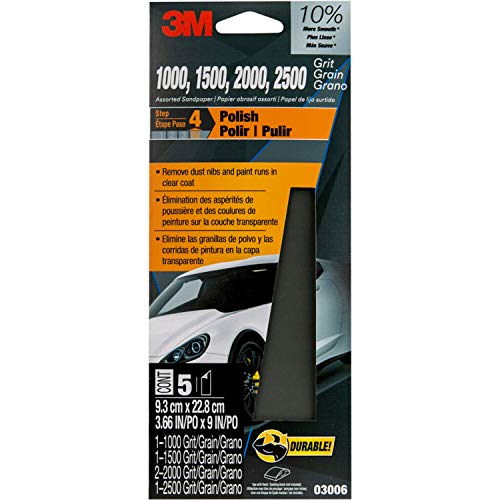
Grits: 1000, 1500, 2000, 2500 (5 sheets total).
Best for: Professionals or serious DIYers focusing on clear coat restoration and defect removal. The higher grits are designed for polishing and achieving a smooth, refined finish on automotive finishes.
Why selected: 3M’s Wetordry line is known for consistent grit distribution and the ability to use wet or dry without changing papers, aiding efficiency in finishing stages.
Limitations: Not a full range of grits in one pack; you may need additional sheets for aggressive material removal if prepping very rough surfaces.
Pihemum 45 Pcs Sandpaper Assortment

Grits: 80, 120, 180, 240, 320, 400, 600, 800, 1000, 1200, 1500, 2000, 2500, 3000, 5000 (3 sheets per grit).
Best for: Suitable for automotive polishing from initial shaping to final finishing, as well as wood and metalWork. A broad range supports projects requiring both heavy material removal and fine polish.
Why selected: Electro-coated silicon carbide ensures even grit distribution and long-lasting performance in wet or dry use, which is helpful for repeated passes on automotive panels.
Limitations: Heavy use in wet conditions can require frequent surface cleaning to maintain cut efficiency on some grits.
BMOTL Sandpaper Assortment

Grits: 1000, 1200, 1500, 2000, 3000, 5000 (7 sheets per grit, total 42 sheets).
Best for: Auto detailing and finish work, especially when you need ultra-fine grit for polishing and finishing automotive paintwork, glass, and metal surfaces.
Why selected: Multi-surface performance with waterproof, tear-resistant construction suits wet detailing and dry finishing. The 5,000 grit enables gentle polishing to minimize haze on clear coats.
Limitations: Fewer coarse grits in this set, so use a separate kit if substantial material removal is required before finishing.
YXYL Sand Paper Sheets Assortment
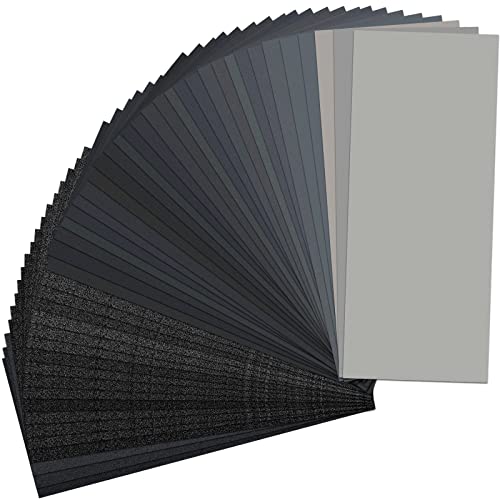
Grits: 120, 150, 180, 220, 240, 320, 400, 600, 800, 1000, 1200, 1500, 2000, 2500, 3000, 5000 (16 grits, 3 sheets each).
Best for: Broad automotive and woodworking projects, delivering a complete path from aggressive material removal to final polish on multiple surfaces.
Why selected: Uniform grit distribution and waterproof coating help sustain performance across wet and dry workflows, with clear grit labeling for quick identification.
Limitations: A wide range can lead to more sheets to manage; consider a labeled organizer to keep grits accessible during busy jobs.
Buying Guide
What grit range do I need for automotive work?
For initial shaping and body work, choose lower grits (80–120, 150–240). For paint prep and clear coat refinement, use mid to high grits (400–1500) and finishing grits (2000–5000). A kit that spans 80–5000 provides the most versatility.
Wet vs dry use: which should I choose?
Wet sanding reduces dust and minimizes scratching, useful for clear coats and paint polishing. Dry sanding removes material quickly and is better for rough shaping. A dual-use pack offers flexibility without swapping papers.
What about material durability?
Look for silicon carbide abrasives with electro-coated bonding. These resist tearing and provide even grit wear, which is important for long sessions on automotive panels.
How many sheets are practical for a single project?
For typical car refinishing, a kit with at least 20–40 sheets across multiple grits keeps you from running out mid-project and reduces tool changes.
What are common limitations to watch out for?
Coarse grits may require attention to heat buildup and control on delicate surfaces. Ultra-fine grits can clog on soft paints if not used with water. Always test on a small area first.
FAQ
- Do I need both wet and dry sandpapers for cars? Yes. Wet sanding reduces dust and helps polish, while dry sanding accelerates material removal for rough prep.
- Which grit should I start with for a new panel? Start with 80–120 grit to shape imperfections, then progress to 180–240, and finish with 400–1500 grits before polishing.
- Can I use these papers on metal or wood? Yes. Most kits are suitable for multiple surfaces, including metal, wood, and automotive plastics, as long as you adjust pressure and use appropriate grits.
- How do I prevent clogging during wet sanding? Keep a steady stream of water on the surface and rinse the paper regularly to maintain cutting efficiency.
- Is more grit variety always better? More grit variety helps handle different stages of a project, but prioritize grits that match your typical workflow to reduce waste and storage needs.
- Are these papers compatible with orbital sanders? The 5-inch discs and standard sheet sizes align with most orbitals and block sanders; check your tool’s attachment system and backing.