When the check engine light illuminates, your priority is a fast, accurate code read and clear feedback on what to fix next. This guide reviews five reliable OBD2 scanners that work with most 1996+ vehicles, helping DIYers and professionals decide which tool fits their needs. Each option is explained with who it’s best for, what it does best, and practical cautions to consider before buying. Below is a quick overview to help you compare at a glance.
| Product | Best For | Key Benefit |
|---|---|---|
| ANCEL AD310 | Everyday DIYers | Fast, simple code read/clear with durable build |
| MOTOPOWER MP69033 | Budget-conscious users | Wide protocol support and multilingual display |
| VDIAGTOOL VD10 | New hobbyists | Clear DTC definitions from a built-in database |
| ANCEL AD410 Enhanced | Smog-ready vehicles | Extensive DTC library and emissions-focused features |
| FOXWELL NT201 | Smog prep and live data fans | Dedicated I/M readiness check and color indicators |
Buyer types: DIYers who want quick answers and portability; car owners who want to verify emissions readiness before inspections; and enthusiasts who appreciate live data and more detailed fault information. All five tools here connect through the vehicle’s OBDII port and draw power directly from the car, avoiding external batteries.
ANCEL AD310 Classic Enhanced OBD II Scanner

The ANCEL AD310 is a compact, budget-friendly OBDII code reader designed for quick diagnostics and straightforward fault-code clearing. It accommodates 1996 and newer vehicles using the OBDII protocol. Best for: homeowners and hobbyists who want fast results without extra bells and whistles. Why selected: its CEL Doctor capability helps quickly identify the likely cause of a check engine light, and the device reads live data and freezes frame information for easier problem tracing. Limitation: the screen is simple, so highly detailed data may require broader interpretation.
MOTOPOWER MP69033 OBD2 Scanner

The MOTOPOWER MP69033 offers broad protocol coverage, including 1996 US, 2000 EU, and Asian cars, with support for newer OBDII and CAN vehicles. It presents a 2.8-inch LCD with backlight for easy viewing of codes, data, and live values. Best for: budget-minded users who still want a wide set of features. Why selected: it provides DTC lookup, live data, and real-time curves, plus multiple languages for diverse users. Caution: some users may prefer a larger display or more advanced bi-directional tests which this unit does not provide.
VDIAGTOOL VD10 OBD2 Scanner
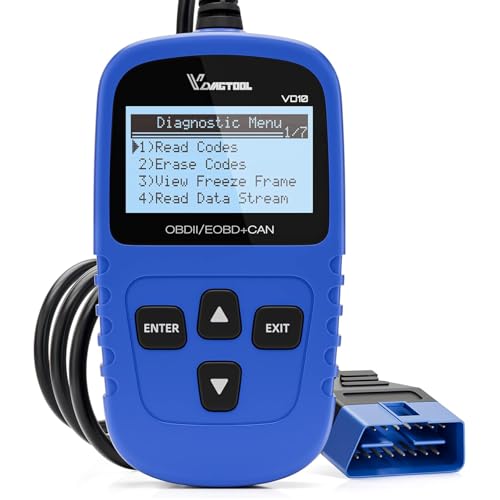
The VDIAGTOOL VD10 targets DIYers with a focus on ease of use. It reads and clears codes, shows live data, freeze frame, I/M readiness, and vehicle information from the built-in database. Best for: new car owners learning to diagnose problems themselves. Why selected: its built-in DTC definitions save time on lookups. Limitation: the depth of the DTC database is solid but not as extensive as premium tools, which may matter for rare codes.
ANCEL AD410 Enhanced OBD2 Scanner

The AD410 is an enhanced OBDII scanner with wide vehicle compatibility and a large DTC library. It excels at quick fault-code reading and clearing, and performs emissions-focused checks like monitoring readiness for smog tests. Best for: drivers who need robust emissions data and assurance before inspections. Why selected: it supports extensive diagnostics, plus O2 sensor and EVAP system testing. Caution: note that it is primarily an engine code reader and does not provide full ABS/SRS/other system reset capabilities.
FOXWELL NT201 OBD2 Scanner

The FOXWELL NT201 offers a focused diagnostic experience with easy read/clear functionality and a dedicated I/M readiness button. It provides live data, OBDII fault codes, and a clear color-coded wait-free status indicator for emissions readiness. Best for: drivers who want a simple, reliable tool to verify readiness and monitor live data. Why selected: straightforward operation and a strong emphasis on emissions readiness help users pass inspections more smoothly. Caution: does not support ABS/SRS or other advanced system diagnoses.
Buying Guide: How To Choose The Right Check Engine Light Scanner
What should you look for when buying an OBD2 scanner to handle check engine lights?
- Vehicle compatibility: Ensure the device supports your vehicle year, make, and model. Most tools here cover 1996+ OBDII cars, with some offering broader compatibility.
- Data depth: If you want more than codes, pick devices with live data, freeze frame, I/M readiness, and DTC definitions.
- Ease of use: For beginners, a tool with a clear display, simple menus, and a dedicated I/M readiness button helps reduce guesswork.
- Read/clear functions: Most tools clear codes after repairs. Note whether they truly reset the MIL or simply clear the stored codes after repairs are completed.
- Power source: All listed devices draw power from the vehicle’s OBDII port; no external battery is needed.
- Build and portability: A compact, durable unit is helpful for frequent use in the driveway or garage.
- Language support: Multilingual devices are beneficial for non-English-speaking users or for households with diverse backgrounds.
Frequently Asked Questions
- What does it mean when the check engine light comes on?
- Can I clear the check engine light without repairing the car?
- Do I need a professional tool for simple maintenance?
- What is I/M readiness, and why is it important?
- Are there scanners that cover ABS and SRS systems?
- Will these scanners work on all cars?
It indicates a fault in the vehicle’s engine or emission system that stored a diagnostic trouble code. A scanner helps identify the code and its likely cause.
Yes, in most cases a code reader can clear the MIL after repairs show the problem is resolved, but the underlying issue must be fixed to prevent it returning.
No. For basic read/clear and live data, consumer-grade scanners like the ones in this guide are typically sufficient and cost-effective.
I/M readiness shows whether the vehicle’s emission monitors are prepared for an inspection. A tool with an I/M function helps you pass smog tests without surprises.
Some models offer broader diagnostics; however, most entry-level devices focus on engine codes. Check product specs if you need ABS or airbag data.
Nearly all listed tools work on most 1996+ OBDII-compliant vehicles. Always verify compatibility for your specific model if unsure.
In summary, the ANCEL AD310 is ideal for quick, routine code reads; MOTOPOWER MP69033 balances breadth of features with a budget; VDIAGTOOL VD10 suits beginners who want clear code definitions; ANCEL AD410 focuses on emissions readiness with a robust library; and FOXWELL NT201 provides a simple, reliable option with clear I/M readiness feedback. Use this guide to compare features, limitations, and how each device aligns with your maintenance approach and inspection needs.