When choosing a silicone coolant hose, look for high-temperature tolerance, reinforced construction, and a size that fits your engine’s ports. The top five products below are selected for durability, performance, and versatility across cars, trucks, and heavy equipment. Best for performance-minded DIYers, fleet maintenance, and professional mechanics seeking long-lasting coolant routing solutions.
| Product | Diameter | Length | Key Benefit |
|---|---|---|---|
| Outus 3/4″ ID Silicone Heater Hose | 3/4″ ID | 25 ft | High temp range, reinforced braid |
| AUKITNNE 16 ft 3/4″ Silicone Hose | 3/4″ ID | 16 ft | Three-layer design, heavy-duty, long roll |
| BST BSSP Radiator Silicone Hose | 2.5″ ID | 3 ft | OE-style fit for trucks and buses |
| IBESTWOLF 2″ ID x 3 ft Hose | 2″ ID | 3 ft | 4-ply high-temp silicone |
| EVIL ENERGY 5/16″ Silicone Heater Hose | 5/16″ ID | 5 ft | SAE J20R3 Class A, braided polyester |
Outus 3/4″ ID Silicone Heater Hose — 25ft Roll

Best for long, custom coolant routing in automotive cooling systems. This 25-foot coil provides ample length for multiple runs, making it ideal for engines with extended hose paths or spare lengths. The hose features reinforced polyester braid and silicone construction, offering better heat resistance and aging properties than EPDM. It handles up to 85 PSI working pressure and remains flexible from -40°F to 230°F (-40°C to 160°C), ensuring reliable performance in extreme conditions.
Who it suits: enthusiasts and professionals needing a durable, high-heat coolant hose capable of custom routing in cars, trucks, and equipment. This is a solid choice for those prioritizing long service life and flexibility. Caution: slight expansion or softening can occur at very high temperatures, but normal use remains unaffected.
AUKITNNE 16ft 3/4″ Silicone Heater Hose

Best for high-temperature engine cooling with plenty of length. The hose uses a three-layer design: premium silicone walls with a dense polyester layer to resist burst expansion under high pressure, providing strong durability in tough engine environments. Temperature resilience from -40°F to 230°F helps maintain flexibility and performance in freezing or hot conditions. The 19mm ID and 27mm OD dimensions suit many automotive ports and common bypass configurations, while the 16-foot roll supports multiple installations or spare sections.
Who it suits: installers and hobbyists who need a long, dependable hose with robust resistance to heat and aging. Choose this if you want a spare-length hose that can be cut to fit several runs. Limitation: longer hose may require careful routing to avoid excessive bending in tight engine bays.
BST BSSP Radiator Silicone Coolant Hose — 2.5″ ID, 3 Ft
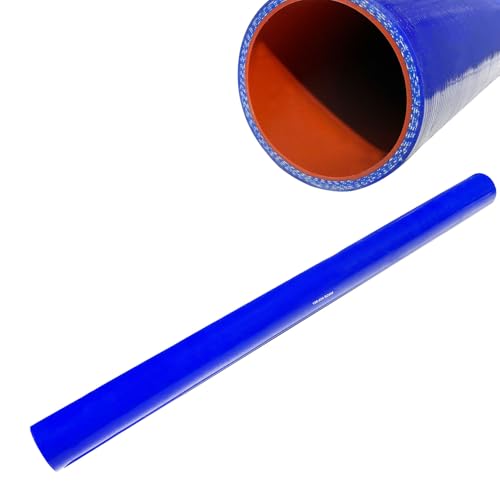
Best for heavy-duty truck or commercial vehicle coolant paths requiring a flat, straight section. This 2.5″ ID hose is designed to fit straight sections without curves, aligning with OE standards for a direct replacement fit. It’s engineered to be easy to install and match factory specifications, reducing fitment issues during upgrades or maintenance. Working with air and water cooling lines, its straight design helps minimize turbulence at the radiator inlet in larger engines.
Who it suits: fleet mechanics and truck operators looking for a fit that mirrors original components. Limitation: not ideal for curved routes; you may need additional hoses for routing in compact bays.
IBESTWOLF 2″ ID x 3 Ft Silicone Hose

Best for trucks and heavy equipment needing a robust 4-ply silicone hose. The 2″ ID x 3 ft length offers a firm, durable option with high-temperature resistance and reinforced polyester fiber, coated with a silicone elastomer to resist aging. This hose is suitable for high-pressure coolant paths, especially on larger engines where extra diameter is advantageous for flow. One consideration is the 3-foot length; longer runs may require additional sections or different routing.
Who it suits: operators and technicians seeking reliability in medium-length coolant runs with heavy-duty construction. Limitations: the 3-foot length may require splicing for longer routes.
EVIL ENERGY 3/8″ Silicone Heater Hose — 5FT

Best for smaller-diameter coolant lines requiring precision routing in compact engine bays. This 3/8″ ID hose meets SAE J20R3 Class A standards and offers a working pressure of 60 PSI with a burst rating around 246 PSI. It features braided polyester reinforcement and dual silicone layers for extended temperature tolerance (-67°F to 356°F) and durability compared to EPDM. The length is 5 feet, making it suitable for short runs or bypass lines in vehicles or industrial equipment.
Who it suits: technicians and DIYers replacing narrow coolant lines or adding a bypass. Caution: ensure the small ID matches the port size to avoid restrictive flow.
Buying Guide: Silicone Hose For Coolant
- What size and diameter do I need? Consider ID for flow and OD for compatibility with clamps and fittings. Always measure port openings and existing hoses.
- What temperature and pressure can the hose handle? Look for high-temperature tolerance and reinforced construction for durability under heat and pressure.
- Is the hose reinforced? Polyester braid or multiple layers improve burst resistance and longevity in engine bays.
- Which length is best? Longer rolls reduce joins but may require more routing planning. Shorter sections simplify tight spaces.
- Coupling and compatibility: ensure the hose material works with coolant types (antifreeze, water) and fits your vehicle’s OE specifications.
- Flexibility vs rigidity: silicone hoses stay flexible at high temps but may soften slightly at extreme heat; ensure routing allows for bends without kinks.
FAQ
- Q: Are silicone hoses better than EPDM for coolant systems? A: Yes, silicone generally offers higher temperature tolerance, longer life, and better aging resistance than EPDM, which improves reliability in demanding engine environments.
- Q: How do I choose the right hose length? A: Estimate the total routing length, then add some overlap for future maintenance. Longer rolls offer flexibility for multiple runs.
- Q: Can I use any diameter hose for my radiator? A: No. Match the hose ID to the radiator outlet and inlet ports, and ensure clamps and fittings fit the hose’s outer diameter.
- Q: What does “4-ply” or “4-layer” mean? A: It indicates multiple layers of silicone and reinforcement (often polyester) that enhance strength and burst resistance under pressure.
- Q: Are these hoses SAE-rated? A: Some models specify SAE J20R3 Class A or similar standards, ensuring compliance with certain automotive requirements for heater and radiator hoses.
- Q: Should I worry about minor expansion at high temps? A: Minor expansion or deformation is common with silicone hoses at high heat but typically does not affect performance or safety during normal use.