If you’re searching for a small engine bore machine, you’re likely looking for a reliable, precise tool to bore and hone engine cylinders for motorcycles, tractors, and compact cars. This guide highlights five strong options and explains who each is best for, so you can pick the right machine for your shop. The following selections balance depth, bore range, and dual-mode operation to suit professional mechanics and serious hobbyists alike. The quick reference table below helps compare key specs at a glance.
| Product | Bore Range | Max Depth | Best For |
|---|---|---|---|
| EQCOTWEA 220V Cylinder Boring Machine | 50–95 mm (1.97–3.74 in) | 170 mm (6.7 in) | Motorcycle and small-tractor engine work with precision and versatility |
| ALLmeter Dial Indicator Bore Gauge | 1.4–6 in | 6 in (150 mm) | Accurate inner-diameter measurement without disassembly |
| INTSUPERMAI 220V Engine Boring Machine | 39–70 mm (1.53–2.75 in) | 160 mm (6.3 in) | Professional cylinder repairs in compact formats |
| TECHTONGDA Motorcycle Cylinder Boring and Honing Machine | 39–70 mm (1.54–2.75 in) | 160 mm (6.3 in) | Compact, dual-mode operation for motorcycles |
| BEILOCKERY 220V T8016A Cylinder Boring Machine | 80–165 mm (3.15–6.5 in) | 400 mm (15.75 in) | Larger cylinder refurbishments and heavy-duty tasks |
Buyer note: For frequent engine block work, look for a rigid boring head, high spindle speed, and a reliable depth range. If you mainly work with motorcycles, a compact bore range and dual-mode operation can save time. If you service tractors or small automobiles, a deeper max depth and heavier base support improve accuracy under load.
EQCOTWEA 220V Cylinder Boring Machine

Key features include a wide boring range and a heavy-duty 250W motor, delivering Φ50–95mm (1.97–3.74 in) bore with a maximum depth of 170 mm (6.7 in). The machine supports both manual and automatic operation via a handwheel, enabling quick adjustments and precise alignment for professional work. The spindle runs at 394 RPM with a 0.1 mm per revolution feed rate, promoting smooth cylinder walls and accurate cuts. This model is best for professional mechanics who repair motorcycle, tractor, and small automobile cylinders with reliable repeatability. A potential limitation is the need for a dedicated 220V supply and space for the base and stand.
Best for: Mechanics who require a robust, versatile boring solution for small engines, with the option to switch between manual and electric control for different tasks.
ALLmeter Dial Indicator Bore Gauge

This gauge set offers a non-disassembly inner diameter measurement workflow, reducing downtime when checking bore sizes. It covers 1.4–6 inches with a high-precision 0.0005 inch reading and a measuring depth up to 6 inches (150 mm). The set includes 15 standard heads from 1.4 to 4 inches, enabling accurate checks across common cylinder sizes. Choose this when you need quick, precise bore measurement material without disassembly. Limitation: It does not bore or hone cylinders itself; it is a measurement tool used in conjunction with boring/honing equipment.
Best for: Shop floor accuracy in dimension verification, especially when you need quick checks before machining or after repairs.
INTSUPERMAI 220V Engine Cylinder Boring Machine

INTSUPERMAI presents a compact professional option with a 250W motor and a 480 RPM main speed. It offers a bore range of Φ39–70 mm (1.53–2.75 in) and a max boring depth of 160 mm (6.3 in). The design emphasizes high machining accuracy, with a rigid head and alignment guidance to ensure vertical cylinder walls. Best for shops performing motorcycle cylinder work with consistent results, especially where space is at a premium. A limitation is the narrower bore range compared to larger machines, which may exclude some larger automotive cylinders.
Best for: Small workshops needing solid accuracy in compact form, particularly for motorcycle cylinders and light automotive work.
TECHTONGDA Motorcycle Cylinder Boring and Honing Machine

TECHTONGDA offers a dual-mode system with a bore range of 39–70 mm (1.54–2.75 in) and a depth up to 160 mm (6.3 in). The spindle can be manually controlled or auto-controlled via a central head screw, enabling flexible operation for varying cylinder geometries. The machine emphasizes alignment to maintain vertical walls and accurate bores, suitable for both motorcycle and light automotive cylinders. Caution: Ensure proper fixtures are used to maintain stability and precise contact during machining to avoid deviation.
Best for: Users needing a simple, dual-mode machine for frequent switching between manual and automated boring tasks, with reliable results on smaller cylinders.
BEILOCKERY 220V T8016A Cylinder Boring Machine
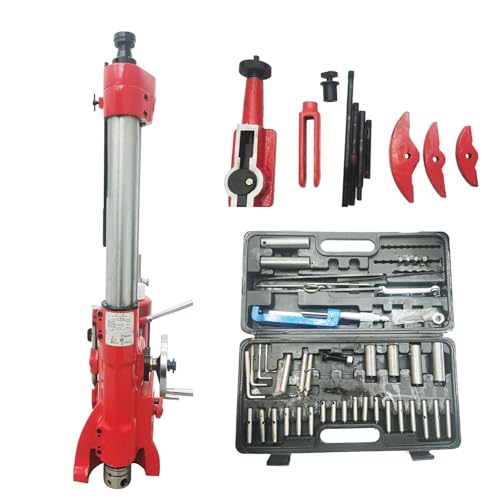
BEILOCKERY’s T8016A model covers a larger bore range of 80–165 mm (3.15–6.5 in) with an impressive depth capacity up to 400 mm (15.75 in), making it suitable for deeper, larger cylinders. It features dual operation modes for manual and automatic boring and boasts higher mobility due to moderate weight. This machine is best for shops tackling cylinder refurbishments that require deeper bores and broader diameters. Limitation: Larger footprint and weight may reduce portability in smaller workspaces.
Best for: Shops performing heavier, deeper cylinder refurbishments where larger bore sizes are routinely required.
Buying Guide: Key Considerations For Small Engine Boring Machines
What bore range do I need?
Choose a bore range that matches the cylinders you service most often. Narrow ranges are sufficient for motorcycles, while larger ranges are better for small cars or tractors.
Depth capacity matters
Max boring depth determines how far into the block you can reach. Deeper bores are essential for certain rebuilding jobs but require a stable base and robust milling head to maintain accuracy.
Manual vs. automatic modes
Dual-mode machines offer flexibility. Manual mode is useful for careful starts and alignment; automatic mode speeds up production when dimensions are stable and repeatable.
Mechanical rigidity and alignment
A high-rigidity boring head and precise alignment features minimize vibration and ensure true bores. Look for micro-adjustment hands, and a spindle designed to maintain perpendicularity with the cylinder wall.
Power and speed compatibility
Most units operate on 220V with motors around 250W, delivering stable torque and consistent cutting. Check local electrical supply and the machine’s rpm to ensure compatibility with your fixtures and tooling.
Portability and base support
Strong base plates and stands improve accuracy, especially when working away from a bench. If you transport the machine, consider mobility features and overall weight.
Measurement tools and accessories
Some sets include dial indicators or gauge heads that help verify bore sizes and alignment before and after machining. Additional accessories can speed up workflow and reduce setup time.
FAQ
- What is a small engine bore machine used for? It is used to bore and hone engine cylinders to restore proper bore size and roundness in small engines such as motorcycles, tractors, and compact cars.
- Do I need a bore machine with a deep reach? If you service engines with tall blocks or deep cylinder bores, a deeper max depth ensures you can complete the job without moving the workpiece mid-process.
- Is manual operation sufficient for bore work? Manual operation offers precise control for setup and alignment, while automatic mode speeds up repetitive tasks; many professionals use both depending on the job.
- What other tools should I pair with a bore machine? A reliable bore gauge or dial indicator set, fixtures for the engine block, and a honing tool are commonly used together for accurate results.
- How important is spindle rigidity? Very important. A rigid spindle with stable feed reduces vibration, improves surface finish, and yields consistent bore dimensions.
- Are these machines suitable for home shops? Yes, many models are designed for professional-level hobbyists and smaller shops, provided you have adequate electrical supply and workspace.