Answering the question, these solar chargers help keep EVs ready by converting sunlight into usable charging power for 12V batteries or portable EV charging. They’re best for early adopters, RVers, boaters, and homeowners seeking a greener, off-grid charging option. The top picks below emphasize reliability, efficiency, and ease of use, with clear guidance on who should choose each model. A quick buyer table follows to compare core specs at a glance.
| Product | Best For | Key Benefit |
|---|---|---|
| POWOXI 7.5W Solar Charger | Casual car owners, emergency keep-alive charging | Smart protection, compact and waterproof |
| SUNER POWER 50W Pro | Off-grid setups, RVs, boats | Ultra-Smart MPPT, high efficiency |
| Voltset 20W Kit | Traveling campers, trailers, small vehicles | 20W, robust protection |
| SOLPERK 20W Kit | All-weather use, multi-battery types | Adjustable mount, durable frame |
| AIXINE Level 1&2 EV Charger | Home or travel charging for BEVs/PHEVs | Flexible Level 1/2 portable charging |
POWOXI Upgraded 7.5W Solar Charger
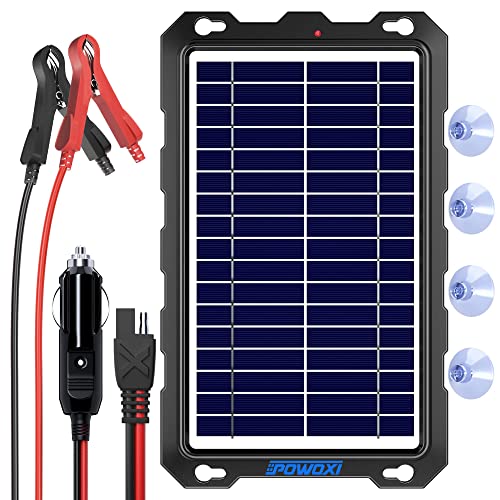
The POWOXI 7.5W solar charger is a portable, waterproof trickle charging kit designed for cars, motorcycles, boats, and more. It includes an intelligent charge controller to manage output and protect the battery from overcharge or short circuits. The system relies on a high-transparency glass panel and corrosion-resistant construction for durability in various weather conditions. This option is best for drivers who want a compact, low-maintenance solution for topping off a 12V battery during outdoor use or extended parking. A potential limitation is its lower wattage, which means slower charging for larger 12V batteries or prolonged charging needs.
Who it is best for: Light-duty vehicle owners, minimal maintenance enthusiasts, and users who want a simple, portable solar trickle charger for on-the-go use.
SUNER POWER 50W Pro Solar Charger Kit

This 50W solar panel kit features Ultra-Smart MPPT technology for high tracking efficiency and peak conversion, aiming to harvest more usable power from sunlight. It supports 12V systems and is built to withstand outdoor exposure with a robust frame and weather-resistant components. The kit excels in off-grid scenarios where more charging power is beneficial, such as camping, RVing, or marine use. A caveat is that 50W may still be insufficient for rapid charging of larger EV batteries, but it provides steady maintenance and trickle charging when sun is available.
Who it is best for: RV owners, boaters, and campers seeking reliable solar charging with advanced MPPT for better efficiency in variable conditions.
Voltset 20W Solar Battery Charger

The Voltset 20W kit uses a high-efficiency MPPT controller with a monocrystalline panel to deliver faster charging for 12V batteries. It emphasizes universal compatibility with LiFePO4, AGM, Gel, Flooded, and Lithium Ion types, making it a flexible option for cars, motorcycles, trailers, boats, and RVs. It includes built-in protection against overcharge, over-discharge, and short circuits, as well as night-time power drainage prevention. A limitation is that at 20W, it’s best suited for maintaining battery health rather than quick replenishment on a larger battery pack.
Who it is best for: Vehicle owners needing a compact, all-weather charger with broad battery compatibility and smart protection.
SOLPERK Solar Panel Kit 20W
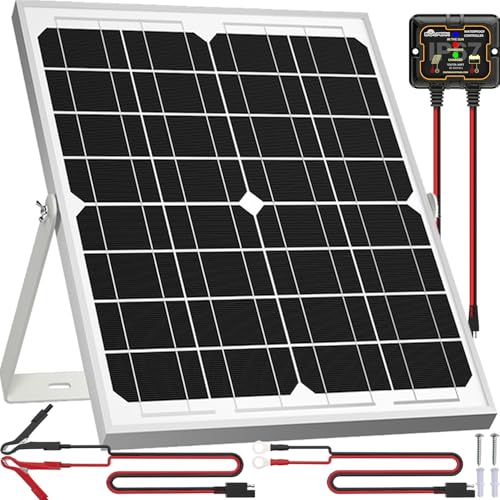
SOLPERK presents a 20W monocrystalline solar panel with a smart MPPT controller and a durable frame. It supports a wide range of 12V batteries including LiFePO4, AGM, GEL, and more. The framework is designed to withstand harsh weather and is waterproof, making it a practical choice for boats, RVs, and outdoor installations. The system includes an adjustable mounting bracket for flexible setup. A limitation is the heavier package size, which may require more mounting space and setup effort.
Who it is best for: Users needing a mid-range solar charging solution with robust weather resistance and broad battery compatibility.
AIXINE Level 1 & 2 EV Charger

The AIXINE charger provides flexible Level 1 and Level 2 charging with 25-foot cable and a 240V NEMA 6-20 plug plus a 120V NEMA 5-15 adapter. It supports J1772-compatible BEVs and PHEVs and offers a travel-ready solution for charging at home or on the road. The unit’s portability and delayed charging option help manage off-peak energy use. A noted limitation is that Tesla vehicles require adapters for J1772 systems, and the charger is not Tesla-native.
Who it is best for: EV owners seeking a portable, versatile charging option for home use or travel with broad vehicle compatibility.
Buying Guide
Key questions to guide a solar charger purchase for EVs:
- What is my charging goal? Quick top-ups or long-term maintenance? Higher-wattage kits deliver faster charging, while smaller panels excel at keeping batteries topped off.
- What vehicles and battery types will I charge? Check compatibility with LiFePO4, AGM, GEL, Flooded, or Lithium Ion batteries and whether the charger supports J1772 standard Compatibility.
- Where will I use it? Consider climate, mounting options, waterproofing, and durability for outdoor use or travel.
- Do I need MPPT control? MPPT optimizes power harvest, especially in variable sun, but adds cost. A basic controller may suffice for maintenance charging.
- Is portability important? If you travel or camp, a compact, lightweight kit is easier to transport and deploy.
What to compare
- Wattage and output stability: Higher watts means faster charging, but real-world results depend on sun and controller efficiency.
- Controller technology: MPPT vs. non-MPPT affects charging efficiency and battery safety.
- Durability: Look for waterproof, weatherproof enclosures and tempered glass for longevity.
- Battery compatibility: Ensure the kit supports your battery type and vehicle inlet standards.
- Portability vs. installation needs: Some kits are plug-and-play; others require mounting hardware and cables.
FAQ
- Can these solar chargers fully replenish an EV battery? Generally not for large BEV packs; they’re intended for maintaining 12V systems or topping off smaller batteries, or providing auxiliary charging when sun is ample.
- Do MPPT solar chargers save energy? Yes, MPPT optimizes power harvest, improving efficiency in varying light conditions.
- Are portable EV chargers safe to use outdoors? Most are designed for outdoor use, but always follow manufacturer guidelines and ensure proper weather protection.
- Which charger is best for a travel trailer? A mid-range 20W–50W panel with robust MPPT and framing is typically versatile for trailers and RVs.
- Do I need adapters for Tesla? Some J1772-based units require adapters for Tesla vehicles; confirm inlet compatibility before purchase.
- Is maintenance required? Many options are maintenance-free beyond occasional cleaning; always verify if a smart controller stops charging automatically when the battery is full.