Answer: These solar panels are ideal for converting sunlight into reliable off-grid power for van life. The top picks here balance compact installs, high efficiency, and dependable performance for different van layouts. Best for different buyers: compact setups suit Class B vans; higher-wattage bifacial options fit larger roof spaces or roof extensions; flexible panels work well on curved surfaces. Below is a quick, buyer-friendly summary of the five selected products.
| Product | Key Benefit | Best For |
|---|---|---|
| ECO-WORTHY 200 Watts Kit | High efficiency monocrystalline cells with durable frame | Moderate roof space, RVs and caravans needing steady runtime |
| Callsun N-Type 16BB 400W Bifacial (2×200W) | Dual-side output with anti-shade design | Larger roof space, off-grid homes or vans with reflective surfaces |
| Renogy 200W N-Type 16BB | Compact for tight spaces; 25% cell efficiency | Class B vans needing space-saving, flexible installation |
| SOLPERK 20W Kit | Waterproof, durable, smart MPPT controller | Battery maintenance and trickle charging on small systems |
| Callsun N-Type 400W Bifacial (2×200W) | High efficiency with bifacial design, anti-shade tech | Rooftops with ample space and varied sunlight exposure |
What to expect: This article presents five solar panels optimized for van life, focusing on efficiency, durability, and practical installation. Each entry highlights who should consider the product, why it was chosen, and a concise limitation to help you compare quickly.
ECO-WORTHY 200 Watts Solar Panel Kit
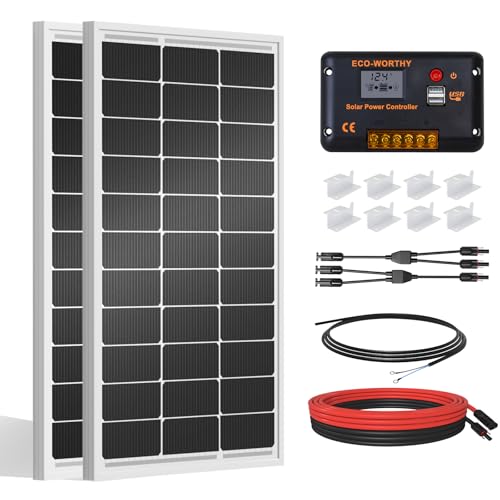
Best for: Van owners who want a robust, mid-wattage kit with a reliable PWM charge controller for RV and camper use. This kit uses high-efficiency monocrystalline solar cells and includes a 30A PWM controller, enabling straightforward setup for many off-grid van systems.
- Daily output expectation: up to 800Wh per day under four hours of full sun, depending on conditions.
- Durability: corrosion-resistant aluminum frame; withstands strong wind and snow loads; IP65-rated junction box for protection.
- Design note: 35.2 by 23.1 by 0.37-inch footprint fits many van roof layouts.
Caution: PWM controllers are typically more affordable but may offer lower efficiency at high battery voltages compared with MPPT options. This kit assumes typical 12V or 24V van systems and straightforward wiring.
Callsun N-Type 16BB 400W Bifacial Kit

Best for: Vans with ample roof space or outdoor setups where rear-side sunlight can be reflected for extra energy. The pair of 200W modules use N-type cells with 16BB busbars, delivering higher efficiency and more robust performance in challenging light.
- Key features: up to 25% efficiency; bifacial design captures rear-side rays for up to 30% more power; twin-cell anti-shade technology reduces impact of shading by up to 50%.
- Mounting note: Bifacial panels require appropriate mounting considerations to maximize rear-side light capture.
- Limitation: Higher upfront cost compared to standard single-face panels.
Renogy Solar Panels 200W N-Type

Best for: Vans where space is tight but a reliable 200W output is desired. Renogy’s 200W N-Type panel is compact, with 25% efficiency and 16BB cell design to help reduce microcracks and improve performance in hot climates.
- Highlights: smaller and lighter than typical panels for Class B vans; 24V system compatibility reduces current loss and improves overall efficiency.
- Installation note: optimized for 12V and 24V battery systems, including Lithium and AGM options.
- Limitation: May require careful roof layout planning to fit the compact form factor on smaller vans.
SOLPERK Solar Panel Kit 20W
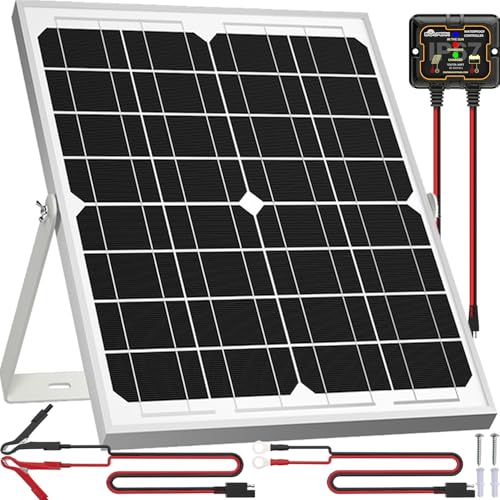
Best for: Van owners needing a compact trickle-charging solution for maintenance and small battery banks. Includes an MPPT controller and mountable hardware for simple installs.
- Key features: high efficiency (21–30% cell efficiency) with monocrystalline A+ cells; waterproof and corrosion-resistant construction; robust withstanding of weather conditions up to 2400Pa wind and 5400Pa snow.
- Controller advantage: smart MPPT controller offers improved charging efficiency over standard PWM.
- Limitation: 20W output is best for small battery banks or secondary charging rather than full van energy needs.
Callsun N-Type 16BB 400W Bifacial (Second Pair)

Best for: Van owners who want maximum daytime energy capture in varied sunlight conditions. The dual-module anti-shade design helps maintain output when parts of the roof are shaded.
- Highlights: up to 25% efficiency with N-Type 16BB cells; bifacial design adds up to 30% more power; shading tolerance enhanced by TwinCell technology.
- Installation tip: ensure reflective surfaces beneath the panel to maximize rear-side gains.
- Limitation: More complex wiring considerations for bifacial setups and potential aesthetic impact on smaller roofs.
Buying Guide: Solar Panels For Van Life
What matters most when choosing van solar panels? Here are practical considerations to guide your decision.
- Power needs: Estimate daily energy usage in watt-hours. Match this to panel wattage and a compatible charge controller (PWM for simpler systems, MPPT for higher efficiency).
- Roof space and weight: Assess available roof area and weight limits. Compact panels help in tight vans, while higher-wattage bifacial options suit larger roofs.
- Mounting and durability: Look for corrosion-resistant frames, IP-rated junction boxes, and weather resistance to withstand road exposure and climate.
- System type: 12V vs 24V systems affect wiring, battery compatibility, and efficiency. Consider Lithium or deep-cycle AGM batteries for longer life.
- Shading and installation layout: Anti-shade technologies and bifacial designs can add resilience in mixed light, but installation height and angle matter for performance.
- Budget vs. performance: MPPT controllers typically cost more but improve energy harvest, especially in variable sun conditions.
Frequently Asked Questions
- What is the difference between PWM and MPPT for van solar systems?
PWM controllers are simpler and affordable but can be less efficient at higher battery voltages. MPPT controllers extract more power from panels, especially in cold or partially shaded conditions.
- Can I mix different solar panel types on one van system?
Yes, but ensure the panels are wired appropriately and that the controller can handle the total voltage and current. Mismatched panels can reduce overall efficiency.
- Is bifacial solar technology worth it for a van?
It can be beneficial if the van roof has reflective surfaces or if panels are installed over ground or reflective materials. On typical roofs, gains may be modest unless conditions favor rear-side capture.
- How many watts do I need for off-grid van living?
It depends on appliances and usage. A common range is 200–400 watts for compact vans with modest energy needs, scaling up for larger setups with air conditioning or high-usage devices.
- What maintenance is required for van solar panels?
Regular cleaning to remove dust and debris, checking wiring and seals, and monitoring battery health. Inspect mounting hardware annually for corrosion or loosening.