The best speed controller for an electric bike depends on your system voltage, motor type, and riding needs. This guide highlights five reliable options and explains who each is best for. It focuses on 36V–48V setups, high-power needs, and compatibility with brushless or brushed motors. Whether you’re upgrading for hills, commuting, or off-road adventures, identify your motor type and voltage to pick the right controller.
Buyer summary table (quick reference)
| Product | Best For | Key Benefit | Notable Limitation |
|—|—|—|—|
| CSBST 24V/36V/48V Ebike Controller Kit (25A, 500W) | Entry-to-mid power builds | Good protection features and LCD display | May require precise wiring for some motors |
| CHENHO 36V/48V/64V 30A 750W/1000W Controller | High-power brushless systems | Sine wave efficiency and quiet operation | Higher current requires adequate cooling |
| CSBST 24V/36V/48V Ebike Controller Kit (500W, 25A) | Brushed or brushless setups | LCD display with real-time data | Limited high-current capability vs 1000W models |
| Maxmartt 500W Brushed Controller & Throttle | Budget, brushed motors | Easy installation and clear labeling | Brushed motors only; heat management critical |
| KT 25A Ebike Brushless Controller (36V/48V) | 750W brushless setups | Aluminum shell with solid heat dissipation | Requires compatible KT accessories |
CSBST 24V/36V/48V Ebike Controller Kit (25A, 500W)

This 500W brushless motor controller is designed for 24V–48V systems. It emphasizes good heat dissipation, low noise, and durability to extend controller life. It includes an LCD display for real-time data and supports brake-off, undervoltage, and overcurrent protections. Best for riders upgrading a mid-range system who want steady speed control and useful information on the go.
Who it’s best for: riders building a mid-power e-bike or converting a scooter with a brushless motor, who value protection features and an integrated display. Why selected: balanced performance, protection features, and an LCD panel streamline troubleshooting and monitoring.
Caution: ensure your motor is compatible with a 500W brushless controller and confirm correct wiring to avoid protection triggers or poor throttle response.
WEIYINGSI Motor Speed Controller 36V 500W

This 36V 500W controller is built for DC brushed motors (not suitable for brushless types). It features rubber grommets and an integrated aluminum housing with cooling fins, providing sturdy protection from the elements and dependable performance. Best for riders who have a brushed motor and want a rugged unit with straightforward wiring.
Who it’s best for: riders with brushed motors seeking a robust, weather-protected controller. Why selected: durable housing and practical protection features for everyday riding. Caution: not suitable for brushless motors; verify motor type before purchase.
CHENHO Electric Bike Controller 36V/48V/64V 30A
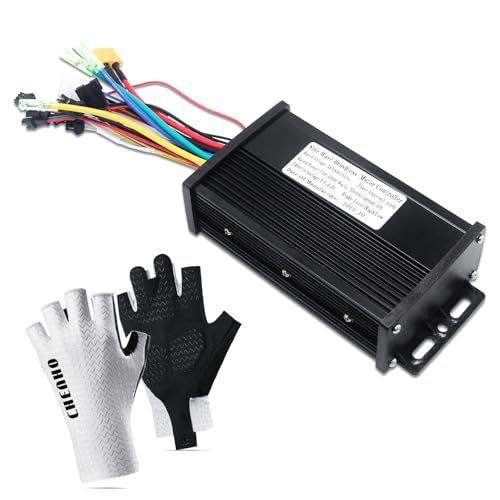
This high-performance controller supports 36V–64V systems and offers 30A (15A rated) with 750W/1000W configurations. It uses sine wave technology for quieter operation and smoother acceleration, suitable for brushless motors with or without Hall sensors. Best for riders needing strong torque and smoother rides on hills or off-road terrain.
Who it’s best for: high-power e-bikes and scooters that require quiet operation and reliable, precise throttle response. Why selected: sine wave technology improves efficiency and ride comfort. Caution: higher current means you should monitor heat and ensure adequate cooling to avoid overheating.
CSBST 24V/36V/48V Ebike Controller Kit (500W, LCD Display)

This 500W brushless motor controller variant emphasizes a versatile LCD display showing real-time speed, battery power, riding time, and mileage. It supports 36V–48V systems and includes protection features like brake-off, undervoltage, and overcurrent safeguards. Best for riders who want a compact, informative controller with a modern display.
Who it’s best for: riders seeking integrated data readouts for monitoring ride metrics. Why selected: the LCD panel adds visibility for performance and energy usage. Caution: verify compatibility with your motor’s voltage and type (brushless) to ensure optimal operation.
ChongXiao Electric Scooter Throttle E-Bike Speed Controller

This universal throttle controller supports 36V–72V configurations and is designed for throttle-based speed control in electric scooters and bikes. It provides acceleration control and is compatible with multiple voltages, making it a flexible option for mixed-voltage builds. Best for riders who need a universal throttle solution for varied systems.
Who it’s best for: riders who want a universal throttle option usable across several voltage setups. Why selected: broad voltage compatibility. Caution: verify that your motor type and wiring harness match the throttle’s input requirements to avoid mismatches.
Maxmartt 500W Brushed Speed Controller & Throttle Grip

Designed for 24V brushed motors, this controller features a user-friendly throttle grip, easy installation, and a robust circuit board. It offers high torque and relatively simple wiring, with protections like reverse polarity and current protection. Best for budget builds or straightforward upgrades where brushed motors are used.
Who it’s best for: riders seeking an affordable, easy-to-install option for brushed motor bikes or scooters. Why selected: clear labeling and simple setup help beginners. Caution: not suitable for brushless motors; check motor compatibility before purchasing.
Buying Guide
What motor type and voltage are compatible?
Choose a controller that matches your motor’s voltage (24V, 36V, 48V, or higher) and type (brushed or brushless). Brushless controllers are common for modern e-bikes and deliver smoother, more efficient performance, while brushed controllers are often simpler and cheaper but require a compatible brushed motor.
How important are protections and safety features?
Look for overcurrent, undervoltage, and brake-off protections. These safeguards protect both the motor and battery from damage during abrupt stops or charging inconsistencies. An LCD or data display can help monitor critical metrics during rides.
What about heat dissipation and durability?
Controllers with aluminum housings and cooling fins typically dissipate heat better, supporting sustained performance on long climbs or high-speed riding. Weatherproofing is also valuable for riders in varied climates.
Is a sine-wave controller worth it?
Sine-wave technology delivers quieter operation and smoother acceleration, reducing mechanical stress on the drivetrain. It’s especially beneficial for higher-power setups or riders who value ride comfort and efficiency.
What installation considerations matter?
Ensure the ports and wiring match your motor and battery harness. Clear labeling helps setup, but some installations may require additional adapters or wiring work. If in doubt, check compatibility with your motor’s Hall sensor configuration and throttle type.
What’s the best value for money?
For entry-level builds, a 500W controller with essential protections and an LCD display offers solid value. For high-power setups, choose controllers designed for 750W–1000W with effective heat management and sine-wave operation.
FAQ
- Q: Can I use any controller with any e-bike motor?
- A: No. Compatibility depends on voltage, motor type (brushed vs brushless), and sensor configuration. Always verify voltage range and signal compatibility.
- Q: Is a bigger current rating always better?
- A: Higher current supports more powerful motors but requires proper cooling and wiring to prevent overheating and electrical issues.
- Q: Do I need an LCD display on my controller?
- A: An LCD display helps monitor speed, battery, and ride metrics, but is not mandatory for operation. Choose based on how much data you want during rides.
- Q: What maintenance is needed for speed controllers?
- A: Regularly check wiring connections, inspect for corrosion or heat damage, and ensure connectors are secure. Replace damaged components promptly to maintain performance.