Stop leaks quickly and safely with proven products designed to seal brake lines, hydraulic systems, and cooling components. This guide highlights five reliable options and clarifies who each product is best for, helping you choose the right one for your vehicle maintenance needs. Whether you need a temporary seal during repairs or ongoing protection for aging seals, these Stop Leak formulations are chosen for durability and clarity in their application.
| Product | Brand | Best For |
|---|---|---|
| ATP Automotive AT-205 Re-Seal Stops Leaks | atp automotive | Professional resealing of various rubber seals and gaskets; ideal for shop-grade repairs or DIY with diverse components |
| OUKENS 7PCS Fluid Line Stoppers Set | OUKENS | Safer maintenance when working on brake lines and hydraulic circuits; blocks leaks during service |
| Bar’s Leaks Cooling System Radiator Stop Leak | Bar’s Leaks | Radiator and cooling system leaks; suitable for sealing leaks in coolant paths |
| Bar’s Leaks Jack Oil with Stop Leak | Bar’s Leaks | Lubricates and stops leaks in floor jacks and related fluids; helpful in maintenance bays |
| Lucas Oil Hydraulic Stop Leak | Lucas Oil | Hydraulic systems and wet brakes; reduces leaks and renews seals in fluid power components |
ATP Automotive AT-205 Re-Seal Stops Leaks

Features include professional-strength, fast-acting resealing that rejuvenates rubber seals and gaskets across engines, transmissions, power steering, differentials, and hydraulic systems. It is compatible with conventional and synthetic oils, ATF, gear oil, power steering fluids, and hydraulic oil. This product is best for mechanics and DIYers dealing with persistent leaks in multiple systems and who need a versatile sealant with broad compatibility. Caution: avoid overuse in sealed systems or on components not specified for sealant treatments, and check compatibility with your oil type before use.
OUKENS 7PCS Fluid Line Stoppers Set

This set includes hose clamp pliers and plugs designed to block leaks in brake lines, fuel rails, hoses, and other critical lines. The kit emphasizes safety and efficiency, with high-temperature and high-pressure resistance for demanding automotive repair environments. It is best for DIYers and professional technicians who work on brake and hydraulic lines and want a tool-assisted approach to plugging leaks. Limitation: designed for line plugging rather than durable long-term sealant, so it should be used in conjunction with proper line repair or replacement when needed.
Bar’s Leaks Cooling System Radiator Stop Leak
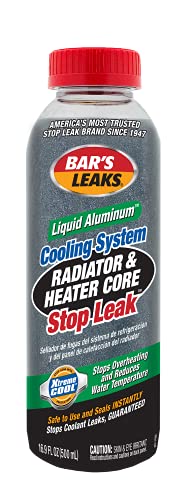
Bar’s Leaks Radiation Stop Leak seals radiator leaks, including freeze plug and heater core leaks, and can help lower engine operating temperature by sealing leaks in the cooling circuit. It is best for drivers with intermittent radiator or coolant leaks who want a quick fix that minimizes overheating risk. Caution: sealant can sometimes clog narrow passages if used excessively; follow product directions and flush if needed during future service.
Bar’s Leaks Jack Oil With Stop Leak
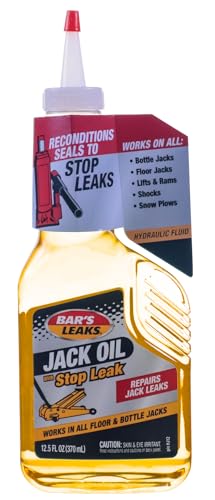
This product stops current leaks in floor and bottle jacks and works with all snow plow fluids. It is non-corrosive, non-clogging, and non-foaming, making it suitable for maintenance bays and portable jacks. Best for shop environments that require a reliable leak-stop properties in hydraulic or fluid systems associated with jacks. Limitation: not designed to address leaks in the vehicle’s engine or transmission seals; use for dedicated jack and hydraulic applications only.
Lucas Oil 10278 Engine Oil Stop Leak

Lucas Oil 10278 is compatible with petroleum, semi-synthetic, and full synthetic motor oils. It renews worn seals with no risk of damage or corrosion and reduces engine noise and oil consumption while raising oil pressure. This option is best for engines prone to oil leaks due to aging seals and for motorists seeking an additive that integrates with typical engine oil. Caution: designed for engine oil systems; avoid using in non-engine hydraulic circuits unless specified by Lucas Oil guidelines.
Buying Guide: Stop Leaks For Brakes And Related Systems
What should I consider before choosing a stop leak product?
- System compatibility: Confirm the product’s compatibility with brake hydraulics, cooling systems, and/or engine oil. Do not mix products across incompatible systems unless explicitly stated.
- Leak type: Identify whether you face a slow seep, a hard-to-seal line, or an older seal that needs rejuvenation. Some products are better for seals, others for radiators or hydraulic lines.
- Application scope: Decide between a multi-purpose sealant and a targeted solution for a specific component such as brakes, radiators, or floor jacks.
- Safety and usage: Check for warnings about high-temperature or high-pressure environments and ensure you follow instructions to avoid unintended damage.
- Long-term vs. temporary fix: Some products provide a quick stop, while others offer ongoing seal restoration. Align with your maintenance goals.
How do I apply a stop leak safely?
- Read the product label thoroughly before applying any sealant or additive.
- For brake and hydraulic lines, use products designed for such systems and avoid introducing contaminants.
- If a leak persists after treatment, consult a professional mechanic to inspect for damaged lines or worn seals that require replacement.
What are the limitations of stop leak products?
- Not all leaks can be fixed with sealants; structural damage or corroded lines may require replacement.
- Overuse can lead to clogged passages or reduced performance in tight systems.
- Some products may interact with certain fluids; always check compatibility with your vehicle’s oil, coolant, or hydraulic fluids.
FAQ
- Q: Can I use brake stop leak products in any brake system? A: Use products specifically labeled for brakes or hydraulic systems; incorrect use can affect braking performance.
- Q: Will stop leak damage my engine or transmission? A: When used as directed for the intended system, most products are formulated to minimize risk, but avoid cross-application without guidance.
- Q: Do these products require professional installation? A: Many are DIY-friendly, but severe leaks or complex brake line issues should be inspected by a mechanic.
- Q: How quickly do stops leak products take effect? A: Some act within a short period after application; others work gradually as seals rejuvenate and pressure stabilizes.
- Q: Are there performance trade-offs after using stop leak? A: In some cases, a temporary fix may mask underlying issues; monitor the system and plan a proper repair if leaks recur.
- Q: Can stop leak cause damage to cooling systems? A: Choose a radiator-specific stop leak for cooling systems to avoid unintended blockages in other components.