When a gas tank leaks, the goal is to stop the leak quickly with a durable, tank-safe repair. This guide highlights select, store-friendly epoxy putties, sealers, and repair kits designed to seal metal tanks, radiators, and related components. Each product is described with who it’s best for, why it was chosen, and practical limitations. This selection is ideal for DIY enthusiasts, professional mechanics seeking quick fixes, and vehicle owners aiming to prevent rust and fuel loss.
Buyer’s quick-reference table:
| Product | Best For | Why It Stands Out | Limitations |
|---|---|---|---|
| J-B Weld 8217 TankWeld | Temporary or quick permanent fix on metal tanks | Fast set, steel-reinforced epoxy; strong 900 PSI tensile strength | Not a cleaning solution; prepare surface first |
| J-B Weld 2110 Metal Fuel Tank Repair Kit | Professional-style repairs without removing the tank | All-in-one kit; original cold-weld concept; simple to use | Requires curing time |
| POR-15 Fuel Tank Sealer (8 oz) | Long-term rust prevention and sealing | Non-porous film; resistant to all fuels | Prep steps required for best adhesion |
| ProSeal Instant Gas Tank & Radiator Repair | Small holes and cracks on wet surfaces | Steel-reinforced; quick 2–4 hour hardening | Full cure takes longer; follow curing schedule |
| Permatex 09101 Fuel Tank Repair Kit | Metal fuel tanks repair in minutes | All required components in one kit | Not for plastic tanks |
J-B Weld 8217 TankWeld Gas Tank Repair

Best for: metal fuel tanks and other metal-based containers with minor leaks. This hand-mixable epoxy putty is steel-reinforced and non-rusting, offering fast setting and durable results. It repairs or rebuilds metal surfaces exposed to fuel and environmental wear. Use for quick field repairs or in-shop fixes where removing the tank is inconvenient.
Why selected: The product’s convenience and fast cure make it a strong option for users who need a simple, do-it-yourself repair without specialized equipment. Tensile strength of 900 PSI provides a robust seal for many tank scenarios.
Limitations: Surface preparation is essential for best adhesion, and it is not a long-term substitute in all highly stressed or high-heat environments. Expect a cure times of about 5 minutes to set and 1 hour to reach full strength.
Best practice tip: Clean, dry, and roughen the repair area before applying, and clamp or hold the patch while it cures to maximize contact.
J-B Weld 2110 Metal Fuel Tank Repair Kit

Best for: users seeking a complete, professional-style repair solution that doesn’t require tank removal. This kit embodies the original cold-weld concept for metal repair in harsh environments.
Why selected: It combines epoxy putty with fiberglass cloth and accessories to enable stronger, longer-lasting repairs. The kit is designed to be user-friendly, enabling holes up to 3/8″ in diameter or cracks up to 4″ long. The self-contained components reduce the need for extra tools.
Limitations: Cure speeds depend on ambient temperature and surface prep. The kit assumes some DIY familiarity with surface cleaning and mixing. Full cure may take up to several hours to achieve maximum strength.
Best practice tip: Follow the included instructions closely for mixing ratios and surface prep to maximize bond strength and durability over time.
POR-15 Fuel Tank Sealer (8 oz)
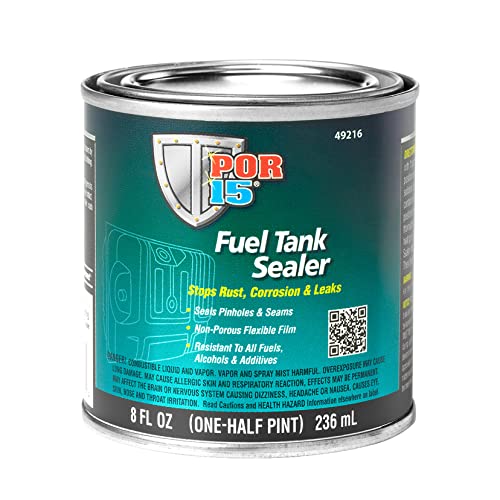
Best for: metal fuel tanks requiring rust stopping and long-term sealing. POR-15 is known for rust prevention and fuel resistance, which makes it a go-to for corrosion protection inside tanks.
Why selected: The sealer forms a non-porous, flexible film that resists fuel, alcohol, and additives. It is designed to prevent rust and seal leaks, contributing to a longer tank life when used with proper prep and cleaning.
Limitations: Proper surface prep is critical; failure to clean and dry the tank thoroughly can lead to coating failure. It is not suitable for plastic tanks, or for applications where quick-turn repairs are needed.
Best practice tip: Drain and clean the tank, remove debris, and follow the recommended drying time before applying the sealer to ensure optimal adhesion and performance.
KBS Coatings 5200 Gold Standard Tank Sealer

Best for: users wanting a metal tank sealer with strong durability and American-made backing. The 8 fl. oz. size is a common choice for mid-size repair jobs.
Why selected: It’s designed to provide robust protection for metal tanks against rust and fuel exposure, with a focus on long-term performance. Its packaging and formulation are optimized for professional-use standards while remaining accessible to DIYers.
Limitations: Specific performance claims can vary with surface condition and preparation. It may require precise mixing and application to realize its full sealing potential.
Best practice tip: Ensure the tank interior is thoroughly cleaned and degreased before applying the sealer for best results and durability over time.
Permatex 09101 Fuel Tank Repair Kit

Best for: metal fuel tanks needing a quick, comprehensive repair solution with all necessary components included. A practical option for on-the-go maintenance and emergency repairs.
Why selected: The kit contains everything required for professional-quality repairs on metal tanks in minutes, improving turnaround for field or shop repairs. It emphasizes ease of use and reliable results for common leaks.
Limitations: Not recommended for plastic tanks; adherence can depend on proper surface preparation and environment. It’s best used for smaller holes and cracks typical of seasoned tanks.
Buying Guide
What type of leak am I repairing?
Metal tanks vs. plastic: Metal tanks commonly benefit from epoxy putties and metal-reinforced seals, while plastic tanks may require compatible sealants or dedicated plastic tank repair products.
Do I need a full kit or a single repair compound?
For quick, on-the-spot fixes, epoxy putties like TankWeld or repair kits with accessories (fiberglass cloth, sandpaper) provide convenience. For rust prevention and long-term sealing, a fuel tank sealer such as POR-15 is useful.
What curing time is acceptable?
Short-term fixes can set in minutes, but full cure times can range from several hours to a day. Consider whether the repair is in a difficult or temperature-controlled environment when planning the cure window.
How important is rust resistance?
Rust prevention is crucial for metal tanks. Sealer products with rust inhibitors extend tank life. Always follow prep instructions to maximize rust resistance.
What prep steps are essential?
Drain the tank when possible, remove debris, clean surfaces, and dry thoroughly before applying any sealer or putty. Prep consistency strongly influences adhesion and longevity.
FAQ
- Q: Can these products fix a leaking plastic gas tank? A: Most listed products target metal tanks. For plastic tanks, look for products explicitly rated for plastic materials.
- Q: Do I need to remove the fuel from the tank before applying these repairs? A: Some products are formulated to work with the tank in place, but always follow the manufacturer’s instructions for safety and effectiveness.
- Q: How long does full cure take? A: Cure times vary by product; plan for several hours to a full day depending on ambient conditions and product specifications.
- Q: Is rust prevention part of the repair? A: Many fuel tank sealers also prevent rust; rust prevention is recommended whenever feasible to extend the life of metal tanks.
- Q: Will these repairs guarantee a leak-free tank? A: Repairs improve leak resistance but may not be permanent under all operating conditions. Regular inspection is advised.
- Q: Are there safety considerations when applying these repairs? A: Work in a well-ventilated area, avoid ignition sources, and follow all label directions for handling and curing.