Answering the need for precise, repeatable measurements, these straight edges are essential for inspecting cylinder heads, engine blocks, and related components. Best for machine shops, automotive hobbyists, and professional mechanics, these tools help detect warps, twists, and runouts with confidence. The top picks offer varying lengths, materials, and optional feeler gauges to suit different inspection tasks. Below, you’ll find five options well-suited to verify flatness, ensure proper surface alignment, and support reliable engine assembly and maintenance.
| Product | Length | Material | Notable Feature | Best For |
|---|---|---|---|---|
| ReluxGo 24 Inch Machinist Straight Edge | 24″ | Steel | Patented design with feeler gauges | Heavy-duty engine blocks and cylinder heads |
| Taytools 24 Inch SE24 Anodized Aluminum | 24″ | Aluminum | Guaranteed straight within 0.001″ | Lightweight, long reach |
| Taytools 12 Inch Anodized Aluminum | 12″ | Aluminum | Guaranteed straight within 0.0005″ | Small components and tight areas |
| Fuerdich 24 Inch Machinist Straight Edge | 24″ | Steel | Includes feeler gauges | General engine and block inspection |
| Noliven 24 Inch Machinist Straight Edge | 24″ | Steel | Patented precision with gauge kit | Precision checks on heads, blocks, flywheels |
ReluxGo 24 Inch Machinist Straight Edge Tool

ReluxGo’s 24-inch steel straight edge is designed to verify surface straightness on parts and gear trains. It pairs with a complimentary feeler gauge to detect distortions in engine blocks, cylinder heads, and flywheels. The tool’s precision-ground edge aims for a tolerance of +/- 0.001 inch, supporting accurate inspections where flatness matters. Best for professional shops and serious hobbyists needing reliable, repeatable measurements across multiple components. Caution: steel edges may require protective storage to minimize rust over time.
Taytools 24 Inch Anodized Aluminum SE24

This 24-inch anodized aluminum straight edge delivers a light, rigid reference for long-span measurements. Guaranteed straight to within 0.001 inch along the full length, it features a machined flat reference edge and a width that supports stable placement on parts. Best for lighter components, aerospace or automotive work where reduced weight reduces user fatigue. Better for field work than heavier steel tools. Limitation: aluminum may bend if subjected to extreme leverage on very thick blocks.
Taytools 12 Inch Anodized Aluminum Straight Edge
This 12-inch Taytools straight edge provides high precision in a compact form. Guaranteed straight within 0.0005 inch, it uses a durable anodized aluminum finish with a flat, smooth reference edge. Best for inspecting smaller engine components like valve covers, bearing caps, or short spans within cylinder heads. Choose this if you need excellent precision in tight spaces. Caution: shorter length may require repositioning when checking long surfaces.
Fuerdich 24 Inch Machinist Straight Edge With Feeler Gauges

Fuerdich offers a 24.8-inch cylinder head straight edge that comes with feeler gauges for integrated distortion checks. The combination supports multi-industry use from automotive powertrains to machine bed inspections. Best for users who want an all-in-one solution to verify flatness quickly during maintenance. Better for those who frequently inspect engine components in a shop setting. Limitation: gauge compatibility should be checked to ensure it covers the widest inspection range needed.
Noliven 24 Inch Machinist Straight Edge
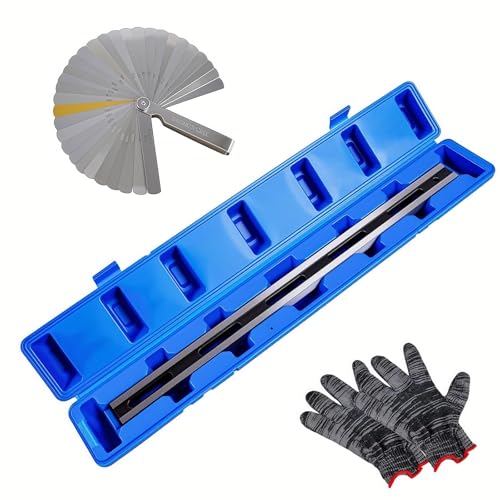
Noliven’s 24-inch straight edge is a patented precision tool designed for surface flatness checks on cylinder heads, engine blocks, and flywheels. Includes a feeler gauge set for warp detection, and a precision-ground edge with ±0.001 inch accuracy. Best for users seeking a robust steel option with integrated measurement aids. Caution: steel construction requires careful handling to prevent nicks on the reference edge.
Buying Guide
How to choose the right length
Longer straight edges cover more surface area, reducing the number of repositionings when inspecting large cylinder heads or engine blocks. Shorter edges can be more maneuverable in tight spaces and help with precise checks on smaller components.
Material matters: steel vs aluminum
Steel straight edges offer maximum rigidity and accuracy under load, suitable for heavy engine blocks. Aluminum options are lighter and corrosion-resistant, ideal for field work and quick checks but may bend under high leverage.
With or without feeler gauges
Tools with integrated feeler gauges streamline warp detection during maintenance. If you frequently measure flatness, a model with gauges saves setup time. If you rarely use gauges, a basic straight edge may suffice.
Precision tolerance to expect
Common tolerances range from 0.0005 inch to 0.001 inch over the full length. A tighter tolerance is beneficial for high-precision work, such as valve seat alignment or cam bearing saddles. Always consider your typical inspection requirements when selecting tolerance.
Durability and storage considerations
Consider whether the tool will be stored in a workshop or transported for field inspections. Anodized aluminum resists corrosion and is lighter, while steel edges stand up to sustained rigidity but require proper rust prevention and storage.
Use-case scenarios to match with product
- Best for heavy engine blocks and flywheels: ReluxGo, Noliven.
- Better for long-span checks and field use: Taytools SE24 (aluminum).
- Choose this if you work in tight spaces: 12-inch Taytools.
- Best all-in-one with gauges: Fuerdich 24″ offers integrated measurement aids.
FAQ
Q: Do these straight edges require calibration?
A: They provide a reference edge specified to tight tolerances, but routine checks against known standards are recommended for critical work.
Q: Which length is most versatile?
A: 24 inches cover most engine blocks and cylinder heads, offering a balance between reach and control.
Q: Can aluminum straight edges be used for engine blocks?
A: Yes, for many checks, though steel may be preferred when high rigidity is essential or under heavy leverage.
Q: Are packaged gauges compatible with all engines?
A: Gauges are typically standard but verify gauge range to ensure it matches the expected deviations in your components.
Q: How should I care for these tools?
A: Wipe clean after use, keep dry to prevent rust on steel tools, and store in a protective case or box to avoid nicks on the reference edge.