Looking for a reliable way to add horsepower to a 4.8L LS engine? This guide highlights five strong options that fit 4.8Ls and related LS blocks, with clear, practical reasons to choose each. The selections range from complete supercharger kits to high-flow intake manifolds that pair well with forced induction. Each product is evaluated for who benefits most, along with a realistic note on any limitations you should know before buying.
Summary table of chosen products
| Product | Best For | Why It Stands Out | Key Limitation |
|---|---|---|---|
| Speedmaster Complete 6-71 Roots Supercharger Kit | Street-driven LS engines needing instant boost | Adds 45-55% horsepower with a complete bolt-on kit | Carbs/fuel sold separately; verify rotating assembly for sustained race use |
| Edelbrock 1578 E-Force Supercharger Kit | GM trucks and SUVs with 4.8/5.3/6.0L engines | Balanced horsepower and torque gains with a proven supercharger option | Boost and power figures depend on application; not a universal fit for all LS models |
| POSENG LS Intake Manifold with 102mm Throttle Body Kit | LS engines when pursuing high-flow intake with throttle body | 102mm throttle body for improved LS performance, compatible with 4.8/5.3/6.0/6.2 | Manifold must be matched with adapters for optimal fit; compatibility nuances |
Speedmaster Complete 6-71 Roots Supercharger Kit
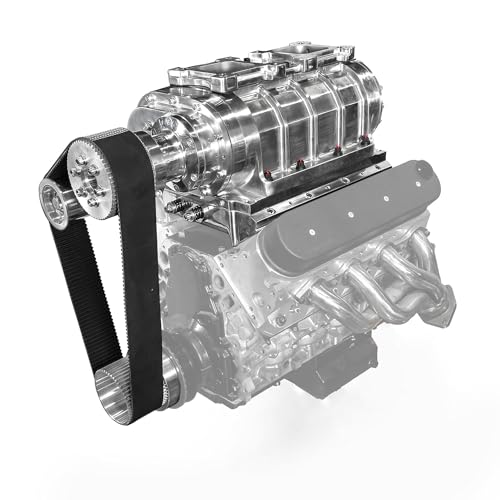
What it is: A complete 6-71 Roots-style supercharger kit designed to bolt onto GM LS family engines, including the 4.8L and various LS blocks. It features double-pinned rotors, factory timing for consistent boost, and comes as a bolt-on package with an intake manifold, snout, pulleys, belt, and gaskets. Best for streetable boost with straightforward installation.
Who it’s best for: This kit is ideal for builders seeking a documented, turnkey boost solution for a 4.8L LS that wants quick throttle response and noticeable horsepower gains. It suits buyers who want a ready-to-run setup rather than sourcing individual components.
Why it’s selected: It is one of the few complete Roots-style systems marketed as a multi-LS block fit, including 4.8L and other common LS displacements. The all-in-one package reduces guesswork and leverages a proven design for boosted performance.
One caution: Verify rotating assembly and fuel system compatibility for sustained race use; some components (fuel system) are indicated as separate purchases in the listing.
POSENG LS Intake Manifold with 102mm Throttle Body Kit

What it is: An LS intake manifold kit featuring a 102mm throttle body and fuel rails, designed for Chevrolet Small Block V8 GEN. III/IV (LS-based) engines, including 4.8L and 6.2L variants. It is marketed as a high-flow upgrade compatible with forced induction setups when paired with appropriate adapters.
Who it’s best for: This kit is well-suited for builders who want a high-flow induction solution to accompany a blower or turbo, and who can manage the adapter requirements to ensure a proper fit.
Why it’s selected: The 102mm throttle body can significantly improve intake efficiency, which helps maximize boost-driven power when used with other forced-induction components.
One caution: The intake manifold must be matched with specific adapters; the cart should include these adapters to realize the intended performance gains.
YESHMA LS Intake Manifold with 102mm Throttle Body

What it is: An LS intake manifold package that includes a 102mm throttle body, TPS, IAC, and fuel rails. It is designed for LS engines 4.8L through 6.2L and emphasizes a ready-to-use setup with extensive features for balanced air and fuel delivery.
Who it’s best for: Buyers who want an all-in-one manifold solution with sensors and rails integrated, reducing the number of separate parts to source for a boost-friendly build.
Why it’s selected: The kit’s all-in-one design can simplify installation and ensure consistent throttle response, which is valuable in boosted applications.
One caution: The description notes the necessity of confirming compatibility with the port spacing and related hardware to avoid improper fitment.
Dirty Dingo LS Billet Twin Turbo Oil Feed Kit

What it is: A billet oil feed kit designed for LS engines, marketed toward forced-induction builds that may use turbochargers. It includes stainless braided lines and fittings designed to support turbo oil supply needs.
Who it’s best for: This is a good match for builders adding forced induction (turbo or supercharger) who require a robust oil feed system for the engine’s performance demands.
Why it’s selected: Clean, durable oil feed lines can improve reliability in boosted LS builds where high oil flow is essential for sustained power delivery.
One caution: It is a turbo-focused accessory and not a complete supercharger kit; ensure your intended setup aligns with a turbo or turbo-plus-systems plan.
OywhC MAP Vacuum Port Sealing Cap (Short Hole Spacing)

What it is: An aluminum sealing cap for MAP vacuum ports on LS-based engines, designed to seal unused or leaking ports. It helps maintain intake flow efficiency in boosted setups by preventing air leaks.
Who it’s best for: This is a practical accessory for builders running forced induction who need reliable sealing on MAP sensor ports as part of a engine-tuning strategy.
Why it’s selected: Proper sealing reduces air leaks that can degrade throttle response and boost pressure, contributing to more predictable performance.
OywhC MAP Vacuum Port Sealing Cap (Long Hole Spacing)

What it is: A second sealing cap option with longer hole spacing, designed to accommodate different MAP port layouts on LS engines. It provides an alternative fit for certain manifolds or port configurations.
Who it’s best for: Builders with a specific port spacing requirement or those who need a different fitment due to accessory combinations in their kit.
Why it’s selected: The availability of a second spacing option increases compatibility across varied LS build configurations.
Buying Guide: Key Considerations for 4.8 LS Boost Projects
- Intended use: Choose a kit based on your goal—street torque, outright horsepower, or a balanced daily-driver with reliable boost. Complete kits like the Speedmaster option simplify installation for those seeking a straightforward boost path.
- Engine compatibility: Confirm the exact LS variant (4.8L, 5.3L, 6.0L, 6.2L) and deck height. Some manifolds and adapters are designed for specific LS families and require matching components.
- Support components: Consider fuel system, ignition timing, and intercooling as part of the build. A kit may list parts included, while others require separate purchases for carbs, fuel rails, or intercoolers.
- Aerodynamics and intake: A high-flow intake manifold with a large throttle body can improve airflow to support forced induction. However, ensure port spacing and adapters align with your exhaust, headers, and blower/turbo layout.
- Reliability and maintenance: Look for robust lines, fittings, and gaskets designed for boosted duty cycles. Proper oil feeds and return lines are crucial for longevity in forced induction builds.
- Installation complexity: Complete kits offer easier bolt-on paths but may still require professional tuning. Assess your mechanical skill and available tools before proceeding.
- Budget and parts synergy: Evaluate how each component works with the blower or intake you plan to use. Some parts are designed to pair with specific superchargers or throttle bodies for optimal performance.
Frequently Asked Questions
- What is the main benefit of a Roots-style supercharger for a 4.8 LS?
– It provides immediate boost at lower RPM, improving throttle response and mid-range power for street driving. - Can I mix intake manifolds with a blower kit?
– Yes, but ensure throttle body size, port spacing, and adapters are compatible to avoid fitment issues and airflow restrictions. - Do I need additional fuel upgrades with a supercharger on a 4.8 LS?
– Often yes. Boost increases demand on fuel delivery, so plan for appropriate fuel rails, injectors, and tuner calibration. - Are sealing caps necessary for MAP ports in boosted engines?
– They help prevent leaks and maintain intake efficiency, especially when ports are unused or hidden by a modified manifold. - Is a complete kit better than buying parts separately?
– For many builders, a complete kit reduces compatibility concerns and speeds up installation, though it may limit customization flexibility.