Direct answer: for air-cooled engines, choose synthetic or synthetic-blend oils that are formulated for small engines, provide excellent heat resistance, and offer strong wear protection. This article highlights five top options and explains which scenarios they fit best. Whether you maintain a lawn mower, generator, or compact tractor, the right oil can improve starts, minimize deposits, and extend engine life. Below, you’ll find a quick product table, clear recommendations, and a buying guide to help you compare choices at a glance.
| Product | Best For | Main Benefit |
|---|---|---|
| STP Premium Small Engine Oil SAE 10W-30 | All-around small engines | All-weather synthetic blend with good wear protection |
| TRIAX Power 4-Stroke SAE 30W | High-load, long-life small engines | High-zinc formula for wear protection |
| Lucas Oil 10115 Semi-Synthetic 2-Cycle | Oil-injection or premix 50:1 | Smokeless combustion and balanced blend |
| Lubrimatic 2-Cycle Engine Oil (8 oz) | Air-cooled 2-cycle engines | High-temp performance and wear protection |
| Briggs & Stratton 5W30 Synthetic Engine Oil | All air-cooled 4-cycle engines | 100% synthetic protection in a compact bottle |
STP Premium Small Engine Oil SAE 10W-30

STP offers a 32-ounce bottle of synthetic-blend 4-cycle oil designed for small engines such as lawnmowers, generators, and snow blowers. The SAE 10W-30 formulation supports easier starts in different seasons and incorporates antioxidants to resist thermal breakdown. Best for budget-conscious buyers seeking reliable all-season performance. Consider this option if you need a straightforward oil that covers multiple small-engine tasks without specialized additives.
TRIAX Power 4-Stroke SAE 30W
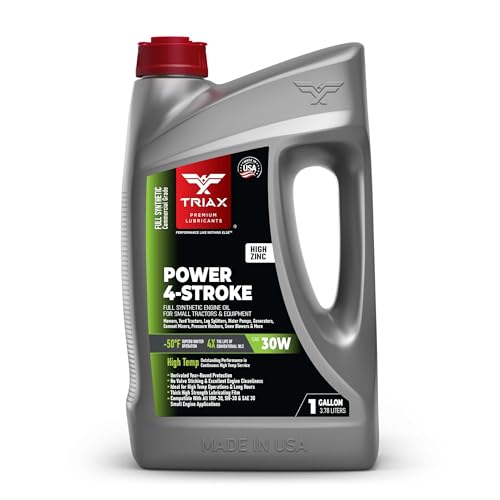
This 1-gallon, full synthetic 4-stroke oil emphasizes commercial-grade durability with extreme shear stability and thermal resistance. It touts up to three times the lifespan of conventional 4-stroke oils and is designed for all-season use from -40°F to 130°F. Best for high-load small engines that run several hours at a time, such as heavy-duty lawn equipment or generators. A caveat is its higher zinc content, which may not be ideal for engines that require ultra-low ash formulations.
Lucas Oil 10115 Semi-Synthetic 2-Cycle Oil

Lucas Oil 10115 is a semi-synthetic 2-cycle oil designed for oil-injection systems or premix up to 50:1. It features a smokeless formula for cleaner burning and blends mineral oil, synthetic oil, and low-ash additives. Best for owners of 2-stroke, air-cooled engines looking to reduce smoke while maintaining dependable lubrication. Use cautiously if your equipment specifies a dedicated 2-cycle oil with different ash or additive requirements.
Lubrimatic 2-Cycle Engine Oil for Air Cooled Engines

Lubrimatic 2-cycle engine oil is formulated for high operating temperatures typical of air-cooled, 2-cycle engines. It aims to improve performance, extend engine life, and reduce plug fouling while delivering strong wear protection and high-temperature performance. Best for riders and small equipment using air-cooled 2-stroke engines. A limitation is the smaller bottle size, which may require more frequent purchases for high-usage equipment.
Briggs & Stratton 5W-30 Synthetic Engine Oil

Briggs & Stratton provides a 32-ounce bottle of 100% synthetic SAE 5W-30 oil designed for all air-cooled 4-cycle engines. This option focuses on reliable cold-start performance and robust protection at operating temperatures typical of lawn equipment. Best for Briggs & Stratton equipment and other brands that recommend 5W-30 synthetic. A potential drawback is that some engines may require a different viscosity; always verify your owner’s manual.
Buying Guide: Key Considerations
What should you check when choosing synthetic or synthetic-blend oil for air-cooled engines?
- Engine type: 2-stroke vs 4-stroke; match the oil type and viscosity to your engine’s design.
- Viscosity: In general, 10W-30 and 5W-30 cover broad conditions, while heavier 30W suits higher-load environments. For extreme temperatures, all-season formulations are beneficial.
- Additive package: Look for wear protection (zinc, phosphorus), detergents, and low-ash formulations if your engine requires them.
- Oil volume: Larger bottles (1 gallon) are cost-effective for frequent users; smaller bottles suit occasional users.
- Compatibility: Check that the oil meets your engine’s specifications and the manufacturer’s recommendations.
Practical Comparison Questions
- Which oil is best for all-season lawn equipment? Choose an all-season, synthetic-blend or full-synthetic 10W-30 or 5W-30 that handles wide temperature ranges.
- Do I need a high-zinc formula? If your small engine runs under high load, a high-zinc option like TRIAX Power 4-Stroke may offer superior wear protection, but verify compatibility with your parts.
- Should I use 2-cycle oil in a 4-cycle engine? No. Use 2-cycle oil only in engines designed for 2-stroke operation or mixed fuel applications.
- Is a bottle size important? Yes. For seasonal use, a 32 oz bottle is convenient; for heavy-use equipment, a 1-gallon container reduces trips to the store.
FAQ
- Q: Can I use 10W-30 in winter and summer? A: Yes, many small engines tolerate 10W-30 in a wide range, but check your manual for viscosity guidance.
- Q: Is synthetic oil better than conventional for air-cooled engines? A: Synthetic oils offer better oxidation resistance and heat stability, which is beneficial for high-temperature operation.
- Q: Do all these oils fit lawn mowers? A: Yes, all listed products target small engines including lawn mowers and generators; verify viscosity with your model.
- Q: How often should I change the oil? A: Follow the engine manufacturer’s intervals; high-use equipment may require more frequent changes.
- Q: Can I mix brands? A: Mixing is generally not recommended; stick to one oil type and viscosity that meets your engine’s spec.