Answering the search: a teflon (PTFE) lubricant can reduce friction and prevent sticking in lock mechanisms. This guide highlights five top options that are effective for residential, automotive, and commercial locks. Each pick is best for different lock types and usage scenarios, from door cylinders to padlocks and electronic access points. The goal is to help you choose a PTFE-based or dry-film lubricant that minimizes residue and maintenance while maximizing smooth operation for typical lock tasks.
Buying Summary (selected products):
- Tri-Flow Teflon Spray Lubricant – PTFE spray for precise, controlled applications on metal components.
- DuPont Non-Stick Dry-Film Lubricant Aerosol – Dry-film PTFE coating for long-lasting, dirt-resistant performance.
- 3-IN-ONE Lock Dry Lube – Quick-drying lock-specific dry lube suitable for various locks.
- Houdini Lock Lube – Greaseless, dielectric-safe option for electronic and traditional locks; no oil or grease.
- Qucship Door Hinge Lubricant – Multi-purpose with rust inhibitors; compatible with locks and hinges in one formula.
Tri-Flow Teflon Spray Lubricant For Locks

Best for: Locks and moving metal parts where controlled spray delivery is needed. The aerosol nozzle enables targeted application to precise areas inside lock cylinders and mechanisms, reducing friction while protecting components.
Why selected: This PTFE-based formula reduces wear between moving parts and improves durability in high-use locks. It is suitable for tools, mechanical assemblies, and other metal components requiring lubrication.p
Limitation: The spray format can overspray in tight spaces if not carefully directed. Use the straw attachment for hard-to-reach areas to minimize mess and waste.
DuPont Non-Stick Dry-Film Lubricant Aerosol

Best for: Tight-tolerance lock assemblies and metal-on-metal contact points where a protective, micro-thin film is advantageous. Ideal for cabins, lockers, and hardware that see frequent use and exposure to dust.
Why selected: The 100% dry-film Teflon coating provides a dirt-resistant layer that minimizes friction at interfaces and remains effective across wide temperature ranges. It helps keep keys moving smoothly after long idle periods.
Limitation: Dry-film coatings can be less forgiving if surfaces are heavily contaminated or rusty; pre-cleaning may be needed before application for best results.
3-IN-ONE Lock Dry Lube

Best for: Home, auto, and commercial locks that need a quick-drying, residue-minimizing solution. Useful when converting stuck mechanisms into smooth operation without oily residue.
Why selected: This product dries clear to the touch within minutes and is suitable for metal, wood, and most plastics (excluding clear polycarbonate and polystyrene). The attachable straw helps reach narrow lock internals for refurbishing and ongoing protection.
Limitation: It is a dry lube, so it may be less effective in very dusty environments unless re-applied periodically after cleaning or maintenance.
Houdini Lock Lube Professional Lock Lubricant

Best for: Professional locksmith use and sensitive electronic locks where oil or graphite might cause issues. Ideal for environments that require a clean, grease-free solution.
Why selected: Houdini Lock Lube is a grease-free formula with no oil, graphite, silicone, or petroleum. It is dielectric and safe around electrical components, reducing the risk of charge conduction while lubricating and cleaning.
Caution: It is a specialized cleaner and protectant; for some mechanical locks, a light lubricant may still be preferred depending on environmental exposure and usage patterns.
LIQUIDFIX Door, Lock, And Hinge Lubricant
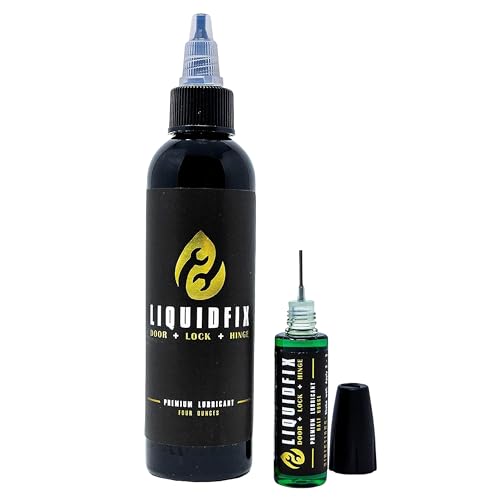
Best for: Homes and small offices needing a multi-purpose solution for doors, locks, and hinges. Useful when you want fewer products in the toolbox without sacrificing effectiveness.
Why selected: A two-bottle approach (4 oz and 0.5 oz needle) supports large applications and precise lubrication, helping to silence squeaks and maintain smooth movement in door hardware and nearby hinges.
Limitation: As a multi-use product, some users may prefer a lock-specific formula for dedicated performance in high-use locking points.
Buying Guide: Teflon (PTFE) Lubricants For Locks
- What is PTFE and why it helps Locks: PTFE reduces friction between moving metal parts, extending life and improving key operation. Dry films leave minimal residue and resist dust buildup.
- Lock type considerations: For cylinders and tumblers, dry or PTFE-based sprays are often best. For electronic or dielectric-sensitive locks, grease-free options reduce the risk of contaminating sensors.
- Application method: Use a narrow straw or precision nozzle for hard-to-reach areas inside cylinders. Avoid over-application, which can attract dust and debris.
- Maintenance frequency: In high-use or dusty environments, reapply as needed to maintain smooth operation. Clean locks before re-lubricating when sticking or slow operation persists.
- Safety and compatibility: Check if the lubricant is labeled safe for metal, wood, and certain plastics. Avoid lubricants that leave a sticky film or attract grime in lock internals.
Quick Comparison by Use Case
- Best for precise, light applications: Tri-Flow Teflon Spray Lubricant
- Best for dry-film protection and dirt resistance: DuPont Non-Stick Dry-Film Lubricant
- Best for quick-drying, general lock use: 3-IN-ONE Lock Dry Lube
- Best for electronic or grease-sensitive locks: Houdini Lock Lube
- Best for multi-purpose door and hinge lubrication: LIQUIDFIX Door, Lock, And Hinge Lubricant
FAQ
- Q: Are PTFE lubricants safe for all lock materials?
A: Most PTFE products are safe on metal and common plastics, but always check the product label for surface compatibility before use. - Q: Should I lubricate a lock that is already sticky or jammed?
A: Yes, but first clean the lock to remove dust and debris. Lubricate sparingly and re-test key operation. - Q: Can I use a graphite-based lubricant on electronic locks?
A: Graphite can interfere with electrical components; prefer dielectric or grease-free lubricants for electronics. - Q: How often should I re-lubricate a door lock?
A: Reapply based on usage and environment. High-traffic or dusty areas may need more frequent lubrication. - Q: Is a dry-film lubricant better than an oil-based product for locks?
A: Dry-film lubricants tend to leave less residue, reducing buildup that can attract dust and impede motion over time.