For buyers seeking daytime privacy, glare reduction, and heat control, one-way window tinting films are a practical solution. This guide highlights five top options and explains who each product is best for, plus when to choose alternatives. The selections balance privacy at day, UV protection, and energy savings, helping you pick a film that fits your window size, light conditions, and decor.
| Product | Best For | Key Benefit |
|---|---|---|
| KESPEN Window Privacy Film (35.4″ x 6.5′) | Home and Small Office Privacy | Strong day privacy with UV and heat blocking |
| KESPEN Window Privacy Film (17.5″ x 6.5′) | Smaller Windows And Rooms | Compact solution with UV protection and heat control |
| KESPEN Window Film One Way Daytime Privacy (35.4″ x 8.2′) | Larger Windows And Office Spaces | Non-adhesive, reflective privacy and energy savings |
| WPCTEV One Way Window Privacy Film (35.4″ x 6.5′) | See-Outside Clarity With Privacy | Daytime privacy, high UV and heat rejection |
| rabbitgoo Window Privacy Film (17.5″ x 6.5′) | Renters And Light-Sensitive Rooms | High UV protection with strong heat control and easy removal |
KESPEN Window Privacy Film One Way Reflective Daytime Privacy (35.4″ x 6.5′)
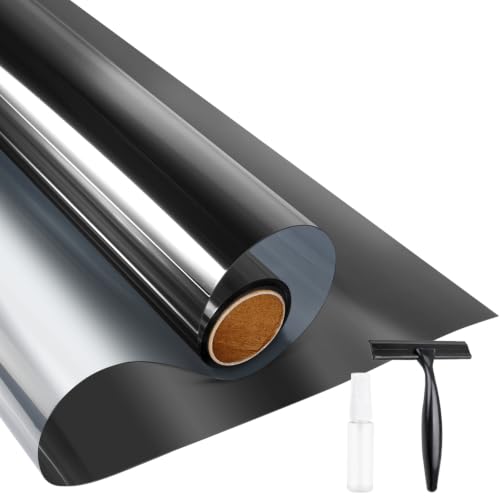
This film emphasizes daytime privacy with a mirror-like exterior. It blocks 82% of infrared and 90% of UV rays, reducing glare and protecting furnishings. The 12% VLT preserves some visible light and keeps a view outside, while the mirror effect is active only when outside light is stronger than inside. This makes it well suited for rooms facing strong afternoon sun.
Best for: Home offices and living rooms with direct sun. Limitations: Night time privacy requires curtains, as the mirror effect reverses when interior lighting dominates.
KESPEN Window Privacy Film One Way Daytime Privacy Static Cling (17.5″ x 6.5′)
This static cling variant provides UV blocking and glare reduction with 12% VLT for a balanced light level. It uses a non-adhesive application, which is renter-friendly and easy to reposition. It works best on single-pane or lightly insulated panes and is ideal for smaller windows or rooms needing portable privacy.
Best for: Renters and smaller windows where easy removal matters. Limitation: Not ideal for heavy-duty adhesion needs or very large panes.
KESPEN Window Film One Way Daytime Privacy Heat Control (35.4″ x 8.2′)
Designed for larger windows, this non-adhesive film emphasizes daytime privacy, heat rejection, and UV protection. It reflects heat away from interiors while preserving some outside visibility. The clear explanation of mirror behavior helps users anticipate privacy changes from day to night, making it suitable for homes with bright sun exposure.
Best for: Home offices and large living spaces with direct sun. Caution: Night privacy depends on closing curtains to maintain seclusion.
Dwersty One Way Daytime Window Privacy Film (17.5″ x 78.7′)

Dwersty highlights daytime privacy with a reflective mirror effect when exterior light dominates. It emphasizes heat control and energy savings, blocking 93% of UV and 85% of IR rays. The product notes that the included tools aid installation, and it’s suitable for larger windows. This option is strong for rooms with hot sun exposure and where a simple, reflective film is desired.
Best for: Homes with sunny facades and renters needing temporary privacy. Limitation: The mirror effect reverses at night; curtains are recommended for nighttime privacy.
rabbitgoo Window Privacy Film One Way (17.5″ x 6.5′)

Rabbitgoo combines heat control, UV protection, and a low-visibility 11% VLT to reduce glare while preserving a comfortable outside view. It’s designed for easy, residue-free removal, which is beneficial for renters or temporary privacy needs. The film is especially effective on hot windows facing the sun, helping keep rooms cooler and furniture from fading.
Best for: Renters and spaces needing reversible privacy with glare reduction. Limitation: Not ideal for double-pane or heavily insulated windows under direct, prolonged sunlight.
Buying Guide
What should I consider before buying window tint film?
Light transmission (VLT) affects how much visible light enters. Higher VLTs let in more light but may offer less privacy. Lower VLTs increase privacy but reduce daylight visibility.
Is UV protection important?
Yes. Look for films that block a high percentage of UV rays (80–93% typically). UV protection helps prevent fading of furniture and reduces skin exposure.
How does heat control work in these films?
Most films reflect or absorb infrared rays, reducing heat transfer through the glass. This can lower cooling costs in summer and retain heat in winter, depending on the window.
Adhesive vs. non-adhesive options
Adhesive films stay on longer and are suited for permanent installations. Non-adhesive or static cling films are renter-friendly and easier to reposition or remove without residue.
What about nighttime privacy?
Many one-way films provide daytime privacy but require curtains or blinds at night when interior lighting negates the mirror effect. Consider pairing with drapes for round-the-clock privacy.
How easy is installation?
Look for films that include squeegees, sprays, or installation tools. Some products mention water-based installation and easy repositioning, which helps with large panes and tricky edges.
FAQ
- Do these films block all visibility? Most one-way films offer daytime privacy with a mirror effect. Nighttime privacy depends on lighting; curtains may be needed for complete privacy.
- Will window tinting affect natural light? Yes, depending on the film’s VLT. Higher VLT films preserve more light; lower VLT films reduce glare but can darken spaces.
- Can I install them myself? Many are designed for DIY installation, including static cling options and adhesive variants with included tools.
- Are these films safe for all window types? Most are suitable for standard single-pane and some double-pane windows, but check product notes for exceptions or cautions.
- Do they protect against fading? UV blocking helps reduce fading in furnishings and decor over time.
- Do these films reduce glare from screens? Yes, many films lower glare, improving comfort for TVs and computer monitors while preserving outside visibility.