Looking for a transition visor that automatically adapts to sunlight? This guide highlights five top options designed to fit common helmets, with clear pros, limitations, and ideal use cases. The products below are best for riders who want convenient day-to-night visibility, reduced glare, and fewer visor swaps. Each entry explains who it’s best for and why it was selected, along with practical cautions.
Summary table of chosen products:
- PSLER Photochromic Qualifier DLX Visor — Best for Bell Qualifier/Star/Vortex users seeking quick, tool-free swaps.
- WeePro Photochromic Anti-Fog Helmet Visor Film — Best for riders wanting inside-the-visor tint without swapping shields.
- Shoei CWR-F2 Transitions — Best for high-end riders needing automatic lighting adjustment and wind-noise considerations.
- The Helmet Shop HJ-31 — Best for i10/i70 helmet users requiring anti-fog-ready, optically clear vision.
- Logto Photochromic Visor (R420 compatible) — Best for R420 users wanting rapid tint transitions and multiple tint options.
PSLER Photochromic Qualifier DLX Visor
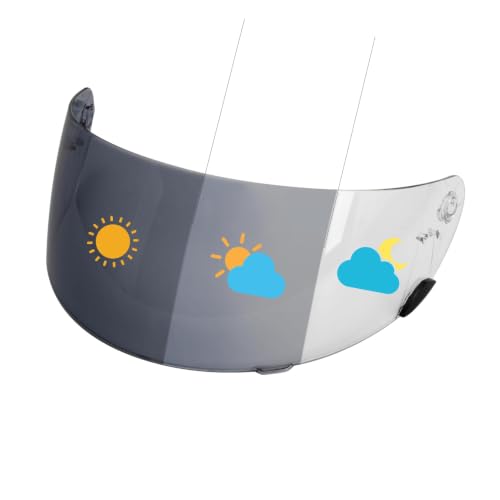
Best for riders with Bell Qualifier, Qualifier DLX, Star, Vortex, RS-1, or Revolver helmets who want quick, one-handed visor swaps. The visor uses a precision fit designed to align with those models, and it is described as impact-resistant polycarbonate. It claims smart photochromic behavior that stays crystal clear indoors and darkens in sunlight, reducing the need to carry multiple visors. A noted limitation is potential fitment gaps or noise leakage for certain helmet shapes, stemming from the non-OEM, single-mold construction. This visor is ideal for daytime riders who go into sun exposure and want faster transitions without fiddling with multiple shields.
Best for: Day-to-evening commuters and sport riders who primarily use Qualifier or similar Bell helmets and want an all-in-one day/night visor.
WeePro Photochromic Anti-Fog Helmet Visor Film

This option is a film insert, not a standalone shield. It changes tint based on UV exposure, becoming clearer at night and darkening in daylight with varying degrees of gray tint as light intensity changes. It is easy to install inside the existing visor, offering a cost-effective alternative to swapping visors. A caveat is that the color transition is gradual, not instantaneous, and performance depends on ambient light and temperature. Best for riders who want a low-profile transition solution without changing the visor assembly.
Best for: Riders who want to avoid extra visors and prefer an inside-film tint that adapts to light without removing the shield.
PSLER RF-1400 Photochromic Visor

Designed for RF1400, X15, NXR2, CWR-F2R, and Z8 models, this visor aims to provide day-night utility in a single shield. It changes with ultraviolet light intensity—more UV, darker tint; low UV, more transparent. A noted caution is that the X15 version uses an electroplating process, which can be susceptible to bug residue and cleaning issues that may affect the plating. It is best for riders who own RF1400-style helmets and want a dedicated, all-season photochromic solution.
Best for: Riders with RF1400 or similar models seeking a dedicated day-night visor with reliable UV-driven tint changes.
The Helmet Shop HJ-31 Photochromic Visor

The HJ-31 is positioned as a universal, direct-fit replacement for i10 and i70 helmets. It emphasizes optical clarity, UV protection, and a seal that minimizes wind noise. Pre-installed anti-fog posts can help—though riders should consider compatible anti-fog inserts for peak performance in foggy or humid conditions. The product notes that it is not compatible with some CL-31, i31, or RPHA 31 helmets, so compatibility checks are essential. Choose this visor when you want a universally compatible, optically correct shield with anti-fog support in mixed riding conditions.
Best for: i10/i70 helmet users seeking reliable optical quality and anti-fog readiness with clear night/day compatibility.
Shoei CWR-F2 Transitions Visor

The Shoei CWR-F2 Transitions Transitions visor features advanced photochromic technology with 3D injection-molded construction for distortion-free vision. It is noted for automatically adjusting to lighting, removing the need for multiple shields. Aerodynamics are enhanced by Vortex Generators, contributing to quieter rides and improved breathing space in varied wind conditions. The main caveat is that this high-end option is tied to Shoei’s ecosystem, and compatibility should be verified with your model. It’s best for riders who value top-tier optical clarity and automatic tinting in all weather.
Best for: Shoei helmet owners seeking premium, seamless transitions with reduced wind noise and high optical fidelity.
Buying Guide
Key considerations when selecting a transition visor include fitment, transparency, transition speed, and maintenance. The following questions help compare options:
- What helmet model do I own, and is the visor model specified for that helmet family?
- Do I want a full shield replacement or an inside-film tint solution?
- How important is instant darkening versus gradual tinting in tunnels or heavy shade?
- Is UV protection enough, or do I need anti-fog features for foggy rides?
- How much care is required to maintain electroplating or coating on chromed visors?
- Will the visor add noticeable weight or alter helmet balance?
Fitment and Compatibility
Always verify the exact helmet model compatibility listed by the manufacturer. Some visors are designed for specific lines (for example, Bell Qualifier relatives or Shoei CWR-F2). If your helmet is not explicitly listed, assess fitment notes and potential gaps or noise leakage claims in user reviews or the product page.
Tint Transitions and Viewing Clarity
Photochromic visors respond to UV exposure. Expect faster darkening in bright sun and slower fade indoors or under artificial lighting. Some products note gradual transitions rather than instantaneous changes, which can influence safe perception in tunnels or shaded sections.
Durability and Cleaning
Electroplated visors may require careful cleaning to avoid staining or corrosion. UV-blocking polycarbonate shields generally offer strong impact resistance, but users should maintain a routine cleaning to preserve clarity and reduce debris buildup that could affect tint performance.
Installation and Maintenance
Some visors are tool-free and designed for quick swaps, while others require more careful handling to ensure proper alignment. If you plan frequent changes, prioritize models with simple, secure mounting and clear installation guidance.
Cost and Value
Higher-end visors from premium brands often provide superior optical clarity and transition performance but at a higher price. When budgeting, weigh the value of convenience, compatibility, and long-term durability against upfront cost.
FAQ
- Q: Do transition visors work in tunnels?
- A: They typically brighten indoors and darken in sunlight; in tunnels, some may take a moment to return to clear, depending on the product and ambient light.
- Q: Are anti-fog visors better than anti-fog inserts?
- A: Anti-fog inserts can enhance fog resistance, but pre-installed anti-fog features on visors provide baseline performance without extra parts.
- Q: Can I mix visors from different brands?
- A: Compatibility is model-specific. Verify fitment against the helmet’s make and model before purchasing.
- Q: How do I clean electroplated visors without damage?
- A: Use gentle cleansers and soft microfiber cloths; avoid abrasive materials that can scratch or degrade coatings.