If you own a 2.4L Toyota or similar 4-cylinder setup and want more power without major work, these turbocharger options align with OEM-style installation and practical performance gains. This guide highlights five carefully chosen products that suit common 2.4L applications, from Toyota 4Runner to Hiace and Land Cruiser models, as well as compatible 1.5L and 1.5T GM variants for broader comparison. Each entry notes who benefits most, practical installation notes, and a realistic limitation to consider.
| Product | Best For |
|---|---|
| maXpeedingrods CT20 Turbo Turbocharger (2.4L Toyota 4-Runner, 2L-T) | OEM-replacement style upgrade for 2.4L Toyota diesel/gas engines |
| Turbocharger TD04LR (Chrysler/PT Cruiser SRT-4 2.4L) | Compact setup for small-displacement turbo performance |
| CT20 Turbo Turbocharger 1720154030 (Toyota 4Runner 2.4L 1984-1995, 2L-T) | Direct replacement with easy install |
| CT16 Turbo 17201-0L030 / 17201-30120 (Toyota 2.5L 2KD-FTV D4D) | Diesel 2.5L applications for similar swap options |
| Dasbecan 25206073 Turbocharger (Chevy Equinox / GMC Terrain 1.5T) | Compact 1.5L turbo comparison for cross-checks |
maXpeedingrods CT20 Turbo Turbocharger for Toyota

Best for: Toyota 4Runner 2L-T and 2.4L diesel variants, including Hiace and Hilux models. This CT20 unit is described as a direct OEM replacement with factory-level efficiency restoration, simplifying installation and minimizing modifications.
Why chosen: It targets 2.4L engines with a direct OEM replacement approach, reducing guesswork during fitment and offering a seamless upgrade path for reliability and restored performance.
Limitation: Compatibility depends on exact OE part numbers and 2.4L variant; verify fitment for your exact VIN or engine code before purchase.
Turbocharger TD04LR Replacement for Chrysler PT Cruiser GT

Best for: Small-displacement 2.4L engines in compact cars where a quick turbo upgrade is desired without heavy modifications. This TD04LR unit emphasizes easier installation and compatibility with 2.4L powerplants.
Why chosen: Focuses on improved reliability and performance consistency, with an emphasis on ease of installation and factory-like operation after upgrade.
Limitation: Market labeling sometimes shifts by vehicle model; ensure the TD04LR variant matches your engine family and mounting points.
CT20 Turbo 1720154030 for Toyota 4Runner 2.4L

Best for: Older 4Runner generations (1984-1995) and related 2L-T 2.4L installs where a straight-forward turbo replacement is desired.
Why chosen: This unit emphasizes 100% brand-new construction with careful turbine power improvements and a Ni-based turbine blade for high-temperature durability, aiming at a robust OEM-like upgrade path.
Limitation: Older-model fitment requires verifying flange and compressor housing compatibility with your specific 2.4L engine block and exhaust manifold.
CT16 Turbo 17201-0L030 / 17201-30120 (2.5L 2KD-FTV)

Best for: Toyota Hilux, Hiace, and Land Cruiser households with 2.5L 2KD-FTV diesel engines as a reference for similar turbo sizing.
Why chosen: Provides a diesel-oriented turbo option that helps compare turbo sizing and efficiency with 2.4L gasoline engines, assisting buyers aiming for cross-model performance insights.
Limitation: This CT16 variant is primarily listed for 2.5L diesel engines; verify actual compatibility with your 2.4L platform before choosing.
Dasbecan 25206073 Turbocharger Kit
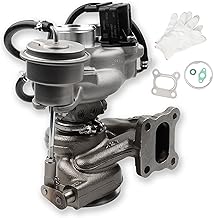
Best for: Chevy Equinox and GMC Terrain 1.5T configurations, useful for cross-checks when evaluating small displacement turbo kits for similar power levels.
Why chosen: Emphasizes OEM-standard performance with durable materials and a sealing design to protect against oil seepage, helpful for buyers comparing 1.5T modular options.
Limitation: This kit targets a different engine family; consider it mainly for cross-reference rather than a direct 2.4L fitment.
Buying Guide: Key Considerations For 2.4L Turbo Upgrades
What engine family does your 2.4L belong to? Confirm the exact engine code and year to ensure a proper match with turbine housing, compressor wheel size, and mounting points.
Is this a direct OEM replacement? OEM-replacement parts reduce installation complexity and preserve factory tolerances, but verify flange patterns and oil lines to avoid misfits.
What is your goal—more power, improved efficiency, or both? Choose a turbo with a compressor map and turbine size aligned to your target horsepower and torque range for a balanced upgrade.
Do you need street reliability or race-ready performance? Some units emphasize durability and long service life; others prioritize maximum boost and peak power, which may affect driveability and cooldown practices.
What are the maintenance and warranty implications? Some listings mention warranties or limited coverage; read the terms to understand what is protected and for how long.
Installation considerations: Some turbos are ready for direct OEM replacement, while others may require supporting modifications such as intercooler piping, intake, or exhaust adjustments. Plan for space, heat management, and safety checks.
FAQ
- Can a 2.4L engine use any turbocharger? Not every turbo fits every 2.4L variant. Always verify engine code, fuel type, and mounting compatibility.
- Will upgrading boost increase fuel economy? Turbo upgrades can improve efficiency with proper tuning, but excessive boost may increase fuel consumption and require additional fueling adjustments.
- Is OEM replacement always best? OEM-style replacements offer easier installation and compatibility but may limit peak performance gains compared to purpose-built aftermarket options.
- Do I need a professional to install a turbo on a 2.4L? Depending on the vehicle, some installations are straightforward, while others require engine tuning, exhaust work, and ECU reflash; consider professional help for reliability.
- Should I upgrade supporting components? Upgrades to intercooler, piping, hoses, and wastegate control are often necessary to realize stable power and prevent leaks under higher boost.
- What maintenance is required after turbo installation? Regular oil changes with the correct grade, air filter maintenance, and periodic boost control checks are essential for longevity.