Turbo headers designed for the 5.3-liter V8 or LS-based engines improve exhaust flow, reduce backpressure, and support higher power goals. This guide highlights top options for 5.3 or LS swaps, helping buyers pick the right header for street, drag, or performance-tocused builds. The selections below are aimed at LS-family engines and compatible swap projects. Each product is evaluated for fit, material, and suitability for turbo setups.
Buyer note: the best choice depends on engine setup, mounting space, and whether you want forward-facing or standard configurations. The table below summarizes five strong contenders, with a quick snapshot of who each one is best for.
| Product | Best For | Key Material |
|---|---|---|
| Exhaust Turbo Headers 1-3/4 x 3 in. Up and Forward Facing for Chevrolet GM LS1 LS2 LS3 LS6 LS Based V8 Engines | Forward-facing turbo builds | 304 stainless steel |
| LS Swap Header Replacement for 1960-1986 Chevy C10 Camaro | Classic swaps with compact fit | T304 stainless steel |
| Stainless Steel Headers, Shorty Style for LS Swaps | Universal LS swaps | 304 stainless steel |
| LISMWKS Exhaust Header, Stainless Steel LS Swap Header | Durable LS swaps with multiple fitments | 304 stainless steel |
| Exhaust Headers 2002–2013 Silverado Sierra Suburban Tahoe | GM truck LS engines swaps | 304 stainless steel |
Exhaust Turbo Headers 1-3/4 X 3 In. Up And Forward Facing
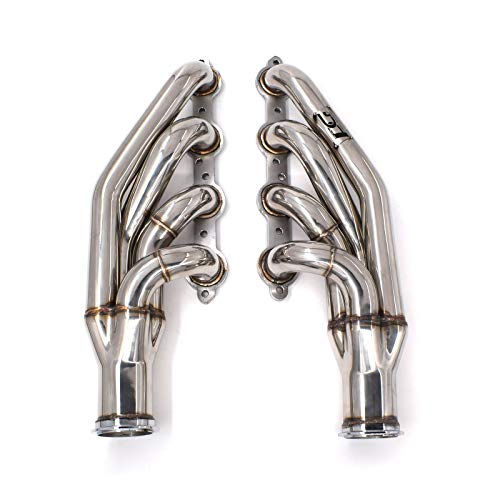
Designed for LS-based small block V8 engines (LS1, LS2, LS3, LS6), this header supports single or twin turbo builds. It features up-forward tube routing and fully mandrel-bent 16-gauge 304 stainless steel tubes. Best for turbo projects needing forward clearance and robust stainless construction.
Who it’s best for: builders aiming for a compact, forward-facing header that clears engine bays with turbo piping. Reason to choose: strong stainless construction and a dedicated LS-focused fit. Caution: assembly and fit may vary by vehicle; confirm clearance with nearby components before installation.
LS Swap Header Replacement for 1960-1986 Chevy C10 Camaro

These 1 5/8″ primaries and 2 1/2″ collectors target LS swap needs in older C10, Camaro, and similar platforms. Made from T304 stainless steel and finished in silver, they support a broad range of LS1–LS9 small-blocks. Best for classic-square-body swaps or mid-year GM trucks.
Who it’s best for: owners upgrading older platforms to LS power with a focused swap kit. Reason to choose: explicit header sizes and a compact Shorty universal approach. Limitation: designed as swap headers, so fitment should be verified for non-standard mounts or headers-to-tubing clearance.
Stainless Steel Headers, Shorty Style for LS Swaps

Universal LS swap headers cover a wide range of vehicles, including various GM trucks and S-series builds. They fit 4.8L, 5.3L, 5.7L LS1, 6.0L, and 6.2L Gen III/Gen IV engines (1998–2020). The product notes emphasize universal fitment and LS compatibility, not LT engines.
Who it’s best for: builders seeking a broadly compatible shorty header for LS swaps. Reason to choose: broad vehicle coverage and corrosion-resistant 304 stainless steel. Caution: not designed for LT engines or serious husbanding of long-tube upgrades; verify engine family and exhaust routing before ordering.
Exhaust Headers 2002–2013 Silverado/Sierra (Right Side)

Direct-fit headers for 2002–2013 GM trucks and SUVs with 4.8L, 5.3L, 6.0L, or 6.2L LS engines. They use 1-5/8″ mandrel-bent primaries and a beveled Y-pipe on the right side. Best for truck builds requiring a robust right-side outlet configuration.
Who it’s best for: truck owners upgrading LS engines with a precise factory-style fit. Reason to choose: heavy-duty 304 stainless steel and an intended right-side Y-pipe. Caution: compatibility is tied to the right-side configuration; not ideal if you need a reverse-side or center-exit design.
TEWOLISES Exhaust Headers For Silverado

These headers cover Silverado 1500 models from 2002–2013 and 2500HD/3500HD variants up to 2016. They use 1-5/8″ primaries and emphasize a laser-cut 3/8″ head flange for a durable seal. Best for users who prioritize a sturdy, leak-free interface and long-term durability.
Who it’s best for: Silverado/Sierra builders seeking a heavy-duty flange and verified pre-fit notes. Reason to choose: reinforced flange thickness and precise fitment notes help reduce gasket leaks. Caution: verify Your Garage fitment to ensure model-year accuracy; avoid if your vehicle deviates from listed years.
Exhaust Headers For Chevy LS 1960s–1970s El Camino/Monte Carlo

Premium 304 stainless steel with a polished finish delivers strong corrosion resistance. The CNC-machined, TIG-welded construction provides clean joints and easy installation. It advertises an extended five-year warranty and lifetime technical support, which may matter for long-term projects.
Who it’s best for: classic GM car owners upgrading to high-quality stainless headers. Reason to choose: premium materials, precise manufacturing, and a multi-year warranty. Caution: the materials and design favor classic layouts; confirm fit with your specific El Camino/Monte Carlo configuration.
Buying Guide
What should I consider when choosing turbo headers for a 5.3 or LS swap?
- Engine compatibility: Ensure the header family supports LS1, LS2, LS3, LS6, LS7, and/or 5.3L blocks you plan to use.
- Primary tube diameter: Larger primaries improve flow but may require more space. Common choices range from 1-5/8″ to 1-3/4″.
- Material and finish: 304 stainless steel offers corrosion resistance and durability, important for turbocharged setups and humid climates.
- Fitment and clearance: Forward-facing designs can improve turbo clearance, while universal shorty headers may fit more vehicles but offer less precise fit.
- Collector and flange design: Beveled or V-band outlets affect piping routing and turbo flange compatibility.
- Warranty and support: Some products advertise longer warranties or lifetime support, which can ease future service concerns.
- Installation approach: Some headers are intended for swap projects with specific vehicle generations. Verify Your Garage or manufacturer notes for exact fit.
Practical comparison questions
- Should I choose forward-facing headers for turbo setups? Yes, forward-facing designs can help with turbo placement and clearances in tight engine bays.
- Are universal LS swap headers always a good fit? They offer broad compatibility but may require custom fabrication for precise fit in some builds.
- Is 304 stainless steel worth it for headers? For longevity and corrosion resistance, especially in turbo installations, it is a solid choice.
- Do right-side or left-side outlet designs matter for trucks? Yes, outlet orientation influences piping layout and turbo or Y-pipe routing.
- Can I rely on a long warranty? A longer warranty can provide peace of mind during a multi-year swap or build.
FAQ
- Q: Will these headers bolt directly to a factory LS engine? A: Some are designed for LS swaps and compatible with LS engines, but always verify specific engine, year, and mounting details.
- Q: Are these headers suitable for turbocharged builds? A: Many are marketed for turbo setups or LS swaps; confirm pipe routing and clearance for turbochargers.
- Q: Do they require special gaskets or adapters? A: Gasket requirements depend on the flange and collector design; check product notes for gasket compatibility.
- Q: Can I install these headers in a common truck or car without modifying the frame? A: Some headers are designed for direct fit, but fitment may depend on the chassis and engine cradle.
- Q: Do these headers come with a warranty? A: Several listings mention multi-year warranties or extended coverage; review the specific product page for terms.
- Q: Are these suitable for a daily driver or only for race use? A: They are designed for performance gains and may be tuned for street use, but check noise, clearance, and heat considerations.