Finding a reliable UTV backup camera can improve safety during off-road adventures, trailers, and towing work. This guide highlights five top-performing options that balance image clarity, installation ease, and durability. Each product is reviewed with key features, installed use cases, and practical considerations to help you choose the right system for your vehicle and workload.
| Product | Brand | Key Benefit |
|---|---|---|
| Yakry RV Backup Camera Plug and Play | Yakry | Wired reliability with 1080P view and night vision |
| LeeKooLuu 7-Inch Wireless Backup Camera | LeeKooLuu | Plug-and-play setup with pre-paired channels |
| KEMIMOTO UTV Rear Camera for KRX 1000 | KEMIMOTO | 170° wide view; rugged, OEM-style compatibility |
| WOOCARTY 10.1″ 2-Wired Backup System | WOOCARTY | Dual camera, high durability for heavy equipment |
| PixelMan AHD 1080P Backup Camera | Pixelman | HD switching and upgraded image processing |
These options cover wired and wireless setups, from compact two-camera systems to larger dual-display configurations. When selecting a UTV backup camera, consider installation complexity, signal stability, viewing angle, night vision, and weather resistance to ensure dependable performance in demanding terrains and conditions.
Yakry RV Backup Camera Plug-and-Play

The Yakry system provides a wired back-up solution designed for stability and simple installation. It uses a single power supply to run both the 7-inch HD monitor and the waterproof camera, eliminating the need for separate power sources. A 66-foot cable links the camera to the monitor, ensuring a robust connection with minimal interference. Features include true infrared night vision, a wide 150-degree viewing angle, and non-fisheye clarity. This setup is suitable for trailers, trucks, RVs, tractors, and other heavy-duty vehicles requiring dependable performance with straightforward wiring.
LeeKooLuu 7-Inch Wireless Truck Backup Camera

This system emphasizes plug-and-play setup, pre-paired wireless transmission, and HD 1080P viewing on a 7-inch monitor. It supports switching between multiple camera views and includes a split-screen mode for simultaneous monitoring—handy for towing or backing a trailer. Night vision improves visibility in low-light conditions, and the system is designed to minimize signal interference, making it a practical choice for busy operators who need quick installation and reliable performance.
KEMIMOTO UTV Rear Camera for KRX 1000

Designed for Kawasaki KRX 1000 and similar UTVs, this wired backup camera offers a 170-degree ultra-wide view to reduce blind spots. The camera supports seamless integration with Kawasaki Interactive Display and provides 480P night vision for improved visibility in dim lighting. The system emphasizes a stable signal and improved color fidelity, making it a strong option for off-road use where reliability matters most in reversing and parking maneuvers.
WOOCARTY 10.1″ 2-Wired Backup System

WOOCARTY presents a robust dual-camera, dual-display system designed for rigorous environments. The 10.1-inch monitor is built to endure vibrations and temperature ranges typical of construction sites and fleet operations. IP69K waterproof rating and 20G shock resistance help ensure reliability on trailers, tractors, and heavy equipment. The system provides clear 1080P video and a wide field of view, with a user-friendly remote for quick adjustments, flip/mirror settings, and easy mounting options.
PixelMan AHD 1080P Backup Camera
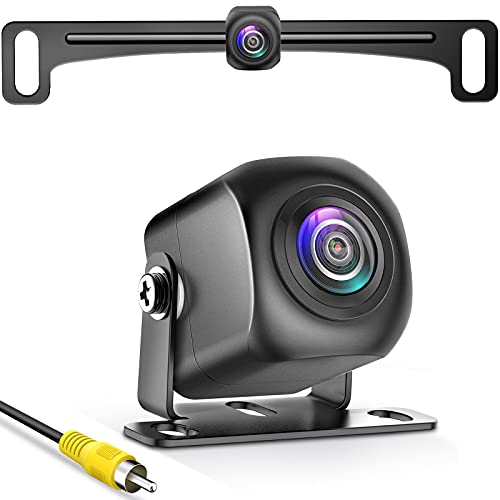
PixelMan’s PMD2A-S backup camera emphasizes sharp 1080P AHD output with 170-degree viewing coverage. It supports HD and AHD switching, providing flexible integration with different monitor inputs. The unit uses high-quality components to deliver bright, accurate color under varied lighting and weather conditions. The design is suitable for cars, SUVs, RVs, and other larger vehicles where a reliable, high-definition image matters for reversing and lane positioning.
Buying Guide: Key Purchase Considerations for UTV Backup Cameras
When choosing a backup camera system for a UTV, consider the following factors to ensure reliable performance and value for your application.
- Wired vs wireless: Wired systems generally offer more stable signals, especially over longer runs or in environments with interference. Wireless systems offer easier installation, but can suffer from interference or range limitations, depending on the environment.
- Monitor size and resolution: Larger displays improve visibility when backing up in challenging terrain or towing. Look for 1080P or higher where possible and ensure the monitor’s brightness and anti-glare features suit outdoor use.
- Camera angle and distortion: A wide-angle (around 150–170 degrees) helps reduce blind spots. Avoid fisheye distortions that can mislead judgment during maneuvers.
- Night vision and weather resistance: For off-road or low-light work, IR night vision and IP ratings (IP65, IP69K) protect against dust, water, and immersion while ensuring clear imaging in dark or harsh weather.
- Durability and installation: Consider the mounting method, vibration resistance, and temperature tolerance. Heavy equipment and off-road environments demand rugged housings and robust cabling.
- Power and wiring: Check whether the system uses a single power source or requires multiple connections. Plug-and-play designs may speed installation, but ensure compatibility with your vehicle’s electrical system.
- Compatibility with your vehicle: Some cameras are designed for specific makes or models or integrate with OEM displays. Verify mounting compatibility and required adapters before purchasing.
For fleet operators or hobbyists, balancing ease of installation with durable performance is essential. A wired system is often favored for trucks, trailers, and heavy equipment due to its reliability, while wireless setups can be preferable for quick upgrades or temporary installations on rental gear or multiple vehicles. Always match the system to your typical operating conditions, including terrain, weather exposure, and how often you reverse or tow heavy loads.