Answering the question most buyers ask: which vacuum canister best supports a power braking setup? This guide highlights five top canisters and related kits suitable for cars with high-performance or stock brake boosters that require steady vacuum. Each option is chosen for reliability, compatibility, and clear install notes. Ideal buyers include weekend racers needing extra vacuum for big cams, hot-rodders upgrading boosters, and shops seeking durable, easy-to-integrate cans. The following table summarizes core specs to compare at a glance.
| Product | Best For | Key Benefit | Notes |
|---|---|---|---|
| LVOUP Vacuum Reserve Canister | High-performance engines | 1/8 in NPT adapter holes, pressure gauge | Steel, black finish; solid for extra vacuum |
| JEGS Steel Vacuum Reserve Canister | Street and show builds | Chrome-plated steel, includes fittings & port plug | Grommet and check valve included |
| Comp Cams 5201 Vacuum Canister | Universal fit | Universal fit, reputable performance brand | Basic but trusted option |
| JEGS Electric Vacuum Pump Canister | Maintains vacuum in idle | 12V pump encased in chrome canister | Includes rotary vane pump |
| CVR VPR700 Billet Aluminum Reservoir | Premium builds | Billet aluminum, built-in gauge and check valve | Natural finish, solid for frequent braking |
LVOUP Vacuum Reserve Canister 5x7in
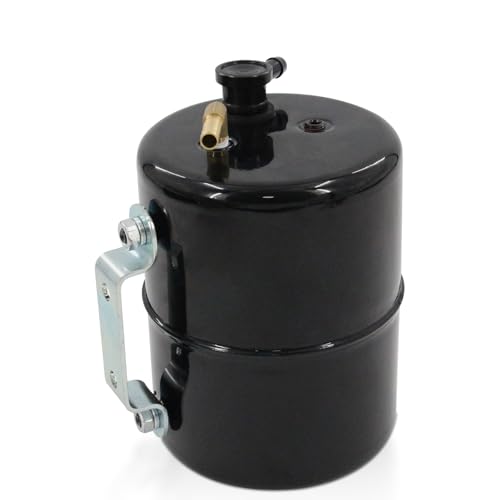
Best for: enthusiasts seeking a robust steel canister with accessible fittings. This model offers a compact 5 by 7 inch footprint and includes 1/8 in NPT threaded holes for fittings, a pressure gauge, and a plug. It is designed to store extra vacuum so the brake booster maintains a steady supply, especially when operating a high-performance or big-cam engine. The included gauge helps you monitor vacuum levels during operation, which is valuable for tuning and safety checks. A potential limitation is that it relies on the engine’s vacuum source rather than an integrated pump, so it’s best paired with a suitable booster and vacuum lines.
Best use guidance: connect near the brake booster to ensure the most consistent vacuum for extended stops or aggressive braking. The canister’s metal construction adds durability in demanding environments, and the dual purpose of storage plus monitoring helps builders avoid fuel or brake system issues under load.
JEGS Steel Vacuum Reserve Canister, 5x7in

Best for: builders who want a chrome-plated steel look with included fittings. This canister includes a grommet, one-way 3/8 inch check valve, a 1/8 inch NPT 90-degree fitting, and a 3/8 inch barb x 1/8 NPT port plug. The steel chrome finish offers both aesthetics and durability, making it a good choice for show-quality builds or daily drivers that benefit from extra vacuum storage. A caution: chrome-plated steel may show wear over time in harsh weather; ensure proper mounting and protection from road debris to maintain appearance.
Why chosen: the bundled hardware reduces the need for sourcing additional parts, and the 5×7 inch size provides compatibility with many engine bays without crowding nearby components.
Comp Cams 5201 Vacuum Canister

Best for: universal fit needs where a straightforward, no-frills vacuum canister is acceptable. Comp Cams is a recognized name in performance parts, and the 5201 model offers a universal fit with a polished, zinc-plated look. It’s a practical option for builders who want a simple solution without extra features. The data notes do not detail gauge or specific fittings beyond the universal fit; verify compatibility with your booster and vacuum lines before purchase. Choose this if you want a dependable, widely compatible canister without specialized accessories.
JEGS 62992 Electric Vacuum Pump Canister

Best for: vehicles needing persistent vacuum without relying solely on engine speed. This option encases a 12-volt rotary vane pump inside a chrome concealed canister, designed to maintain vacuum levels when crankcase pressure or engine vacuum falls. It includes standard pumping features suitable for booster systems that require supplemental vacuum, particularly at idle. Limitation: as with any electric pump, ensure mounting location allows for cooling and wiring access to avoid heat-related performance drops. This is a strong pick when you want consistent vacuum in idle or low-Vacuum conditions.
TT Racing Alloy 2L Vacuum Brake Cannister

Best for: racers or tuned street builds wanting a compact, lightweight reservoir. This 2-liter aluminum alloy canister includes a mounting bracket and necessary fittings. Its dimensions—diameter around 5 inches and height about 6.5 inches—make it suitable for tight engine bays where space is at a premium. Choose this if you prioritize weight savings and a sleek, race-oriented appearance. A caution: ensure the bracket and fittings fit your vehicle’s mounting points to avoid clearance issues with hoses or booster hardware.
CVR VPR700 Billet Aluminum Power Brake Reservoir

Best for: buyers seeking a premium billet aluminum reservoir with integrated features. The VPR700 includes a built-in check valve and gauge along with a mounting flange. Its natural aluminum finish emphasizes durability and a high-end look. Selling point: designed to provide extra vacuum for frequent braking, which is valuable for aggressive driving or frequent stop-and-go driving. Limitation: billet aluminum can be more expensive and may require careful mounting to avoid vibration or stress on the gauge and valve connections.
Buying Guide: Key Purchase Considerations
- Compatibility: Check fit type (universal vs. vehicle-specific) and NPT port sizes to ensure you can connect your booster hoses and adapters without forcing fittings.
- Material and Finish: Steel and chrome finishes offer durability and aesthetics; billet aluminum provides a premium look and light weight but may require more care to prevent dings.
- Built-in Features: Gauges, check valves, and mounting flanges simplify installation and ongoing maintenance, especially on high-performance builds.
- Mounting Space: Engine bays vary; select a unit whose dimensions comfortably fit between the brake booster and other components.
- Power vs. Vacuum Source: Electric vacuum pumps provide vacuum independently of engine RPM, while reserve canisters rely on engine vacuum and act as a supplemental reservoir.
- Installation Complexity: Some kits come with additional fittings and hardware; others may require custom hoses or brackets. Consider your mechanical comfort level and tools available.
FAQ
- What is the primary purpose of a vacuum canister for power brakes?
It stores extra vacuum to maintain booster performance, especially when engine vacuum fluctuates or during high-demand driving. - Do I need an electric vacuum pump along with a canister?
Not always. If your engine produces sufficient vacuum at idle and under load, a reservoir can suffice. An electric pump is useful where vacuum is insufficient or highly variable. - Can vacuum canisters improve braking consistency for big cams?
Yes. They help provide steadier vacuum to the booster, reducing brake assist drop during aggressive throttle use. - What should I inspect before buying a vacuum canister?
Check fit type, port sizes, mounting options, included hardware, and whether a gauge or check valve is supplied if you need monitoring or extra protection against backflow. - Are chrome or billet aluminum finish options more durable?
Both are durable; chrome offers corrosion resistance and aesthetics, while billet aluminum provides strength and lighter weight with a premium look. - Is a canister necessary for all vehicles?
Not always. Typical street vehicles with adequate engine vacuum may not require a canister, but boosted or high-performance engines with frequent heavy braking can benefit from extra vacuum storage.