Answer: If you’re swapping engine oil at home, a vacuum oil extractor pump makes the job cleaner, faster, and easier. The best options below cover pneumatic, manual, and electric styles to fit garages, driveways, and mobile setups. Each pick is suited to specific buyers: DIY homeowners who want spill-free changes, professionals needing speed, and boaters or lawn-care pros who work in tight spaces.
Summary table of selected products:
| Product | Mode | Tank Capacity | |
|---|---|---|---|
| EWK 6.5L Pneumatic/Manual Oil Extractor | Pneumatic & Manual | 6.5 L | DIYers who want spill-free, dipstick-based extraction |
| Harpy Eagle Electric Oil Change Extractor | Electric | — | Mobile setups needing faster extraction on larger engines |
| Amarine Made Oil Pump | 12V Electric | — | Portable, on-the-go oil transfers from vehicles or machines |
| FAITIO Oil Pump 12V | Electric (12V) | — | Cars, motorcycles, and light equipment with easy battery power |
| VEVOR Pneumatic/Manual 6.5L | Pneumatic & Manual | 6.5 L | Versatile for both home and shop use with mixed modes |
EWK 6.5L Pneumatic/Manual Oil Extractor
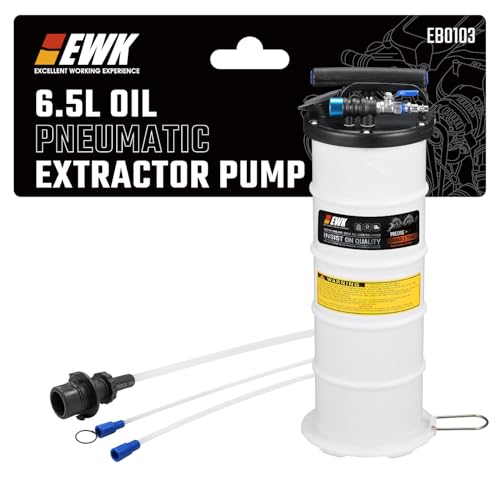
Features: Oil Change Made Simple; skip the shop and extract through the dipstick without lifting the car. Dual-mode extraction lets you switch from manual to pneumatic for shop-level speed, with suction up to 1.8 L/min. Two extended suction tubes reach deep into the reservoir to minimize leftover oil. Best for DIYers who want clean, spill-free changes in a home garage.
Best for: Home mechanics and hobbyists who value mess-free oil changes and flexibility between manual and air-assisted operation.
Caution: Ensure engine oil is within the extractor’s compatible fluids; avoid using with gasoline or flammable liquids unless specified by manufacturer.
Harpy Eagle Electric Oil Change Extractor

Features: A 100W motor pumps up to 1 quart per minute. Extended hoses (4 feet) enable draining from larger engines, including pickups and boats. Comes with a storage case and quick-release components to minimize spills during storage. Best for users who need fast, electric extraction on a mobile or workshop setup.
Best for: Those who want a powered solution for quicker oil changes, especially in setups with limited time or space to manually pump.
Caution: Electric units require a power source; ensure safe handling to prevent spills and protect electrical connections in damp environments.
Amarine Made Oil Pump

Features: A 12V, 60W oil transfer pump delivering 0.8–1.0 L/min. Portable and suitable for use anywhere with a car battery connection. Easy installation by connecting hoses to the oil inlet/outlet and linking to the battery. Simple operation by pressing a button once all connections are set.
Best for: Professionals or hobbyists who need a compact, battery-powered extractor for frequent oil changes away from a traditional power outlet.
Caution: Not suitable for gasoline, diesel, water, or flammable liquids; verify compatibility with the target oil type before use.
VEVOR 6.5L Pneumatic/Manual Oil Extractor

Features: Dual-mode operation combines pneumatic speed with manual reliability. The kit includes a 1.74 Gal/6.5L tank, main and extension tubes, a dipstick, a suction hose, and sealing rings for a complete oil and fluid change solution. Four tube sizes reach deep into the pan for thorough extraction.
Best for: Users who want a single device that handles oil changes and other fluid extractions with both air-assisted and manual control.
Caution: Ensure proper tube sizing and tube connections to prevent leaks or incomplete extraction, especially in deep sumps.
Buying Guide
What mode fits your setup?
Consider whether a pneumatic, manual, or electric extractor best matches your workspace. Pneumatic models offer speed but require an air supply. Manual models are simple and portable but require more effort. Electric pumps provide consistent performance but need a power source.
What capacity do you need?
Most home oil changes do well with 6.5 L tanks. If you service multiple vehicles in one session, lean toward larger tanks or a model with easy drainage and a clean, sealed reservoir to minimize spills.
Is portability important?
Battery-powered and hand-pump options excel for mobile work—driveways, boats, or roadside service. If your area has reliable power access, a pneumatic or electric model can save time on each job.
What fluids are you changing?
Verify compatibility: many pumps are designed for engine oil and some support other fluids. Do not use units with gasoline, diesel, water, or flammable liquids unless explicitly stated by the manufacturer.
How important is ease of use and maintenance?
Look for features like long hoses, simple clamps, and clear seals. A kit with multiple extension tubes and a dipstick adapter makes reaching bottom pans easier and reduces clean-up time.
Safety and storage considerations
Choose models with spill-prevention designs and storage cases when possible. Ensure the device can be stored dry and clean to avoid residual oil and mold.
How to compare quickly
- Mode: Manual, Pneumatic, or Electric
- Tank size: 6.5 L standard vs. larger options
- Included accessories: tubes, dipstick adapters, hoses
- Best use case: DIY home garage, mobile service, or shop
FAQ
- Q: Can I use these pumps for brake fluid changes?
A: Some models include tubes suitable for brake fluid, but verify manufacturer guidance as compatibility varies per unit. - Q: Do these pumps work with diesel or transmission fluid?
A: Many are designed for engine oil only; check the product details to confirm acceptable fluids. - Q: Is a power outlet required for all electric models?
A: No; battery-powered options do not require a wall outlet, while corded models need a power source. - Q: What maintenance is needed after oil changes?
A: Clean the hoses and reservoir, replace seals as needed, and store in a dry area to prevent leaks and mold. - Q: Are these suitable for boats or marine engines?
A: Some models with long hoses and robust seals are suitable; confirm the unit’s compatibility for marine oil pans. - Q: Which is the fastest option?
A: Electric or pneumatic models generally offer higher extraction speed than manual pumps, depending on your setup.