Answer: This guide highlights top solar panel options for van life, RVs, and off-grid camper setups. It helps buyers choose reliable panels, kits, and accessories that fit tight spaces and moving installs. The featured products cover fixed roof installs, portable kits, and bifacial options to maximize energy in limited space. Ideal buyers include full-time van dwellers seeking steady power, weekend campers needing portable flexibility, and DIY van builders prioritizing space efficiency and durability.
| Product | ||
|---|---|---|
| POWHAZY Solar Cable Entry Gland | Cable Entry Gland | RVs, boats, and vans needing clean, weatherproof entry |
| ECO-WORTHY 200W Kit | Rigid Panel Kit with PWM Controller | Fixed roof installs in smaller vans or cabins |
| BougeRV 200W Portable Panel | Portable Foldable Panel | Flexible, temporary setups and travel-ready charging |
| Renogy 200W N-Type Panel | Rigid N-Type Panel | Compact vans needing high efficiency in tight spaces |
| Callsun N-Type 400W Dual Panels | Bifacial Dual-Module Panels | Maximized power in rooftop setups or larger van systems |
POWHAZY Solar Cable Entry Gland With 10AWG Cable

Best for: Vans, RVs, and boats needing a weatherproof roof entry without routing cables through multiple glands. This unit arrives pre-wired with 10AWG PV cables and built-in MC4 connectors, simplifying installation and reducing leaks. It features a low-profile housing, gasketed gland, and UV‑resistant materials for outdoor durability. Suitable for DIY roof installs where a clean, secure entry point matters.
Why selected: It combines pre-wired convenience with a secure strain-relief design, helping protect connections while the vehicle moves. The integrated channels support stable fastening and adhesive contact. Caution: ensure compatibility with your roof thickness and sealant method; verify seal integrity after mounting.
ECO-WORTHY 200 Watts Solar Panel Kit
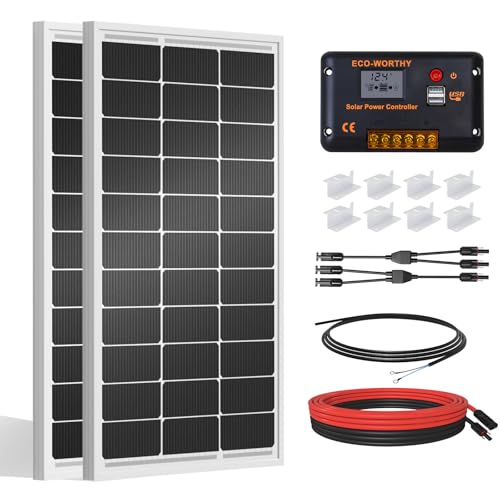
Best for: Small to mid-size vans and off-grid cabins needing a ready-to-use kit with robust durability. The kit uses high-efficiency monocrystalline cells with up to 21.5% efficiency claims, a corrosion-resistant frame, and weather resistance (IP65 rated). It aims to deliver reliable daily output in typical RV and camper conditions.
Why selected: The combination of durable frame, weather sealing, and PWM controller provides a straightforward solution for fixed installations. Limitations: real-world efficiency may vary with climate and installation angle; mounting options should meet prevailing weather requirements.
BougeRV 200W Portable Solar Panel

Best for: Campers and van dwellers who need a movable, high-efficiency power source. The panel uses N-type cells with up to 25% conversion efficiency, a fiberglass layer for durability, and quick plug-and-play connectors for easy setup with compatible power stations or portable fridges. Great for day trips or scenarios where permanent roof mounting isn’t possible.
Why selected: Its portability and robust construction make it a versatile choice for on-the-road charging. Caution: heavier and bulkier than some fixed panels; storage space and weight should be considered when planning van layouts.
Callsun N-Type 16BB 400W Bifacial Panels

Best for: Rooftop van systems and larger setups where space allows. These 200W panels, delivered as a pair, use N-Type 16BB cells for high efficiency (up to 25%) and bifacial technology to harvest rear-side light, boosting total output by up to 30% under favorable conditions. Ideal for optimizing energy in sunny climates on Class A/B vans and marine roofs.
Why selected: Bifacial design can maximize power without extra surface area, helpful for limited roof space. Limitation: performance gains depend on installation over reflective or light-colored surfaces; rear exposure must be considered in mounting.
Buying Guide
What should you consider when choosing van conversion solar panels?
- Power needs: Estimate daily energy consumption and match panel wattage to cover baseline loads plus a buffer for charging inefficiencies.
- Mounting type: Fixed roof panels save space but require careful sealing; portable panels add flexibility but need storage space and extra connectors.
- Panel type: Monocrystalline (high efficiency) vs. bifacial (rear-side capture) vs. N-Type cells (better temperature stability and longevity). Choose based on climate and roof area.
- Durability: Look for weatherproof framing, sealed enclosures, and UV-resistant materials for long-term outdoor use.
- Electrical compatibility: Ensure the panel or kit is compatible with your battery bank (12V/24V), charge controller type (PWM vs MPPT), and existing wiring harnesses.
- Ease of installation: Pre-wired cables, integrated glands, and clear mounting hardware reduce installation time and leakage risk.
Frequently Asked Questions
Can I install solar panels on a small van roof?
Yes. Opt for compact 200W panels or modular kits designed for tight spaces. Consider a lighter 12V system with a PWM controller for simple setups.
What’s the difference between fixed and portable solar panels for vans?
Fixed panels stay on the roof for steady charging, saving space. Portable panels offer flexibility for temporary setups but require storage and extra cables.
Are bifacial panels worth it for vans?
Bifacial panels can provide more total energy if installed over reflective surfaces; however, the gains depend on sunlight angle and mounting environment.
Do I need a charge controller with van solar panels?
Yes. A charge controller regulates charging to prevent battery damage. PWM controllers suit simple, low-cost setups; MPPT controllers maximize efficiency in variable conditions.