Finding the right water pump for a motorhome ensures steady pressure, quiet operation, and dependability on the road. This guide highlights five top options that balance performance, durability, and ease of use for RV, marine, and camper setups. Designed for a range of buyers—from full-time travelers to weekend campers—these pumps cover both 12V DC and 110V AC needs. Read on to compare flow, pressure, priming, and safety features to pick the best fit for your water system.
| Product | Power | Flow | Pressure | Best For |
|---|---|---|---|---|
| ECO-WORTHY 33-Series | 110V AC | 4.0 GPM | 45–70 PSI (adjustable) | RV owners needing AC-powered pump |
| ECO-WORTHY RV Fresh Water 12V | 12V DC | 3.5 GPM | 35–80 PSI (adjustable) | Off-grid or battery-fed RVs |
| Kitvance 12V 6.0 GPM | 12V DC | 6.0 GPM | up to 70 PSI | High-flow showers and multi-fixture RVs |
| Wassermann RV Pump 12V | 12V DC | 4.0 GPM | 45 PSI | Comprehensive kit in one |
| Kohree 12V 7.5 GPM | 12V DC | 7.5 GPM | 70 PSI | High-demand systems |
ECO-WORTHY 33-Series Industrial Water Pressure Pump
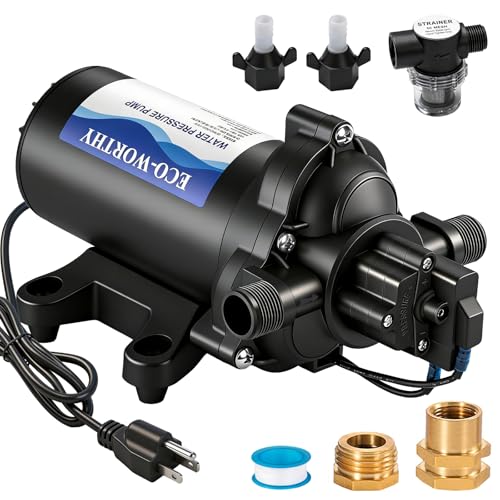
The ECO-WORTHY 33-Series is a 110V AC diaphragm pump designed for fixed-install RV water systems that rely on shore power. It delivers up to 4.0 GPM at a selectable 45–70 PSI, regulated by a smart pressure switch. Best for motorhomes with a powered water system during stationary stays or sites with portable AC power. A key advantage is not needing a battery; it runs directly from AC power, reducing battery load during camping stops. A potential limitation is dependence on AC availability and longer power-cable routing. The unit includes safety features like thermal overload protection.
ECO-WORTHY RV Fresh Water Pump 12V DC

This 12V DC pump provides 3.5 GPM with a 45 PSI switch, and it’s self-priming up to 9.8 vertical feet. It suits off-grid RVs and boats that rely on battery power or a portable inverter. It includes an automatic pressure switch to prevent rapid cycling and can run dry briefly without damage, offering safer operation during low-water conditions. Best for battery-powered systems or when shore power isn’t available. A caution: check that your battery capacity supports extended use without frequent recharges.
2026 Upgraded RV Water Pump, Kitvance

The Kitvance 2026 upgrade delivers 6.0 GPM with a robust 70 PSI capability. It features a smart bypass to minimize cycling and noise, a genuine NSK bearing-based design for quiet operation, and a self-priming range that supports long horizontal runs. Best for larger RVs or setups with multiple fixtures that demand steady pressure. Choose this if you need a quiet, high-flow pump with flexible installation. Limitation: higher flow comes with greater power draw, so ensure your electrical setup can handle it.
WASSERMANN RV Pump, 12V Self-Priming Kit

The Wassermann setup includes a complete kit with hoses, adapters, and a debris filter, delivering up to 4.0 GPM at 45 PSI. This makes it a practical all-in-one option for RVs that want a straightforward replacement with minimal extra purchases. Best for users seeking a ready-to-install package. A minor note: ensure your vehicle’s electrical system supports the full kit’s current requirements to avoid strain on the coach battery.
Kohree 12V Fresh Water Pump, 7.5 GPM

The Kohree 2026 Upgraded model delivers 7.5 GPM at 70 PSI, making it a high-demand option for RVs with multiple fixtures. It uses a five-chamber diaphragm and NSK bearings for strong, steady flow with reduced vibration. Best for users who require premium performance and longer pump life. Limitations include higher power usage and the need for a solid 12V supply to sustain peak performance.
[Upgraded Version] MRGVFLO 7GPM Pump
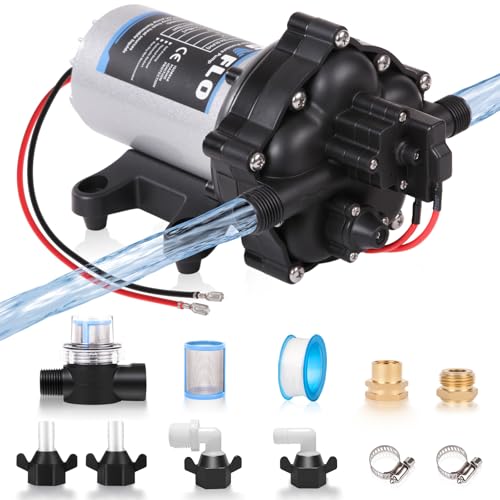
This 7 GPM, 70 PSI 12V pump uses a five-chamber diaphragm and a smart pressure switch for automatic on/off. It’s designed for quiet operation and energy efficiency, making it suitable for continuous RV use. Best for couples or small families who need reliable performance without frequent cycling. Limitations include ensuring proper wiring and fuse sizing for safe operation.
Buying Guide
What to check before buying
Power type: 12V DC pumps suit off-grid lifestyles; 110V AC pumps work well with shore power or generators. For quiet, on-demand performance, prioritise automatic pressure switches and self-priming capabilities.
Flow, pressure, and fixtures
Higher GPM helps with multi-fixture showers and sinks; up to 70 PSI is common for RVs. Consider the number of outlets and peak simultaneous use when choosing a pump.
Self-priming and dry-run safety
Self-priming lets you start from low water, and dry-run protection helps prevent motor damage when tanks are low or empty.
Durability and warranty considerations
Look for thermal overload protection, corrosion-resistant diaphragms, and quality bearings. A complete kit with hoses and filters reduces installation time.
Installation practicalities
Check available space, power source (battery vs shore power), and whether you need an inline filter or bypass features for quiet operation.
Summary of key considerations
- RV size and water usage pattern (high-flow vs. compact setup)
- Power availability (12V battery vs AC shore power)
- Expected noise level and vibration
- Reliability features (dry-run, thermal protection, bypass)
Frequently Asked Questions
- What is the typical RV water pump flow rate? Answer: Most RV pumps range from 3–7.5 GPM depending on model and PSI.
- How do I know if a pump is suitable for dry operation? Answer: Look for dry-run protection or thermally protected motors.
- Can I run a 12V pump off a standard RV battery? Answer: Yes, but ensure battery capacity and wiring support the load.
- Is an AC-powered pump better than a DC pump? Answer: It depends on your power setup; AC is convenient with shore power, DC suits off-grid use.
- Should I choose a high-flow pump for a small RV? Answer: If you need multiple fixtures simultaneously, yes; otherwise a moderate flow pump may save power.
- Do these pumps require maintenance? Answer: Regularly check fittings, clean filters, and inspect diaphragm integrity to prevent leaks.