Answering the common buyer question “which hitch is best for a camper trailer?” this guide highlights five reliable, versatile hitch receivers ideal for RVs, campers, and travel trailers. These selections balance strength, ease of installation, and compatibility with bumper or frame-mounted configurations. Each pick targets a specific use-case: from temporary add-ons for bikes or cargo to robust weight-distributing options for larger trailers. The following table compares key attributes to help you decide quickly.
| Product | Best For | Mount Type | Max Tongue Weight | Notes |
|---|---|---|---|---|
| Stromberg Carlson CC-300 Adjustable Accessory Hitch | Back of camper, bikes, cargo | Class I or II compatible | Not specified on data | Adjustable, durable alloy steel |
| Ohuhu RV Bumper Hitch 2″ Receiver Adapter | 4″ x 4″ bumper setups | 2″ receiver on bumper | Not specified | Easy install, stainless steel finish options |
| CURT 13703 Adjustable RV Trailer Hitch | Frames up to 72″ wide | 2″ x 2″ receiver | 3,500 lbs GTW | Versatile, easy to install |
| CURT 17063 Weight Distribution Hitch | Travel trailers and campers with sway | 2″ shank | 10,000-14,000 lb GTW | Integrated lubrication, sway control |
| TOPTOW RV Bumper Hitch Receiver 63801 | 4″ to 4.5″ bumper beams | 2″ receiver | 200 lbs tongue weight | Easy mounting on bumper beams |
Stromberg Carlson CC-300 Adjustable Accessory Hitch

The Stromberg Carlson CC-300 adjustable hitch creates a 2″ receiver on travel trailers and fifth wheels, enabling bike racks and cargo carriers to mount at the back of an RV. This versatile option fits Class I or can be welded on for Class II configurations, broadening compatibility across vehicle types including cars and trailers. The construction uses durable alloy steel with a powder-coated finish for long-lasting performance. Best for RV owners who need a flexible, back-of-camper hitch that can adapt to different mounting styles.
Best for: RV owners who want a mix of adjustability and durability for cargo or bike racks. Choose this if you plan to bolt on for Class I or weld for Class II compatibility and value a robust, exterior hitch solution.
Caution: Installation accuracy matters; verify frame compatibility before mounting to the side wall or I-beam members to avoid misalignment.
Ohuhu RV Bumper Hitch 2″ Receiver Adapter

This bumper-mounted hitch adapter adds a 2″ receiver to 4″ x 4″ bumpers, enabling bike racks, cargo racks, and other accessories. It’s quick to install without welding and uses premium steel with dual coatings to resist rust and corrosion. Best for owners who want a straightforward, non-w welding solution for bumper-based accessories. It’s not intended for towing, so plan accordingly.
Best for: RV owners who want a simple, non-weld solution on bumper beams for light-duty racks and carriers. It’s a solid choice when you need to quickly add a hitch without altering the frame.
Caution: Not designed for towing; ensure your application remains within the 200-lb tongue weight limit and avoid using it for actual trailer towing.
CURT 13703 Adjustable RV Trailer Hitch
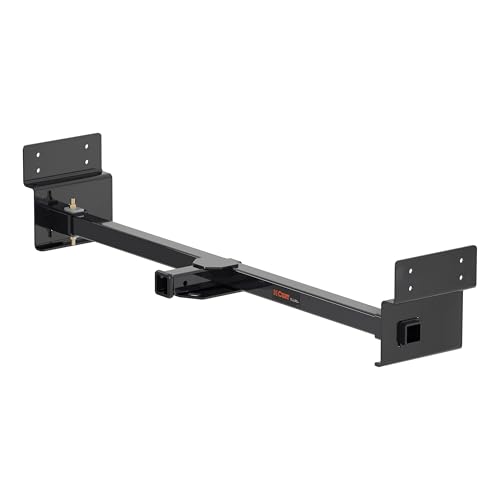
CURT’s 13703 adds a standard 2″ x 2″ receiver to RV frames up to 72 inches wide, suitable for towing accessories and cargo carriers. It’s rated for 3,500 lbs gross trailer weight and 350 lbs tongue weight, with a three-piece adjustable design and included grade-8 hardware. Best for: RV owners needing a reliable, adjustable hitch that fits a broad range of frames and supports common towing accessories. Limitations: Not designed for weight-distribution use.
Best for: RVs that require a straightforward, adjustable hitch install with proven CURT hardware. Choose this if you want a balanced mix of compatibility and ease of installation.
Caution: Confirm your RV frame width and any vehicle manufacturer limits before installation to ensure proper fit and safe operation.
CURT 17063 Weight Distribution Hitch

This weight distribution hitch uses chain-connected arms and a sway control kit to improve towing stability, braking, and steering for travel trailers and campers. It provides continuous lubrication through grease zerks and is built from forged steel for strength. Best for: heavier trailers where improved stability and control are priorities. Data notes: reliability is tied to proper setup and lubrication.
Best for: Towers seeking improved control on long or heavy trailers. Choose this if you want a time-tested weight-distribution system with sway reduction features.
Caution: Proper setup is essential; misalignment or improper lubrication can reduce effectiveness.
TOPTOW RV Bumper Hitch Receiver 63801

This bumper hitch receiver fits 4″ to 4.5″ bumper beams and uses a 2″ x 2″ tube opening with a 200-lb tongue weight capacity. It’s designed for easy mounting on travel trailer bumpers and supports common 2″ hitch accessories like bike racks and cargo carriers. Best for: RV owners with larger bumpers who want a simple, economical mounting option. Limitation: 200-lb tongue weight limit may be insufficient for heavier racks or cargo.
Best for: Quick-add on a travel trailer bumper for light-duty accessories. Choose this if you need a straightforward bumper-mounted hitch with easy installation.
Caution: Ensure the bumper dimensions match the available space and that the tongue weight stays within the listed limit.
Buying Guide: Key Considerations For Camper Trailer Hitches
- Frame vs bumper mounting: Decide whether you need a hitch that attaches to the vehicle frame or to the bumper. Frame-mounted options typically handle higher weights, while bumper mounts are easier to install.
- Receiver size and compatibility: Most hitches use a 2″ x 2″ receiver. Confirm the size of the receiver on your existing racks or cargo carriers to ensure a proper fit.
- Weight rating: Check gross trailer weight (GTW) and tongue weight (TW) ratings to match your trailer’s needs. Always stay within the lowest-rated component in your towing setup.
- Sway control and distribution: For larger or long trailers, weight-distribution hitches with sway control can improve stability and braking performance.
- Installation complexity: Some models require welding or frame fabrication, while others offer quick-bolt or bumper-mounted installation. Consider your DIY comfort level and vehicle capabilities.
- Durability and finish: Powder-coated or coated finishes resist rust from outdoor exposure. Durable steel frames are less likely to deform under load.
- Intended use: If you only need light-duty racks or bike carriers, bumper adapters may be sufficient. For occasional towing or heavier loads, a robust, frame-mounted hitch with distribution features is preferable.
Frequently Asked Questions
- What is the difference between a bumper hitch and a frame hitch for campers?
– A bumper hitch attaches to the bumper and is generally easier to install, suitable for light-duty accessories. A frame hitch attaches to the vehicle’s frame, often handling higher weights and more diverse towing needs. - Can I install a 2″ hitch on a 4″ bumper?
– Some adapters are designed for 4″ bumper beams, but ensure compatibility with the bumper’s inner dimensions and load limits before installation. - Is weight distribution necessary for all campers?
– Not always. Weight distribution is most beneficial for heavier trailers to improve stability, braking, and steering; lighter setups may not require it. - Do these hitches support towing trailers or only accessories?
– Some models are designed for accessories like bike racks and cargo carriers, while others (like certain CURT options) support towing up to specified GTW and TW limits. Always verify the intended use in the product data. - What maintenance is required for hitch receivers?
– Regularly inspect mounting hardware, clean the receiver, and apply lubrication to moving parts or grease zerks as recommended by the manufacturer to maintain smooth operation.