For automotive enthusiasts and professional painters, a turbine HVLP (high-volume, low-pressure) sprayer delivers smooth, consistent finishes with less overspray. This guide highlights five top turbine paint sprayers that are well-suited for automotive work, focusing on finish quality, ease of use, and value. Suitable buyers include hobbyists refinishing classic cars, shop owners seeking reliable systems, and DIYers tackling auto body projects. Below is a quick summary table of the chosen products to help you compare at a glance.
| Product | Brand | Best For |
|---|---|---|
| Fuji Spray 2805-T75G Mini-Mite 5 | Fuji Spray | Precision automotive coats with quiet operation |
| Fuji Spray 2203G Semi-PRO 2 | Fuji Spray | Affordable, pro-grade gravity feed |
| Falcon-5 Turbine System with E7700GTO-600 | Apollo Spray | OEM-like finishes, versatile coatings |
| Fuji Spray 2895-T75G Q5 Platinum | Fuji Industrial | Higher power and quieter operation |
| Apollo Sprayers HVLP Power-5 VS | Apollo Spray | Self-contained, adjustable turbine power |
Before selecting, consider spray pattern control, heat management, noise level, and compatibility with automotive paints. The listed products provide a range of power, noise reduction features, and pattern adjustments to fit different shop setups and paint systems.
Fuji 2805-T75G Mini-Mite 5 Platinum

The 5-stage turbine delivers about 9.5 PSI with built-in noise reduction and a Heat Dissipation Chamber (HDC). The gun includes a side pattern control knob to adjust fan size from small to large, making it ideal for automotive clear coats and base coats where control matters. Best for professional shops or serious hobbyists seeking a quiet, high-performance turbine with precise fan control.
Why this is chosen: high atomizing power, reduced heat buildup, and customizable fan pattern support smooth, even finishes on automotive panels. Caution: larger systems require space and proper ventilation; ensure you have a compatible workspace for optimal results.
Fuji 2203G Semi-PRO 2

Equipped with a professional non-bleed spray gun and adjustable pattern fan control, this gravity-fed unit is a popular choice for automotive finishes. It ships with a 400cc gravity cup and a 1.3mm air cap set installed, suitable for base coats and clear coats when paired with the right paints.
Best for: cost-conscious professionals and serious DIYers who want pro-level control without the premium price. Limitation: some users may upgrade to larger cups for extended sessions on big panels.
Falcon-5 Turbine System with E7700GTO-600

This five-stage turbine system offers 9.5 PSI sealed pressure for broad coating compatibility, including automotive paints and wood finishes. It features dual air filtration and 16 cooling louvers to help extend motor life and maintain consistent atomization during longer sessions.
Best for: users who want a factory-like finish with robust filtration and cooling. Choose this if you spray diverse coatings and need dependable performance. Caution: heavier spray setups may require a larger workspace to accommodate airflow and hose management.
Fuji 2895-T75G Q5 Platinum

This Platinum series adds a quieter operation with a patented noise reduction feature and a heat dissipation chamber, plus a side-pattern control knob for fan size. The extra power helps minimize thinning for viscous automotive paints and achieves finer atomization.
Best for: painters seeking a balance of quiet operation and strong atomization for higher-build automotive finishes. Limitation: slightly higher price versus mid-range units; budget-conscious buyers may opt for less premium models if not needing the quiet feature.
Apollo Sprayers HVLP Power-5 VS
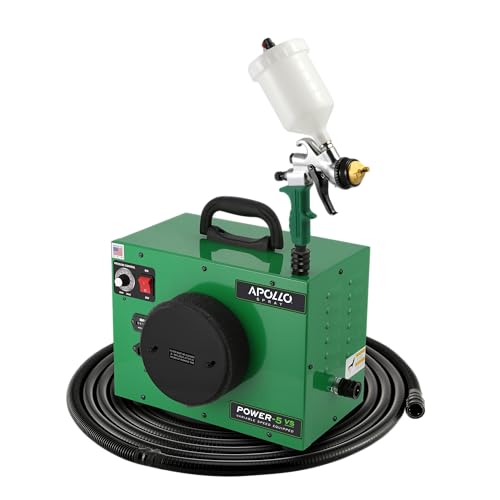
This self-contained turbine system eliminates the need for an external compressor and supports a 0.1 to 9.5 PSI range, offering precise control for a wide range of automotive finishes, from base coats to primers and clear coats. It provides a 100% duty cycle, helping maintain consistent performance during long sessions.
Best for: shop setups that want a compact, all-in-one solution with adjustable pressure. Avoid this if you require extremely low-psi spray for ultra-thin coatings and ultra-high material efficiency in constrained spaces.
Buying Guide
Key considerations when choosing a turbine sprayer for automotive work include:
- Finish quality: Look for precise pattern control and adequate atomization for base coats and clear coats.
- Power and air flow: Higher PSI and efficient turbines reduce thinning needs and improve transfer efficiency.
- Noise and heat management: Noise reduction features and heat dissipation chambers help with long sessions.
- Gun and cup configuration: Gravity-fed cups offer easy setup for base coats; bottom-fed cups can be more efficient for larger jobs.
- Maintenance: Dual filtration and cooling features extend motor life and reduce downtime.
- Versatility: A system that handles water-based and solvent-based paints is advantageous for automotive projects.
Practical guidance by scenario:
- For small body panels or touch-ups, a lighter, quieter unit with good pattern control is ideal.
- For full panels and larger sections, prioritize higher atomization and a larger cup capacity.
- For shops prioritizing minimal downtime, consider systems with robust cooling and easy maintenance.
Frequently Asked Questions
- What makes a turbine paint sprayer suitable for automotive finishes?
A: High atomization, adjustable fan patterns, and compatibility with automotive paints ensure smooth base and clear coats with minimal orange peel. - Do I need a separate compressor for these systems?
A: No. These turbine sprayers are self-contained and designed to operate without an external compressor. - Is quieter operation important for auto body work?
A: Yes. Lower noise reduces fatigue during long sessions and improves the work environment. - Can I spray both water-based and solvent-based paints with these units?
A: Many models support both types, but always verify paint compatibility in the manufacturer’s specs. - What maintenance steps help extend a turbine sprayer’s life?
A: Regular cleaning, proper storage, and ensuring cooling features are unobstructed help maintain performance.