The best time to find a question about your car is while there’s still time to answer it. Start your road-trip preparation before departure morning, and keep the last walkaround for confirming the plan rather than discovering an overdue service.
A driveway check can organize observations, identify missing information, and help you book the right inspection. It doesn’t certify that every hidden component is ready for a long drive.
Start with the vehicle and its records
Gather the owner’s manual, recent invoices, and the current odometer reading. Match the documents to the actual model, year, engine or powertrain, and market before using a schedule or fluid instruction.
Make a short list of service items due before or during the expected trip. If you don’t know when an item was last completed, mark it unknown rather than treating a missing reminder as evidence that it isn’t due.
AAA Club Alliance recommends preventive attention before road travel and distinguishes basic owner checks from professional brake, battery, and fluid-system inspections. Use your records to explain what has already been done and what still needs assessment. [1]
When calling a shop, give the departure date and approximate trip distance along with any symptom. “I’m leaving Friday and heard a new noise yesterday” helps set priorities more clearly than “Please make the car road-trip ready.”
Check the car for open safety recalls using NHTSA’s lookup service and follow the stated repair directions. A recall check is its own task, separate from an ordinary maintenance appointment. [2]
Look at tires before packing the car
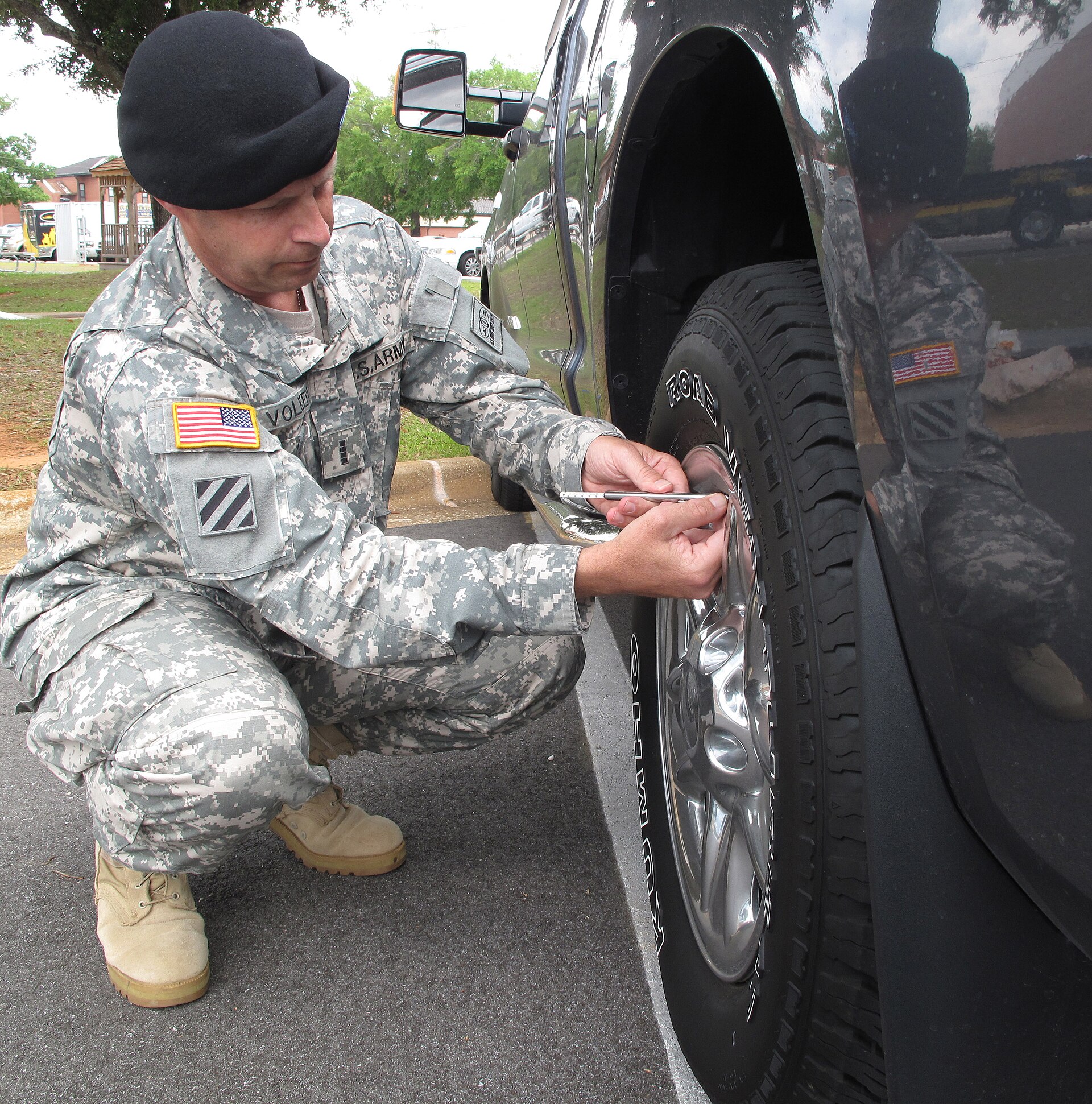
NHTSA advises checking cold tire pressure against the vehicle maker’s target, including the spare where fitted, and referring damaged tires to a tire professional. Its summer guidance defines cold as at least three hours after driving. [2]
Write down the readings by wheel position so a front-to-rear difference isn’t mistaken for an error. For the actual measurement steps, use our tire-pressure guide alongside your vehicle instructions.
Check the tire sidewalls and visible tread from a safe position without crawling beneath the vehicle. If damage or an unfamiliar wear pattern raises a question, have it assessed while you still have time to change plans.
AAA specifically recommends professional inspection when you notice uneven tread wear. Its discussion also emphasizes that the pressure target comes from the vehicle’s label rather than a number chosen by the driver. [1]
Find out what the vehicle actually carries for a flat tire: a spare, a repair kit, or another arrangement. Locate its instructions and limitations instead of packing as though every car has a usable full-size spare.
Plan the load before it reaches the trunk
Loading is about weight as well as space. Ford’s load guidance explains that occupants and cargo share the vehicle’s payload allowance, and that reaching the weight limit means no more cargo even if room remains. [3]
Read the actual vehicle placard and loading instructions, then account for the people and gear you intend to carry. Don’t borrow a capacity number from an internet example, a different trim, or a rental car you used last year.

The photograph illustrates packing luggage, not a verified loading configuration. It doesn’t establish the vehicle’s payload, where bags should be secured, or whether the rest of a trip check has been completed.
For an original arithmetic example, suppose a vehicle’s confirmed remaining allowance for luggage is 240 pounds and your packed bags total 170 pounds. That leaves 70 pounds within that particular calculation, not a universal permission to add a roof box.
Ford’s guidance separately identifies axle and total vehicle weight ratings, and explains that added equipment and trailer loading affect the calculation. A driveway checklist isn’t a towing or roof-rack fitment approval. [3]
If you’re adding a carrier, trailer, or unfamiliar load, resolve its mounting, capacity, and loading instructions before the trip. Keep that work separate from deciding which suitcase fits most neatly in the cargo area.

Check the view and the visible signals
AAA’s road-trip guidance includes headlights, brake lights, turn signals, and the rear license-plate light among owner checks. Ask a helper to observe from a safe position while the stationary vehicle’s controls are operated as instructed. [1]
Record a failed or uncertain result by lamp and side instead of writing “lights checked.” That lets the next person distinguish a completed check from an issue that still needs repair.
Look at the windshield and mirrors, then assess wiping performance according to the vehicle manual. A streak you’ve learned to tolerate on a familiar commute deserves attention before unfamiliar roads and changing weather.
The 2025 Mazda CX-5 manual cautions that automatic wipers can move while someone touches the sensor area and specifies an off position for washing or servicing. Use the precautions for your own car before handling blades. [4]
Confirm that packed items leave the required view and access to the controls. Move loose gear before leaving; don’t plan to sort it while a passenger gives directions at the first highway entrance.
Keep fluid observations separate from service decisions
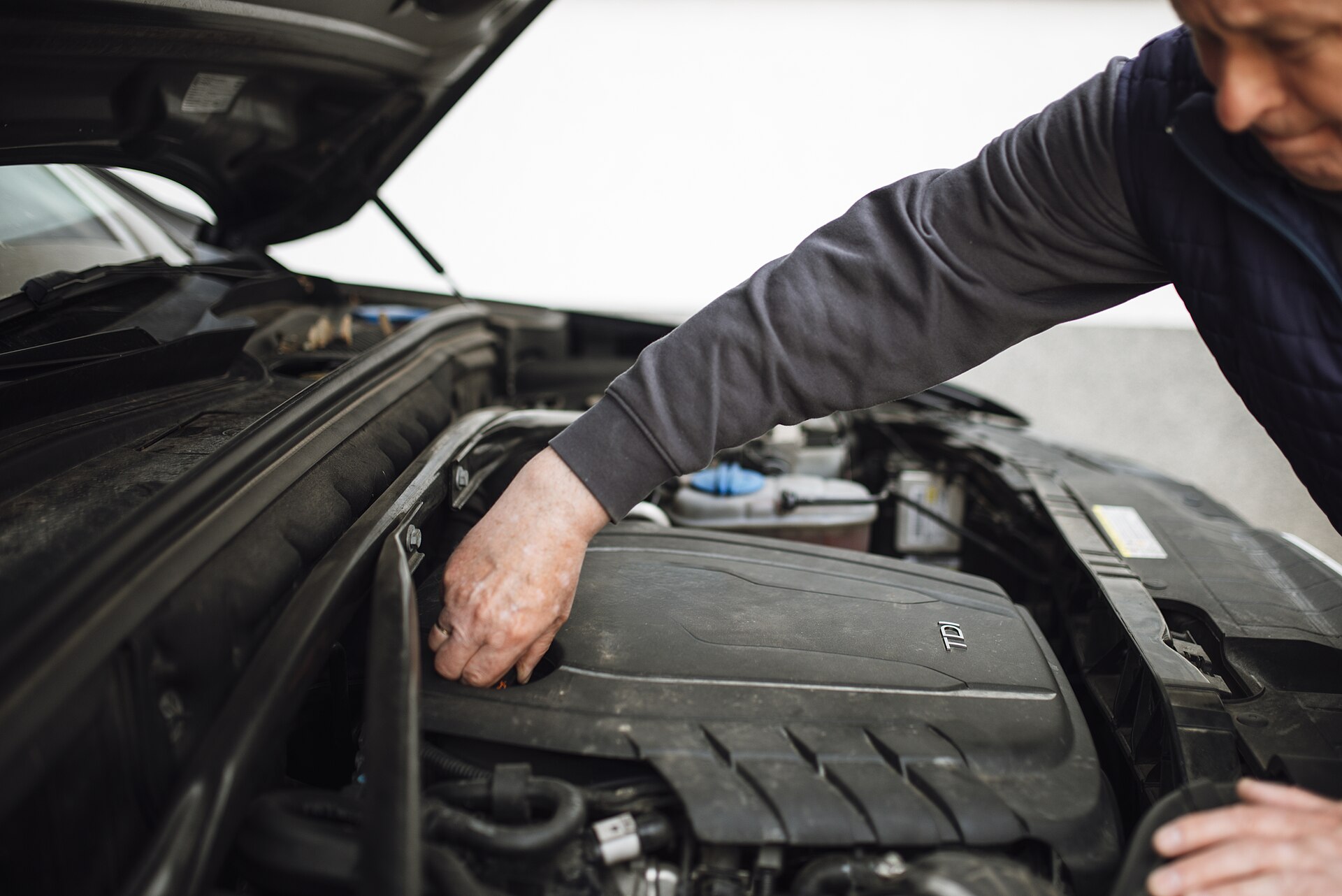
AAA notes that dipstick designs differ and advises reading the owner’s manual for the acceptable oil range. Our oil-level guide explains how to keep the measuring conditions and the reading together. [1]
Use only the owner checks identified for your vehicle, with the specified temperature and waiting conditions. Don’t open a hot cooling system or add an unidentified fluid to complete a generic checklist.
A level observation isn’t a service-history record, and a top-up isn’t proof that a leak has been repaired. Keep those facts in separate lines of your notes when deciding what to ask the shop.
If there’s a current warning or a change in starting, braking, steering, or temperature, resolve it before treating the trip check as finished. Tell the technician what happened rather than selecting a replacement part from a symptom list.
Make the plan usable when you’re away
NHTSA recommends carrying a roadside kit and checking the route, weather, and road conditions before travel. Include a charged phone and its charger so the assistance plan is something you can actually use. [2]
Store the assistance contact and vehicle details where another traveler can find them. Confirm your coverage and its limits directly with the provider instead of assuming a membership or insurance card covers every situation.
For an EV or plug-in hybrid, make the energy plan match the actual vehicle and available equipment. Check the vehicle and charging-provider instructions before relying on an unfamiliar connector or a suggested stop.
Set aside time for breaks and for changes in the route rather than building a departure schedule with no room for delay. A car check and a travel plan support each other, but neither replaces an alert driver.
Use departure morning for the final confirmation
Walk around the loaded car and check that doors, cargo access, and equipment are secured according to their instructions. Read any current dashboard message before moving off, and don’t reinterpret it as harmless just because an inspection was recently completed.
Review your notes for unresolved items and decide who is handling each one. A completed checklist should say what was checked, what was serviced, and what remains uncertain, so you can make the departure decision with useful information.
A simple example is “Tire readings recorded Tuesday; shop inspection completed Wednesday; cargo calculation still needs the final bag weights.” That note preserves the sequence and points to the remaining task instead of awarding the whole vehicle a vague pass.
Keep the finished record with your travel documents so a question later in the trip doesn’t require reconstructing every preparation step from memory.
Sources & documentation
Checked October 14, 2026. Model-specific examples are identified in the guide.
- AAA Club Alliance ·5+ Ways to Prep Your Car for a Road Trip
Vehicle label and uneven wear, oil/manual differences, lamps, professional brake/battery/fluid inspection.
- NHTSA ·Summer Driving Tips
Recall lookup, cold tire checks, roadside planning and summer cabin preparation.
- Ford US online manual ·Load Limit
Payload versus cargo space; occupants, additional equipment, trailer and axle/total ratings.
- Mazda US ·2025 CX-5 Owner Maintenance
Automatic-wiper servicing precautions; owner-care distinctions.