A portable inflator is easier to choose when you start with the place and power source you’ll actually use. A driveway with a compatible charged tool battery creates different options from a trip where you’re relying on the car’s accessory socket.
This documented comparison uses the DEWALT DCC020IB and VIAIR 85P, part 00085, as examples. We haven’t tested fill speed, gauge accuracy, noise, or long-term reliability, so the recommendations concern their documented requirements and your routine.
Identify the exact versions first
Keep the full model and part number in your notes when looking at listings. VIAIR’s current product family includes different power connections and tire chucks, so a nearby product name isn’t enough to establish the version being compared.
The 00085 manual identifies a 12-volt accessory-port compressor with a twist-on tire chuck. That is the version used here, rather than the press-on-chuck or battery-clamp variants shown on the broader family page. [1]
For the DEWALT example, use the current Type 3 DCC020I instruction manual linked to DCC020IB documentation. If you already own a different tool type, check the instructions supplied for it instead of assuming every detail in this comparison applies.
Compare the actual package as well as the device name before considering cost. Record which battery, charger, power adapter, and accessories you already own and which the chosen listing actually includes.

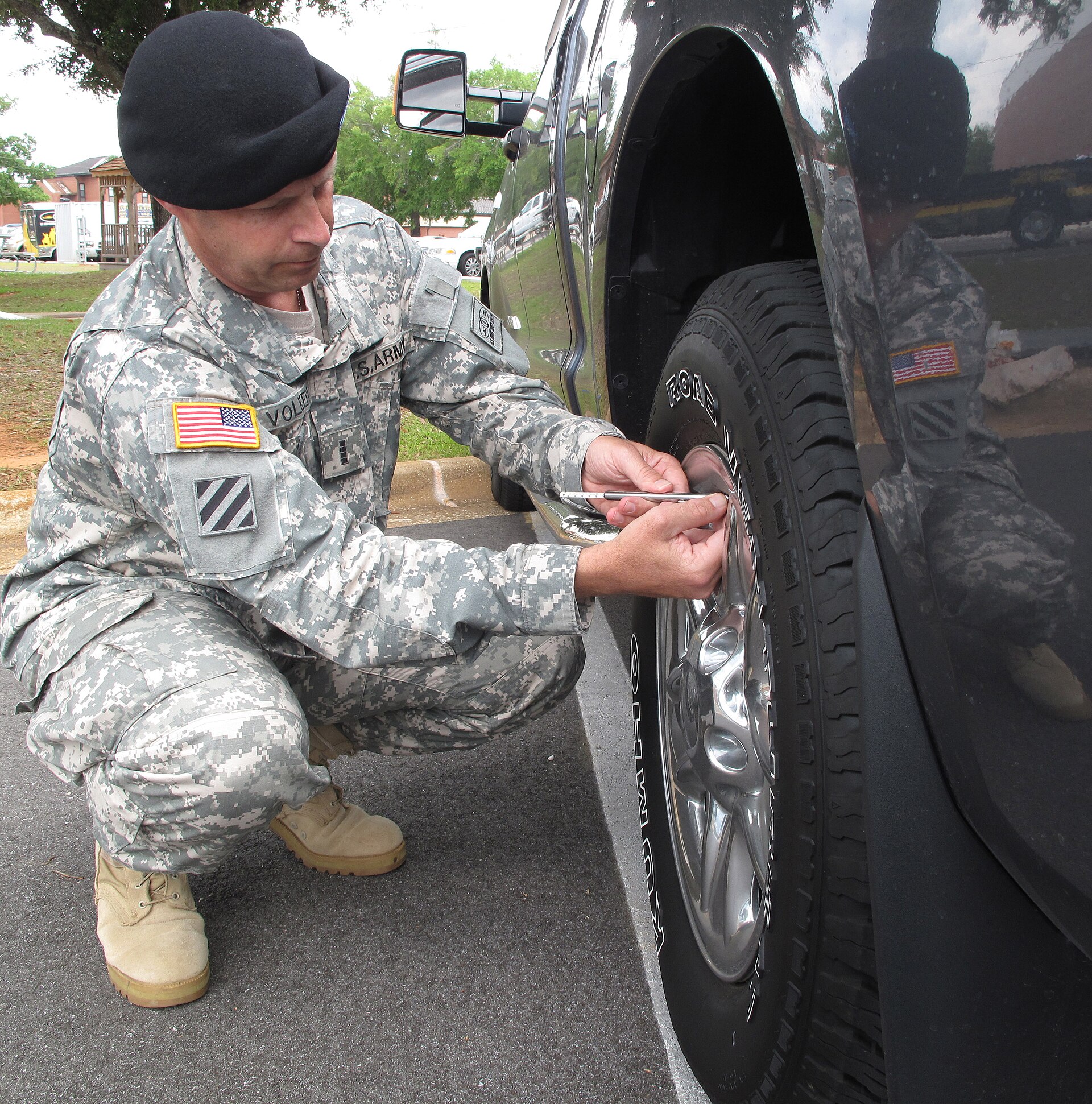
The photograph supplies real tire-inflation context in a military work setting. It doesn’t show either shortlisted product or establish an appropriate procedure for a passenger-car tire.
Compare the power arrangements
The DEWALT Type 3 manual describes compatible battery operation, a 12-volt vehicle connector, and an optional AC supply. Its vehicle-socket mode requires a socket rated for at least 10 amps. [2]
That makes “cordless versus 12-volt” an incomplete division for these two examples. The DEWALT can offer a battery-based setup while also having documented corded options, each with its own equipment and conditions.
The VIAIR 00085 manual requires a 15-amp-rated accessory port and says the engine must run during use. It expressly warns against fitting a higher-rated fuse to get around the original circuit limit. [1]
Read the car’s actual socket rating and operating restrictions before relying on either vehicle-powered mode. A plug fitting into the socket doesn’t establish that the circuit can support the tool.

The diagram separates the power lead from the air hose in a generic setup. It doesn’t specify actual product dimensions, socket locations, battery compatibility, or a connection procedure.
Read the controls and limits together
DEWALT’s manual describes a preset-pressure automatic stop in high-pressure mode and separately says high-volume mode has no automatic stop. Choose the mode and instructions for the actual task rather than treating every hose and mode as interchangeable. [2]
For VIAIR 00085, the operator stops the compressor at the desired reading, and the manual says to verify pressure with the compressor off. That reading condition matters when you’re planning how to check the result. [1]
| Decision | DEWALT DCC020IB, Type 3 instructions | VIAIR 85P, 00085 |
|---|---|---|
| Power plan | Compatible battery; vehicle or optional AC supply | 12-volt accessory port; engine-running requirement |
| Socket requirement | At least 10 A for vehicle mode | 15 A-rated port |
| Pressure control | Preset stop in high-pressure mode | Manual stop; verify with compressor off |
| Operating limits | Use the applicable DEWALT mode instructions | 60 PSI maximum working pressure; duty figure tied to stated conditions |
VIAIR lists a 60 PSI maximum working pressure and a 20-minute duty figure at 30 PSI and 72°F in the 00085 manual. Those stated conditions aren’t a measured time to fill your tire or permission for unlimited repeated use. [1]
Likewise, a maximum pressure or airflow figure doesn’t tell you which device will complete an everyday top-up faster. We don’t have a shared controlled fill test, so this comparison doesn’t rank that outcome.
Start with the vehicle target, not the tool’s maximum
Goodyear directs drivers to the vehicle maker’s pressure recommendation on the placard or in the manual. The compressor’s working limit is a different number serving a different purpose. [3]
Find the actual cold-pressure target and loading instructions for the vehicle before deciding whether a tool fits. Our pressure-check guide helps organize the reading and wheel-position record.
Keep the target, starting reading, final reading, and checking conditions together. An automatic stop can follow the value you entered, but it can’t decide whether you entered the correct vehicle requirement.
If a tire shows damage or repeatedly loses pressure, have it assessed instead of making frequent top-ups the whole plan. An inflator can supply air; it doesn’t establish why pressure was lost or whether the tire is suitable to drive.
Choose for the routine you can support
The DEWALT may fit a driveway routine when you have a compatible battery arrangement and prefer the documented preset stop. Confirm readiness before starting, including the actual battery, tool type, mode, and instructions.
The VIAIR may fit a vehicle-based plan when the port and operating location support its requirements. Check cable and hose reach for all intended wheels without assuming the dimensions of one car prove the setup for another.
For an original comparison, one owner could prioritize using an existing compatible battery beside two household cars. Another might prefer keeping a device with one vehicle, provided its documented socket and running conditions are suitable.
Neither scenario establishes a general winner or a lower lifetime cost. Make a complete equipment list and compare the actual current packages before deciding what you would need to buy.
Make a small shopping worksheet with separate columns for the tool, power equipment, and things you still need to confirm. A blank requirement is useful because it keeps an unanswered question visible instead of turning it into an assumption.
For example, write “vehicle port rating unknown” rather than marking the vehicle-powered option ready. Add the page or label you plan to check, then update the record with the actual answer before deciding between the tools.
Think through where the equipment would sit while you use it, too. A plan that works beside one accessible wheel may become awkward at another, particularly when luggage or a parking position changes the space available.
If someone else shares the car, walk through your notes together before the tool becomes their fallback plan. Have them identify the model, find its instructions, and explain how they would check the required power arrangement.
Keep the unresolved items separate from the reasons you like a product. This makes it easier to notice when a convenient feature has distracted you from a requirement that still needs an answer.
Recognize when neither plan fits
An unknown socket rating, unsuitable operating location, incompatible battery, or task beyond documented limits is a reason to stop the selection. Resolve the requirement instead of assuming an adapter or a stronger fuse will make the plan work.
Don’t run a combustion engine in an enclosed garage to satisfy a compressor instruction. If the location is unsafe, arrange a suitable alternative or assistance rather than trying to complete an inflation task there.
A roadside location can also be unsuitable even when the equipment itself is compatible. Prioritize a safe position and the vehicle’s assistance instructions before unloading tools beside passing traffic.
Keep the instructions with the tool
Before packing the device away, follow its cooling, storage, and maintenance directions. DEWALT’s current manual gives specific runtime conditions for pressures above 100 PSI; those limits shouldn’t be copied into a universal rule for another tool. [2]
Keep the exact manual and model details available to anyone else who may use it. The useful choice is a compatible setup with clear instructions, a correct pressure target, and a way to verify the result.
Models in this comparison
Confirm the selected model and package before purchasing; availability and included accessories can change.
Sources & documentation
Checked October 14, 2026. Model-specific examples are identified in the guide.
- VIAIR ·85P Part00085 Manual, R4-080625
Exact twist-on version;15A port, engine-running requirement, no higher fuse, reading with compressor off,60PSI maximum and20min duty at30PSI/72F.
- DEWALT ·DCC020I Type3 Instruction Manual
Compatible battery/12V/optionalAC choices;10A socket requirement; high-pressure preset stop versus high-volume manual stop; conditional runtime.
- Goodyear ·Check Tires Before Summer Travel
Vehicle placard/manual provides recommended tire pressure, distinct from tool maximum.